Kaziranga ESZ row: Hundreds march in Kaliabor against 10-km zone demand

Synopsis
Hundreds of villagers marched from Kuthari to Bagori in Kaliabor, backing Assam's plan to shrink Kaziranga's Eco-Sensitive Zone to just 1 km — and directly targeting opposition leaders who want the full 10-km buffer retained. With the Numaligarh Refinery and thousands of livelihoods in the balance, this is no longer just an environmental debate: it is a full-blown political confrontation over who gets to define Kaziranga's boundaries.
Key Takeaways
Hundreds of residents marched in Kaliabor on 18 August supporting the Assam government's proposal to reduce the Kaziranga ESZ from 10 km to 1 km .
Protesters raised slogans against Jorhat MP Gaurav Gogoi and Raijor Dal chief Akhil Gogoi for reportedly opposing the ESZ reduction.
Karbi Students' Association members and residents of Karbi Anglong joined the march, widening community support.
Chief Minister Himanta Biswa Sarma warned a blanket 10-km ESZ could threaten the Numaligarh Refinery and settlements in Bokakhat and Kaliabor .
The final ESZ limit must be determined in accordance with Supreme Court directions; no formal reduction has been notified yet.
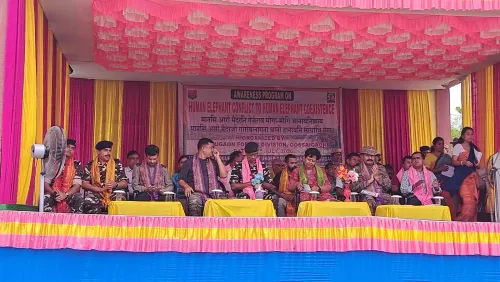
Hundreds of residents living around Kaziranga National Park in Assam marched through Kaliabor on Tuesday, 18 August, backing the state government's proposal to reduce the Eco-Sensitive Zone (ESZ) around the park from the default 10-km limit to 1 km in the proposed areas. The demonstration marked a visible escalation of local sentiment in an increasingly charged political dispute over conservation boundaries and community rights.
What the Protesters Demanded
The march proceeded from Kuthari to Bagori, with participants carrying placards and raising slogans against Jorhat MP Gaurav Gogoi and Raijor Dal chief Akhil Gogoi, both of whom have reportedly opposed the proposed reduction in the ESZ. Some demonstrators staged a semi-nude protest to underscore the intensity of their opposition to a wider buffer zone.
Members of the Karbi Students' Association and residents from Karbi Anglong also joined the march, broadening the demographic base of the pro-reduction camp. Protesters argued that a 10-km ESZ would impose severe restrictions on homes, livelihoods, businesses, and other economic activities of communities that have lived in the area for decades.
The Political Backdrop
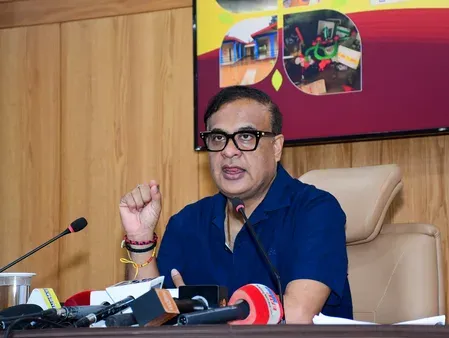
The ESZ debate has gained significant political traction after Chief Minister Himanta Biswa Sarma publicly criticised the Congress over its opposition to the proposed reduction. Sarma warned that a blanket 10-km ESZ stretching from Bokakhat to Kaliabor could have serious implications for settlements, businesses, and major economic establishments in the region.
He specifically cited the Numaligarh Refinery and settlements in Bokakhat and Kaliabor, stating that any final ESZ limits must be determined in accordance with the Supreme Court's directions on the matter. Gaurav Gogoi has reportedly maintained that the protected zone should extend up to 10 km from the national park boundary.
Conservation vs Community Rights
Protesters were careful to frame their demands within a conservation-friendly narrative — acknowledging the importance of protecting Kaziranga's rich biodiversity while insisting that the rights and livelihoods of surrounding communities cannot be sidelined. They contended that any ESZ decision must account for the decades-long presence of villages and economic activity in the zone.
This comes amid a broader national pattern of ESZ disputes, where Supreme Court-mandated buffer zones around protected forests have repeatedly clashed with the interests of local populations. Kaziranga, a UNESCO World Heritage Site and home to the world's largest population of one-horned rhinoceroses, carries particularly high conservation stakes, making any boundary decision politically and ecologically consequential.
What Comes Next
The state government's proposal is subject to final determination in line with the Supreme Court's framework, and no official reduction has been formally notified yet. With local communities, opposition politicians, and the ruling dispensation all staking out distinct positions, the ESZ boundary question is set to remain a flashpoint in Assam's political landscape in the weeks ahead.
Point of View
Yet both sides are now invoking the court selectively. The Numaligarh Refinery reference by CM Sarma is telling — it frames an industrial asset, not just village livelihoods, as the casualty of a wider buffer, which shifts the debate from community rights to economic interests of a different order. A credible resolution will require an independent, site-specific ecological assessment, not a political march in either direction.
NationPress
18 Aug 2026
Frequently Asked Questions
What is the Kaziranga Eco-Sensitive Zone dispute about?
The dispute centres on how wide the Eco-Sensitive Zone around Kaziranga National Park should be. The Assam government has proposed reducing it from the default 10 km to 1 km in certain areas, arguing a wider zone would harm local livelihoods and major economic establishments. Opposition leaders have reportedly pushed back, favouring the full 10-km buffer for stronger wildlife protection.
Why are residents protesting against Gaurav Gogoi and Akhil Gogoi?
Jorhat MP Gaurav Gogoi and Raijor Dal chief Akhil Gogoi have reportedly opposed the state government's proposal to reduce the ESZ to 1 km, with Gogoi said to favour retaining the 10-km limit. Protesters backing the reduction targeted both leaders during the Kaliabor march on 18 August, accusing them of disregarding local community interests.
What is Chief Minister Himanta Biswa Sarma's position on the ESZ?
CM Himanta Biswa Sarma has backed reducing the ESZ, warning that a blanket 10-km zone from Bokakhat to Kaliabor could severely impact settlements, businesses, and the Numaligarh Refinery. He has stated that the final limits must be set in line with Supreme Court directions.
Has the ESZ reduction been officially notified?
No formal reduction has been notified yet. The state government's proposal remains under consideration and must ultimately be determined in accordance with the Supreme Court's framework for eco-sensitive zones around protected areas.
Who are the communities affected by the Kaziranga ESZ decision?
Villages and settlements surrounding Kaziranga National Park in areas including Bokakhat and Kaliabor are directly affected. Members of the Karbi community from Karbi Anglong also participated in the protest, indicating that the impact extends across multiple ethnic and geographic communities in the region.