Did the ED Attach Rs 3.38 Crore in Properties Linked to a Madhya Pradesh RTO Officer?
Synopsis
In a significant move against corruption, the Enforcement Directorate has provisionally attached properties worth Rs 3.38 crore linked to a Madhya Pradesh RTO officer and his wife. This action reflects the agency's commitment to tackling financial misconduct among public servants. Stay tuned as the investigation unfolds!
Key Takeaways
ED provisionally attaches properties worth Rs 3.38 crore.
Investigation initiated by an FIR from the EOW.
Allegations of disproportionate assets against the RTO officer.
Properties include residential and commercial assets in Jabalpur.
Ongoing investigation could uncover more financial misconduct.
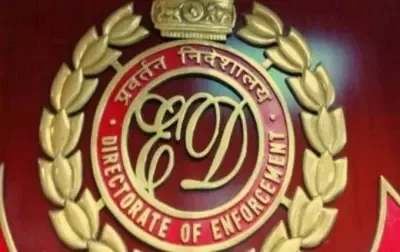
Bhopal, Dec 30 (NationPress) The Enforcement Directorate (ED), operating from its Bhopal Zonal Office, has provisionally seized immovable assets valued at around Rs 3.38 crore belonging to Santosh Paul, the Regional Transport Officer (RTO), and his spouse Rekha Paul, a senior clerk within the Madhya Pradesh government's Transport Department.
This action is in accordance with the Prevention of Money Laundering Act (PMLA), 2002, as indicated by a statement released by the investigating agency on Tuesday.
The ED's inquiry was prompted by an FIR filed by the Economic Offences Wing (EOW), Bhopal, against Santosh Paul under sections 13(1)(b) and 13(2) of the Prevention of Corruption Act, 1988 (amended in 2018).
The complaint accused the public servant of amassing assets that are disproportionate to his declared sources of income.
In-depth investigations by the ED revealed that during the review period, Santosh and Rekha Paul had a confirmed lawful income of merely Rs 73.26 lakh. However, they managed to acquire both movable and immovable assets and incurred expenses totaling approximately Rs 4.80 crore. This resulted in a significant discrepancy, leading to the identification of disproportionate assets valued at around Rs 4.06 crore, the agency noted.
Further examination uncovered troubling financial trends, including structured and repeated cash deposits into their bank accounts right before loan EMI payments. These transactions suggest intentional efforts to integrate unaccounted cash into the formal banking system, a notorious technique for laundering illicit funds.
The provisionally seized properties, deemed Proceeds of Crime, include residential houses, plots, agricultural land, and commercial shops, all situated in the Jabalpur district.
This action underscores the ED's relentless mission to combat corruption among public officials and reclaim assets acquired through unlawful means. By attaching these properties, the agency has effectively frozen assets suspected to stem from corrupt practices in the Transport Department of the state.
The investigation is ongoing, with the ED likely to delve deeper into financial trails and potential involvement of other individuals. Such cases of disproportionate assets continue to reveal systemic weaknesses within public administration, undermining public confidence and diverting resources intended for development.
Point of View
This incident highlights the ongoing battle against corruption in India. The Enforcement Directorate's actions serve as a reminder that public officials must be held accountable for their financial dealings. It is crucial to restore public confidence in governance, and such investigations are essential in curbing corruption and ensuring that resources are used for the betterment of society.
NationPress
9 Oct 2026
Frequently Asked Questions
What prompted the ED's investigation?
The investigation was initiated following an FIR filed by the Economic Offences Wing against Santosh Paul for allegedly accumulating disproportionate assets.
What properties have been attached?
The ED has provisionally attached residential houses, plots, agricultural lands, and commercial shops valued at approximately Rs 3.38 crore.
What does the PMLA entail?
The Prevention of Money Laundering Act allows authorities to investigate and attach properties that are suspected to be acquired through illegal means.
What is the status of the investigation?
The investigation is ongoing, with further financial trails and potential involvement of other individuals likely to be explored.
Why is this case significant?
This case underscores the importance of accountability among public servants and the ED's efforts to tackle corruption within government sectors.