ED exposes narco-terror network funnelling drug money into Delhi nightclubs
Synopsis
India's Enforcement Directorate has peeled back a multi-country narco-terror web where ISI-linked syndicates pay smugglers in contraband cigarettes and perfumes, park dirty money in Delhi nightclubs, and overpay overseas shell companies for kitchen equipment — all to move terror funds without leaving a single digital trace.
Key Takeaways
The Enforcement Directorate (ED) has exposed an ISI-backed narco-terror network routing drug proceeds through hawala channels via Dubai into India, Pakistan, and Afghanistan.
Accused Gaurav Dawar invested drug money in Playboy Club and White Club in Delhi , operated through Newera Feast and Hospitality Pvt.
A ₹3,000 crore heroin smuggling case in Gujarat and related arrests in Delhi , Punjab , and Haryana first unravelled the network.
Syndicates avoid bank transfers and instead pay operatives in contraband goods — cigarettes, perfumes, dry dates, and betel nuts — to eliminate the paper trail.
Hospitality businesses are exploited to blend illicit cash with legitimate sales and to overpay overseas shell companies controlled by terror groups via fake invoices.
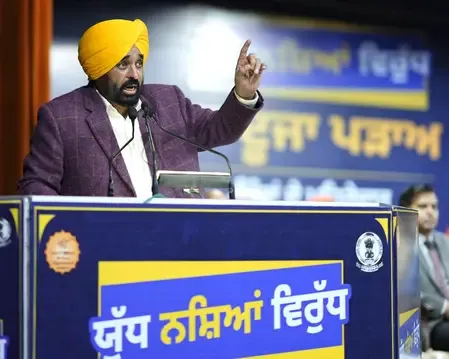
Home Minister Amit Shah has pledged to intensify the anti-narcotics drive to the district level as part of the Modi government's counter-narco-terror strategy.
The Enforcement Directorate (ED) has exposed a sophisticated narco-terror funding network operating across India, revealing how proceeds from drug smuggling are routed through hawala channels and parked in legitimate domestic businesses — including Delhi nightclubs — to indirectly finance cross-border terrorism, according to officials familiar with the investigations.
How the Network Operates
According to ED officials, drug money generated by an ISI-backed syndicate with operatives in Afghanistan, Pakistan, and Dubai first flows into the UAE before being dispersed via hawala routes. Funds destined for ISI assets in Pakistan and Afghanistan are reportedly used entirely to bankroll terror operations against India, while money routed into India is instructed to be 'parked' in seemingly legitimate businesses until further orders.
Officials note that syndicates deliberately avoid electronic bank transfers across borders — a move that would immediately trigger financial intelligence alerts. Instead, they rely on in-kind payments: high-demand commodities such as contraband cigarettes, dry dates, perfumes, and betel nut consignments are exchanged as compensation, bypassing the placement stage of money laundering entirely and leaving no digital or paper trail.
The Gaurav Dawar Case
A key case that brought this network to light involves Gaurav Dawar, an accused in a heroin smuggling operation with links to major seizures in Delhi, Punjab, and Haryana. The trail began with the busting of a ₹3,000 crore heroin smuggling case in Gujarat, in which one Harpreet Singh was named the prime accused by the National Investigation Agency (NIA).
Investigations established that both Dawar and Harpreet Singh reported to Vitaysh Koser, also known as Raju Dubai, who was allegedly operating on the instructions of ISI-linked assets based in Pakistan and Afghanistan. The two accused regularly visited Dubai, where they received payments in cash as well as prohibited commodities.
The ED probe further found that Dawar had made investments in two Delhi nightclubs — Playboy Club and White Club — operated through an entity called Newera Feast and Hospitality Pvt. Ltd.
Nightclubs as Laundering Machines
Officials explained that hospitality and entertainment venues are particularly attractive for money laundering because of the volume and variability of daily cash transactions. Launderers inject illicit cash into daily earnings registries, create fake bookings and dummy restaurant orders, and blend dirty money with legitimate sales proceeds. Contraband cigarettes and perfumes received as in-kind payments are also sold through such venues at retail margins, converting illicit goods into legal business revenue.
A further layer of terror financing is embedded in the supply chain: hospitality businesses reportedly overpay overseas shell companies — controlled by terror networks — for goods such as kitchen equipment, imported linens, and specialised food items, accepting inflated invoices to transfer value abroad. 'What looks like a normal trade operation is actually an indirect way of terror funding through these overseas shell companies,' an official said.
Government Response and What's Next
The battle against narco-terror links has been flagged as a top national priority. Union Home Minister Amit Shah has stated that the Narendra Modi government would intensify the anti-narcotics drive to the district level, leaving 'no stone unturned' to make India drug-free. Multiple agencies — including state police forces, the Intelligence Bureau (IB), the Narcotics Control Bureau (NCB), Customs, and the ED — are now coordinating efforts to dismantle such networks.
Investigators say dismantling these networks requires pursuing both the financial trail and the commodity supply chains simultaneously, as the two are deliberately structured to obscure each other. Further arrests and asset attachments in connected cases are expected as investigations progress.
Point of View
ED, NCB, IB, and Customs — is structurally designed to trace all three channels (hawala, commodity, and invoice fraud) simultaneously, or whether each agency is still running a parallel, siloed investigation.
NationPress
24 Sept 2026
Frequently Asked Questions
How is drug money being used to fund terrorism in India?
According to ED officials, proceeds from drug smuggling are routed through hawala networks via Dubai into India, Pakistan, and Afghanistan. Funds reaching ISI assets in Pakistan and Afghanistan are used to finance terror activities, while money entering India is parked in legitimate businesses — including nightclubs and hospitality companies — until mobilised for operational use.
What is the Gaurav Dawar case and how does it connect to the narco-terror network?
Gaurav Dawar is an accused in a heroin smuggling case linked to seizures in Delhi, Punjab, and Haryana, and connected to a ₹3,000 crore Gujarat heroin case. Investigations found he reported to Vitaysh Koser (alias Raju Dubai), who allegedly operated under ISI-linked handlers in Pakistan and Afghanistan, and that Dawar invested drug proceeds in two Delhi nightclubs.
Why are smugglers paid in cigarettes and perfumes instead of cash?
Officials say syndicates use in-kind payments — contraband cigarettes, perfumes, dry dates, and betel nuts — to bypass the placement stage of money laundering and leave no digital or banking trail. These commodities carry high street value and can be sold for cash within India without triggering financial intelligence alerts.
How are nightclubs and hospitality businesses used for money laundering?
Launderers inject illicit cash into daily earnings records, create fake bookings and dummy restaurant orders, and blend dirty money with legitimate sales. Clubs also sell contraband goods at retail margins. Additionally, these businesses overpay overseas shell companies controlled by terror networks for supplies, effectively transferring funds abroad through inflated invoices.
Which agencies are investigating narco-terror financing in India?
Multiple central and state agencies are involved, including the Enforcement Directorate (ED), the National Investigation Agency (NIA), the Narcotics Control Bureau (NCB), the Intelligence Bureau (IB), Customs, and state police forces. Home Minister Amit Shah has directed that the anti-narcotics drive be intensified down to the district level.