Karthigai Deepam 2024: Edappadi potters ramp up agal vilakku output, urge govt support
Synopsis
Ahead of Karthigai Deepam on 24 November, over 100 pottery families in Tamil Nadu's Edappadi are racing to fulfil bulk orders for handmade agal vilakku — but machine-made lamps from Kerala and Kanyakumari are undercutting prices. A potter has called on the Tamil Nadu government to procure earthen lamps directly for HR&CE-run temples, offering what could be a rare assured market for a craft fighting to survive its own seasonal moment.
Key Takeaways
More than 100 pottery workers in Edappadi, Thevur and surrounding areas of Salem district are producing agal vilakku ahead of Karthigai Deepam on 24 November .
Bulk orders have been placed by traders from Chennai, Salem, Coimbatore, Erode, Tiruchi and Namakkal .
A bundle of 200 lamps sells for ₹160–₹200 , but prices are under pressure from machine-made imports.
Machine-manufactured lamps from Kerala, Nagercoil and Kanyakumari are increasingly displacing handmade products in retail markets.
Potter Kokila has urged the Tamil Nadu government to procure earthen lamps for HR&CE-administered temples and issue no-objection certificates for silt extraction.
More than 100 families in Upper Chittoor alone depend on pottery and lamp-making for their livelihoods.
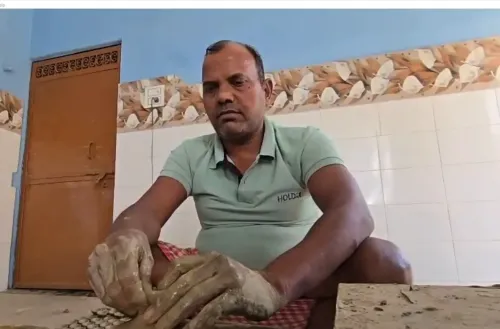
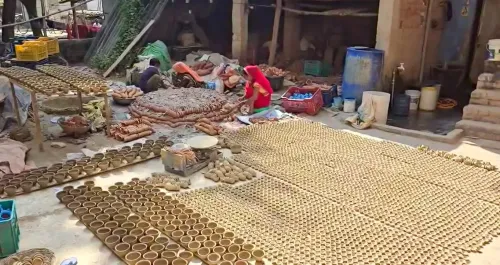
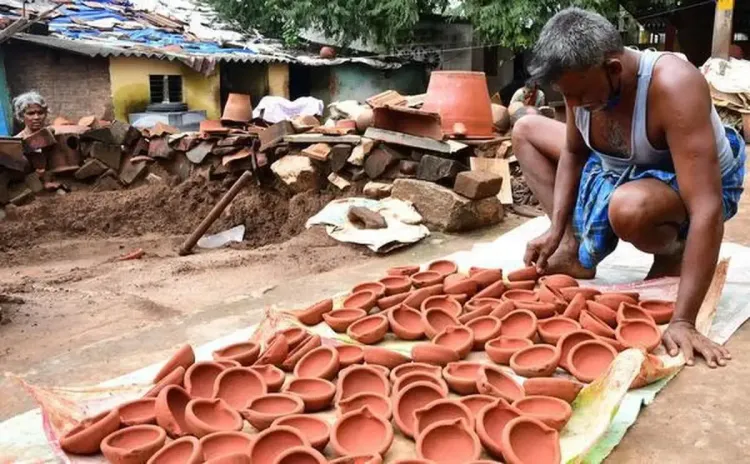
Traditional potters in Edappadi and neighbouring villages of Tamil Nadu's Salem district are intensifying production of earthen lamps ahead of Karthigai Deepam on 24 November, even as factory-made imports from Kerala, Nagercoil and Kanyakumari undercut prices and threaten the livelihoods of artisan families. The handmade clay lamps, locally known as agal vilakku, remain central to the festival's ritual of illuminating homes and temples with rows of flickering lights.
Scale of Production
More than 100 pottery workers are currently active in Edappadi, Thevur and surrounding localities, with production particularly concentrated in Mettutheru, Kullar Street and Upper Chittoor within the Edappadi municipality. Favourable dry weather has allowed artisans to press ahead with preparations without interruption. Bulk orders have come in from traders based in Chennai, Salem, Coimbatore, Erode, Tiruchi and Namakkal, while small retailers have also secured advance supplies to meet neighbourhood demand during the festival.
Pricing and the Machine-Made Threat
A bundle of 200 agal vilakku currently sells for between ₹160 and ₹200, according to potter Kokila of Upper Chittoor. However, that price point is under pressure. Machine-manufactured lamps sourced from production centres in Kerala, Nagercoil and Kanyakumari are gaining a stronger foothold across Tamil Nadu's retail markets, making it increasingly difficult for hand-craft producers to secure remunerative returns. Kokila noted that competing products were steadily displacing traditional artisan lamps from price-sensitive retail channels.
What the Artisans Are Asking For
Potter Kokila, speaking on behalf of the community, said more than 100 families in Upper Chittoor alone depended on pottery and lamp-making for their income, with finished products dispatched to cities including Erode, Tiruppur and Coimbatore. She urged the Tamil Nadu government to arrange direct procurement of earthen lamps for temples administered by the Hindu Religious and Charitable Endowments (HR&CE) Department, arguing that such an assured institutional market would provide a lifeline for the trade. She also called for the issuance of no-objection certificates for extracting the silt used as the primary raw material in pottery production — a regulatory hurdle that has added to the sector's difficulties.
Why the Craft Still Matters
Despite the growing availability of ceramic alternatives and decorative candles, earthen lamps have retained their ritual significance for Karthigai Deepam, one of Tamil Nadu's most widely observed festivals. The occasion provides pottery families with one of their most concentrated windows of wholesale and retail demand across the year. Notably, the concerns raised by Edappadi artisans mirror a broader pattern seen among traditional craft communities ahead of major Hindu festivals, where seasonal demand spikes are increasingly insufficient to offset year-round competition from mechanised production. With festival orders keeping workshops occupied through the week, artisans say government intervention — both on procurement and raw material access — is now essential to sustain the craft beyond its annual revival.
Point of View
Which is a structurally sound intervention. The raw material bottleneck around silt extraction permits is a solvable administrative problem that successive governments have left unaddressed. Without both fixes, Karthigai Deepam may remain a brief annual reprieve rather than a sustainable market for a craft that is visibly losing ground to mechanised competitors year by year.
NationPress
16 Nov 2026
Frequently Asked Questions
What is Karthigai Deepam and why do potters ramp up production for it?
Karthigai Deepam is a major Tamil Hindu festival — falling on 24 November this year — during which devotees illuminate homes and temples with rows of small clay lamps called agal vilakku. It is the single largest demand window for traditional earthen lamp makers, drawing bulk orders from traders and retailers across Tamil Nadu.
Where are the earthen lamps from Edappadi sold?
Lamps produced in Edappadi, Thevur and nearby areas of Salem district are dispatched to traders and retailers in Chennai, Salem, Coimbatore, Erode, Tiruchi, Namakkal, Tiruppur and surrounding markets across Tamil Nadu.
Why are traditional lamp makers struggling despite high festival demand?
Machine-made lamps from production centres in Kerala, Nagercoil and Kanyakumari are undercutting handmade agal vilakku on price, making it hard for artisans to secure fair returns. A bundle of 200 lamps sells for only ₹160–₹200, leaving thin margins for labour-intensive handcraft production.
What specific support have Edappadi potters sought from the Tamil Nadu government?
Potter Kokila has urged the Tamil Nadu government to arrange direct procurement of earthen lamps for temples managed by the Hindu Religious and Charitable Endowments (HR&CE) Department, which would provide an assured institutional market. She has also requested no-objection certificates for silt extraction to ease access to the raw material required for pottery.
How many families in Edappadi depend on pottery and lamp-making?
According to potter Kokila, more than 100 families in Upper Chittoor within Edappadi municipality alone depend on pottery and earthen lamp production for their livelihoods, with products reaching cities including Erode, Tiruppur and Coimbatore.