Shiv Sena (UBT) slams engineered defections, says Maharashtra's political morality shattered
Synopsis
Shiv Sena (UBT)'s Saamana editorial didn't just attack defectors — it framed Maharashtra's political crisis as a moral collapse. Invoking the Mahabharata's Duryodhana, the Thackeray camp accused the BJP and its allies of buying legislators for ₹50 crore and suffocating independent politics. The piece names Fadnavis and Shinde directly, signalling an intensifying ideological counter-offensive.
Key Takeaways
Shiv Sena (UBT) published a scathing editorial in Saamana on 3 July , attacking engineered defections in Maharashtra .
The editorial accused legislators of 'selling themselves for ₹50 crore ' or switching sides for Cabinet posts.
Six Shiv Sena MPs and one MLC who defected to the Eknath Shinde faction were called out for 'sheer selfishness.' Chief Minister Devendra Fadnavis and Deputy CM Eknath Shinde were directly targeted in the editorial.
The piece invoked the Mahabharata analogy, comparing ruling leaders' conduct to Duryodhana's court, warning of a political reckoning.
The Thackeray camp argued that 'Modi-style' governance has made independent social and development work impossible without BJP patronage.
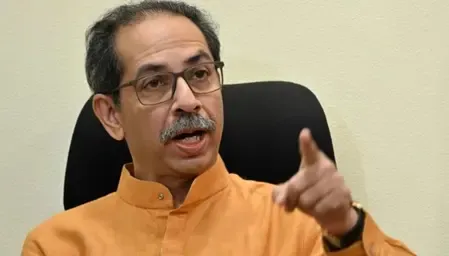
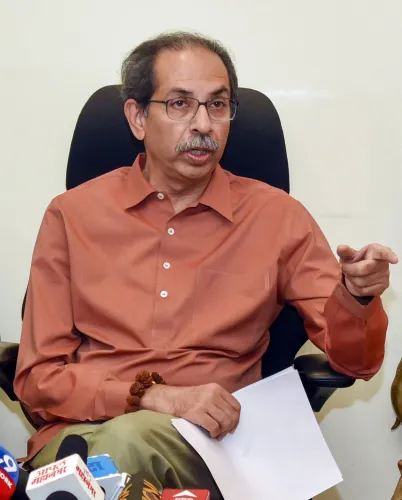
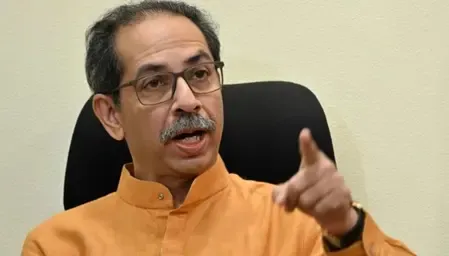
Shiv Sena (Uddhav Balasaheb Thackeray) on 3 July launched a sharp broadside against the ruling dispensations at the Centre and in Maharashtra, declaring that the state's once-stable political culture has been hollowed out by what it called an 'insatiable, ravenous greed for power.' The attack came through an editorial in the party's mouthpiece, Saamana, and targeted engineered defections, alleged legislative buyouts, and what the Thackeray camp described as the systematic destruction of Maharashtra's political morality.
The Defection Charge
The Saamana editorial accused legislators of 'selling themselves for ₹50 crore' or switching sides in pursuit of posts such as the Deputy Chairperson's position or Union Cabinet berths. 'Breaking or buying such helpless and mentally weak individuals requires no bravery,' the editorial stated pointedly. The piece singled out the recent defection of six Shiv Sena MPs and a Member of the Legislative Council (MLC) to the Eknath Shinde faction, dismissing their stated justifications of 'political compulsion' as a cover for 'sheer selfishness.' The editorial questioned what dignity these defectors could hope to retain, arguing they would ultimately serve as mere functionaries beholden to rulers in Delhi.
The Mahabharata Warning
Drawing on mythology, the editorial compared the conduct of current ruling leaders to the Kaurava court during the disrobing of Draupadi. 'The grotesque, victorious laughter of these leaders resembles that of Duryodhana. Just as Duryodhana and his gang laughed during the disrobing of Draupadi in the royal court, these leaders celebrate today. However, Lord Krishna appeared to protect Draupadi's honour, and the subsequent Mahabharata wiped out the mocking laughter of Duryodhana's clan. The current political mockery should be a matter of deep introspection for everyone,' the editorial said. The invocation of the Mahabharata analogy signals the Thackeray camp's intent to frame the current political moment as a moral reckoning, not merely a factional dispute.
Attack on 'Modi-Style' Governance
The editorial argued that under what it termed 'Modi-style' governance, a narrative has been imposed that social and development work can only be carried out under the umbrella of the ruling party. The Uddhav Thackeray-led faction contended that had such a political climate existed 50 years ago, celebrated social reformers and clean legislators would have been suffocated. It named figures including Baba Amte, Dr Abhay Bang, Popatrao Pawar, and Dr Prakash Amte as examples of independent social workers who, under current conditions, would have been forced to seek BJP patronage for government funds. Principled legislators of an earlier era — among them Madhu Dandavate, Barrister Nath Pai, Madhu Limaye, George Fernandes, Comrade Hiren Mukherjee, Ganpatrao Deshmukh, and Prof N.D. Patil — would, the editorial argued, have been coerced into joining the Bharatiya Janata Party (BJP).
Fadnavis and Shinde in the Crosshairs
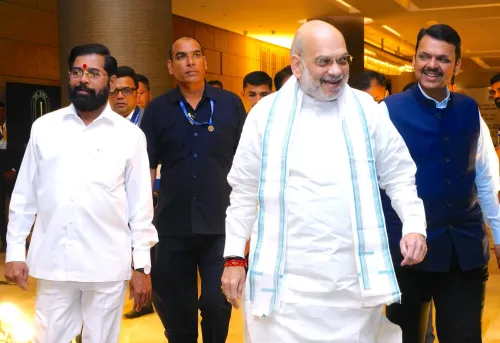
The Thackeray camp trained its fire directly on Chief Minister Devendra Fadnavis and Deputy Chief Minister Eknath Shinde. It alleged that Fadnavis remains consumed by anxiety over protecting his post, while Shinde is focused on pleasing what the editorial called Delhi's 'Maharashtra-haters' by fracturing opposition parties. The piece described the current wave of engineered defections by the BJP and its allies as 'distorted and disgusting,' noting that even long-serving opposition figures who were once settled in their roles are now being targeted.
What Comes Next
The editorial concluded with a stark assessment: Maharashtra politics has descended into 'absolute opportunism,' with national ideology and regional pride bartered away for personal gain. This is not the first time Saamana has been used as a political weapon — the mouthpiece has historically served as the Thackeray family's primary platform for setting ideological tone. With Maharashtra's political realignments still fluid ahead of future electoral cycles, the Shiv Sena (UBT)'s escalating rhetoric signals that the party intends to contest the legitimacy of defections on moral and cultural grounds, not just legal ones.
Point of View
Using cultural and mythological framing to reach a Maharashtrian audience that responds to such idiom. What mainstream coverage misses is the escalation in specificity: naming Fadnavis and Shinde directly, and attaching a ₹50 crore figure to alleged buyouts, raises the stakes considerably. Whether the party can sustain this moral high ground is another matter — Uddhav Thackeray's own political journey involved alliances of convenience that critics would argue set a precedent for exactly the kind of opportunism Saamana now condemns.
NationPress
3 Jul 2026
Frequently Asked Questions
What did Shiv Sena (UBT)'s Saamana editorial say about defections in Maharashtra?
The Saamana editorial, published on 3 July, accused legislators of defecting for ₹50 crore payments or to secure posts like Deputy Chairperson or Union Cabinet berths. It called the wave of engineered defections 'distorted and disgusting' and said Maharashtra's political morality had been completely shattered.
Which leaders did the Saamana editorial target?
The editorial directly named Chief Minister Devendra Fadnavis and Deputy Chief Minister Eknath Shinde. It alleged Fadnavis is consumed by anxiety over his post, while Shinde is focused on pleasing Delhi's interests by fracturing opposition parties.
Why did Shiv Sena (UBT) invoke the Mahabharata in its editorial?
The editorial compared the conduct of current ruling leaders to Duryodhana's court during the disrobing of Draupadi, framing the political moment as a moral crisis. It warned that, as in the Mahabharata, such mockery would eventually be met with a reckoning.
Who were the defectors the editorial referred to?
The editorial addressed the defection of six Shiv Sena MPs and one MLC to the Eknath Shinde faction. It dismissed their stated justifications of 'political compulsion' as a cover for selfishness and accused them of betraying their parent party after benefiting from its patronage.
What is Saamana and why does it matter politically?
Saamana is the official mouthpiece of Shiv Sena, historically used by the Thackeray family to set ideological direction and signal political intent. An editorial in Saamana carries the weight of an official party position, making this attack on the BJP and its allies a formal escalation, not an off-the-cuff remark.