Ex-CJI Gavai flags judicial diversity gap in letter to President
Synopsis
A former Chief Justice is now publicly questioning the very system he once led. B.R. Gavai's letter to President Murmu claims forward communities took close to 80% of judicial appointments between 2021 and 2026, OBCs under 14%, and that one community under 5% of the population holds over 40% of Supreme Court seats.
Key Takeaways
Gavai wrote to President Droupadi Murmu , marking copies to PM Narendra Modi and Law MoS Arjun Ram Meghwal .
He alleged forward communities accounted for close to 80% of judicial appointments between January 2021 and January 2026 .
OBC representation in that period remained below 14% , according to the letter.
He claimed a community forming under 5% of the population holds over 40% representation in the Supreme Court .
Gavai cited the Law Ministry's own admission of “inequitable representation of backward and minority communities” before a parliamentary committee.
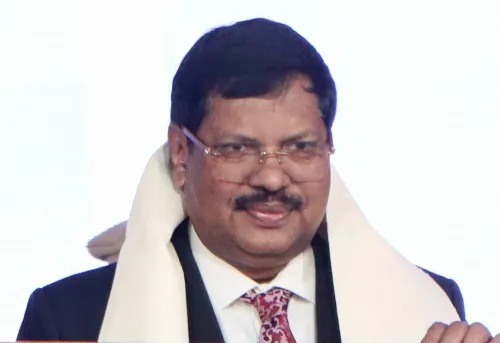
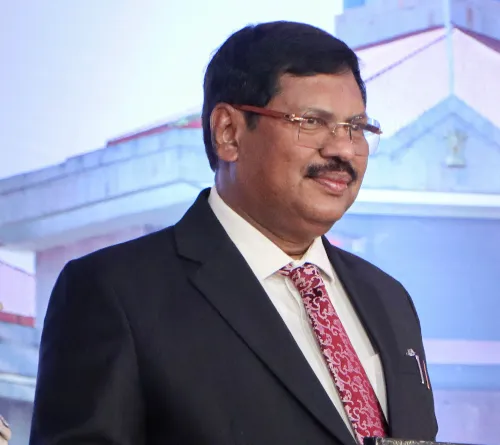
Former Chief Justice of India (CJI) B.R. Gavai has written to President Droupadi Murmu, alleging a lack of diversity and inclusivity in appointments to the higher judiciary and claiming that candidates from one particular community are being favoured over other sections of society. The letter, reported from New Delhi on 27 November 2026, was also marked to Prime Minister Narendra Modi and Union Minister of State for Law and Justice Arjun Ram Meghwal.
Gavai urged the President to intervene, stating that recent appointments and transfers of judges were being carried out in disregard of the principles of merit, diversity and inclusion.
Key Allegations in the Letter
Citing figures in his letter, the former CJI said the share of forward communities in judicial appointments made between January 2021 and January 2026 was close to 80 per cent, while representation of Other Backward Classes (OBCs) remained below 14 per cent.
He also flagged what he described as disproportionate representation in the Supreme Court, claiming that a community making up less than five per cent of the country's population now holds over 40 per cent representation in the apex court, with its presence having increased manifold in recent years. The letter does not name the community, according to the reported contents.
“However, in the recent past, disturbing events have unfolded, showing complete disregard to principles of merit and inclusivity. Candidates belonging to one particular section of the society are being favoured for recommendation/elevation to the exclusion of everyone else,” Gavai wrote.
Gavai Recalls His Collegium Tenure
Recalling his time as a member and later head of the Supreme Court Collegium, Gavai said he had ensured adequate representation of Scheduled Castes, Scheduled Tribes, OBCs, minorities, women and forward communities while considering recommendations for elevation to the High Courts and the Supreme Court.
Notably, he clarified that he was not opposed to the elevation of candidates from forward communities. His endeavour, he said, had always been to maintain a balance in representation across different sections of society.
Government's Own Acknowledgement
Gavai pointed to the Law Ministry's submission to a parliamentary committee, which acknowledged “inequitable representation of backward and minority communities” in the higher judiciary. This comes amid long-running debate over how the collegium system selects judges for constitutional courts.
He further argued that the executive is an equal stakeholder in the appointment and transfer of judges. According to the letter, Parliament and the executive have on several occasions urged the Supreme Court and High Court Collegiums to consider candidates from marginalised sections to correct the imbalance.
Appeal to the President
Describing equal representation as a shared constitutional duty, Gavai called on all stakeholders to ensure diversity and inclusivity are reflected in judicial appointments.
“I earnestly request you to acknowledge the issue at hand and intervene in the matter as you may deem appropriate to ensure all are reminded of the constitutional duty of equal representation in one of the most significant pillars of Indian democracy,” he wrote.
There has been no reported response yet from Rashtrapati Bhavan, the Prime Minister's Office or the Law Ministry. How the government and the current Collegium respond is likely to shape the next phase of the debate over transparency and representation in India's higher judiciary.
Point of View
And that alone signals how serious Gavai considers the imbalance. Yet the letter carries an uncomfortable contradiction: the Collegium he praises for balance is the same opaque, self-selecting mechanism now accused of skewing appointments, which suggests the problem is structural rather than personal. By inviting the executive in as an 'equal stakeholder', Gavai also reopens the fault line that the NJAC verdict tried to close. Without published, community-wise appointment data and clear selection criteria, neither the Collegium's defenders nor its critics can settle this on evidence.
NationPress
27 Nov 2026
Frequently Asked Questions
What did former CJI B.R. Gavai write to President Murmu?
Gavai alleged a lack of diversity and inclusivity in appointments to the higher judiciary, claiming candidates from one particular community were being favoured. He urged the President to intervene and remind stakeholders of the constitutional duty of equal representation.
What figures did Gavai cite on judicial appointments?
According to his letter, forward communities accounted for close to 80 per cent of appointments made between January 2021 and January 2026, while OBC representation stayed below 14 per cent. He also claimed a community forming under five per cent of the population holds over 40 per cent of Supreme Court representation.
Who else received Gavai's letter?
The letter was marked to Prime Minister Narendra Modi and Union Minister of State for Law and Justice Arjun Ram Meghwal, in addition to President Droupadi Murmu.
Is Gavai opposed to judges from forward communities?
No, Gavai clarified he is not opposed to the elevation of candidates from forward communities. He said his aim during his Collegium tenure was to maintain balanced representation across SCs, STs, OBCs, minorities, women and forward communities.
Has the government acknowledged unequal representation in the judiciary?
Yes, Gavai cited the Law Ministry's submission to a parliamentary committee that acknowledged inequitable representation of backward and minority communities in the higher judiciary. He added that Parliament and the executive have repeatedly urged Collegiums to consider candidates from marginalised sections.