E20 fuel facts: Debunking water, engine, and safety myths in India's ethanol programme
Synopsis
From the claim that making one litre of ethanol guzzles 10,000 litres of water to fears that E20 voids car warranties, India's ethanol blending push has generated a parallel wave of misinformation. Scientific trials, official clarifications, and global precedents — from Brazil's E27 mandate to the US E10 standard — systematically dismantle the most viral assertions, even as the programme logs ₹1.90 lakh crore in foreign exchange savings since 2014.
Key Takeaways
The claim that 10,000 litres of water are needed per litre of ethanol is disputed; modern distilleries reportedly use 3–5 litres with Zero Liquid Discharge recycling.
ARAI field trials covering 40,000 km (cars) and 20,000 km (two-wheelers) found no significant adverse impact on vehicle performance from E20 fuel.
Carbon monoxide emissions fell by ~ 50% in two-wheelers and ~ 30% in four-wheelers in E20 trials; unburnt hydrocarbons dropped ~ 20% .
Insurance validity and manufacturer warranties are not affected by E20 use, per SIAM and the PIB Fact Check unit.
The EBP Programme has saved over ₹1.90 lakh crore in foreign exchange and paid more than ₹1.60 lakh crore to farmers since 2014-15 .
Brazil mandates E27 and is moving toward 35% blending; the US uses E10 as standard petrol — placing India's E20 target within established global norms.
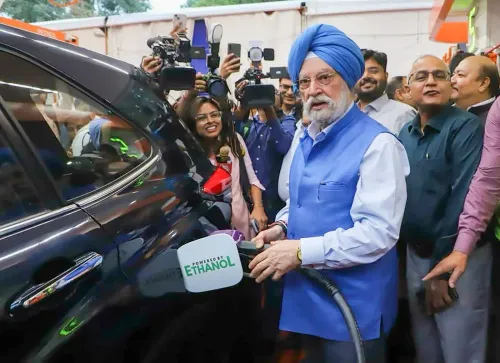
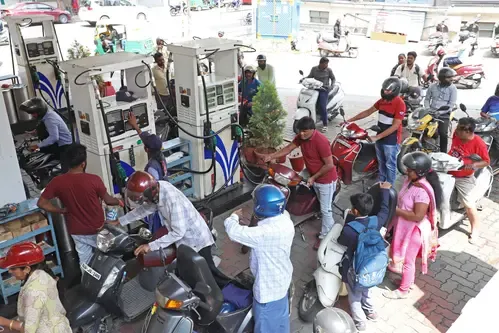
As India accelerates its Ethanol Blended Petrol (EBP) Programme, a wave of claims about E20 fuel has spread across social media platforms, targeting concerns ranging from water consumption and food security to engine damage and insect attraction. A review of scientific studies, technical assessments, and official clarifications indicates that many of these claims are either misleading or factually incorrect.
The Water Consumption Claim
One of the most widely circulated assertions holds that producing one litre of ethanol requires 10,000 litres of water. According to technical assessments, this figure incorrectly attributes the entire agricultural water footprint of crops such as paddy to the ethanol production process itself.
Paddy and wheat are primarily cultivated under the Minimum Support Price (MSP) system and procured by the Food Corporation of India (FCI) for national food security — not specifically for ethanol. The actual industrial water consumed inside modern ethanol distilleries is reportedly around 3–5 litres per litre of ethanol, with Zero Liquid Discharge (ZLD) technology enabling extensive recycling of process water.
Is E20 an Untested Experiment?
A recurring criticism has labelled E20 an untested experiment. Government agencies reject this characterisation outright, noting that ethanol has served as a transport fuel for well over a century. Henry Ford's 1908 Model T was engineered to run on ethanol, gasoline, kerosene, or combinations thereof.
Today, ethanol-blended fuels are standard in several major economies. The United States has adopted E10 as its baseline petrol, with E15 expanding under federal support and millions of flex-fuel vehicles capable of running on blends up to E85. Brazil currently mandates E27 and has decided to raise blending to approximately 35 per cent, with more than 80 per cent of new passenger vehicles sold there being flex-fuel models. Canada, Thailand, Japan, and several European nations also use ethanol blends. Officials describe India's E20 rollout as consistent with established global practice.
Vehicle Performance and Engine Safety
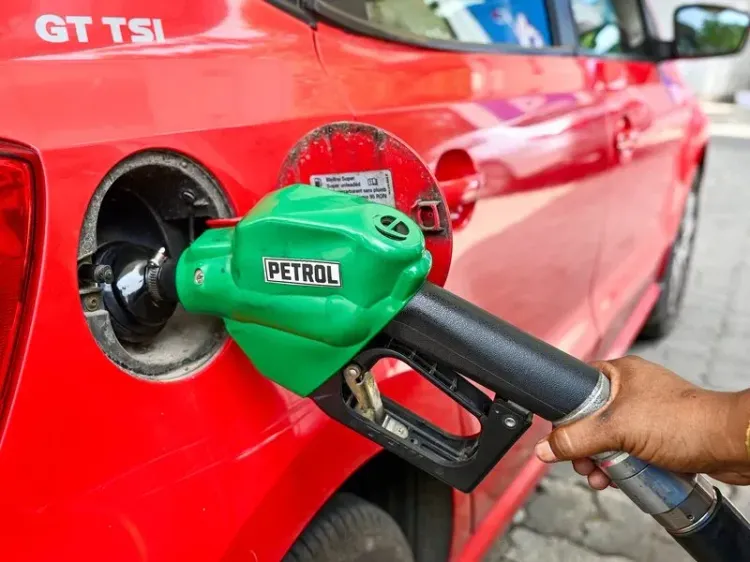
Concerns about mileage loss and engine damage have also been addressed through field trials. Studies conducted by the Automotive Research Association of India (ARAI), in collaboration with Indian Oil Corporation Limited (IOCL), the Indian Institute of Petroleum (IIP), Dehradun, and the Society of Indian Automobile Manufacturers (SIAM), covered 40,000 kilometres for passenger cars and 20,000 kilometres for two-wheelers. The trials reportedly found no significant adverse impact on vehicle performance, drivability, cold starting, or compatibility with metallic and plastic components.
The same trials recorded measurable environmental benefits: carbon monoxide emissions fell by around 50 per cent in two-wheelers and approximately 30 per cent in four-wheelers, while unburnt hydrocarbon emissions declined by about 20 per cent compared with conventional petrol.
Insurance, Warranty, and Other Viral Claims
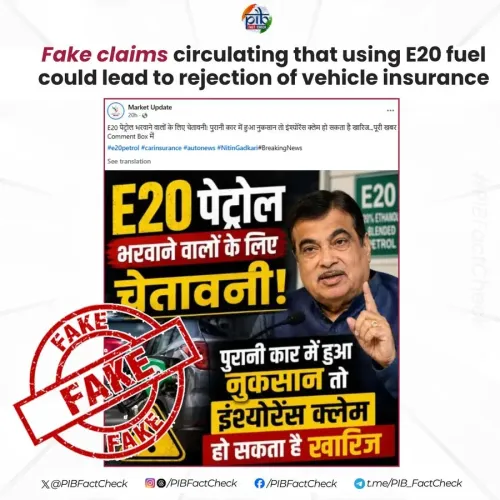
Claims that using E20 fuel voids insurance cover or manufacturer warranties have been rejected by both insurers and automakers. According to official clarifications, insurance policies and vehicle warranties remain valid for vehicles using E20 fuel, provided the fuel meets prescribed specifications. SIAM has confirmed that warranty obligations continue to apply. The Press Information Bureau's Fact Check unit has also described such claims as incorrect.
Viral social media posts alleging that ants and bees are drawn to vehicle fuel caps because ethanol contains sugar were dismissed by Bharat Petroleum Corporation Limited (BPCL). The company explained that fuel-grade ethanol undergoes fermentation and distillation that removes residual sugars before blending, and that ethanol-blended petrol contains denaturants that repel insects. The characteristic hydrocarbon odour of petrol dominates after blending, and the blend reportedly produces lower fuel vapour than conventional petrol, leaving no identifiable attractant for insects.
Separately, the Office of the Attorney General for India clarified that a case before the Supreme Court cited in media reports related solely to contractual provisions governing ethanol procurement from Dedicated Ethanol Plants by Oil Marketing Companies — specifically the annual allocation methodology and the interpretation of the 'best endeavour' clause. The Attorney General's Office stated that no submission described the E20 programme as an experiment, and urged media organisations to report judicial proceedings accurately.
The Ministry of Petroleum and Natural Gas has also dismissed viral videos purporting to show sugarcane juice being mixed with petrol, or ethanol-blended fuel separating into distinct layers, as fabricated and misleading. On concerns about water ingress into fuel tanks, the Ministry noted that such contamination is undesirable regardless of fuel type, and that modern vehicles carry built-in safeguards against it.
Programme Outcomes Since 2014
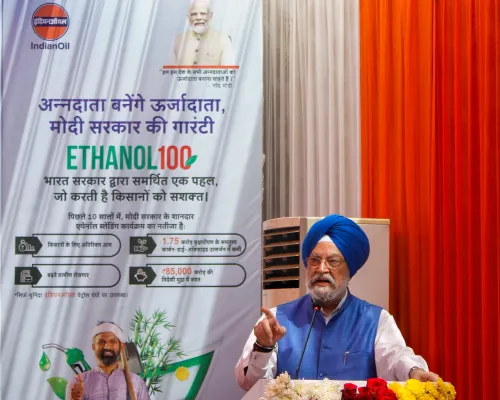
The government has highlighted the cumulative impact of the EBP Programme from Ethanol Supply Year 2014-15 through May 2026. According to official figures, the programme has generated foreign exchange savings exceeding ₹1.90 lakh crore, facilitated payments of more than ₹1.60 lakh crore to farmers, reduced carbon dioxide emissions by around 930 lakh metric tonnes, and substituted over 310 lakh metric tonnes of crude oil imports. As the programme scales toward full E20 adoption, independent verification of these outcomes will be critical to sustaining public trust.
Point of View
But the communication strategy has been reactive rather than proactive, allowing false narratives to entrench before corrections arrived. The more substantive question mainstream coverage is missing: the programme's own official figures — ₹1.90 lakh crore in forex savings, 930 lakh metric tonnes of CO2 reduced — have not been independently audited, and India's track record on self-reported scheme outcomes warrants scrutiny. Winning the fact-check battle on water use and insect attraction is necessary but not sufficient; the government still needs a credible third-party verification framework to make its headline numbers stick.
NationPress
3 Jul 2026
Frequently Asked Questions
Does producing E20 ethanol really consume 10,000 litres of water per litre?
No. Technical assessments indicate that modern ethanol distilleries consume approximately 3–5 litres of water per litre of ethanol produced, with Zero Liquid Discharge technology enabling extensive recycling. The 10,000-litre figure incorrectly attributes the entire agricultural water footprint of crops like paddy — grown primarily under the MSP system for food security — to ethanol production alone.
Will using E20 fuel damage my vehicle's engine?
According to field trials by ARAI, IOCL, IIP-Dehradun, and SIAM covering 40,000 km for cars and 20,000 km for two-wheelers, E20 fuel showed no significant adverse impact on drivability, cold starting, or compatibility with metallic and plastic engine components. The studies also recorded reductions in carbon monoxide and unburnt hydrocarbon emissions compared with conventional petrol.
Does E20 fuel void vehicle warranties or insurance policies?
No. Both automobile manufacturers and insurance companies have clarified that using E20 fuel does not invalidate warranties or insurance policies, provided the fuel meets prescribed specifications. SIAM has confirmed warranty obligations remain in force, and the PIB Fact Check unit has described contrary claims as incorrect.
Is India's E20 programme an untested experiment?
Officials reject this characterisation. Ethanol has been used as a transport fuel for over a century — Henry Ford's 1908 Model T ran on it. The US uses E10 as its standard petrol, Brazil mandates E27 and is moving toward 35% blending, and several other nations including Canada, Thailand, and Japan use ethanol blends. India's E20 target is consistent with established international practice.
What has the Ethanol Blended Petrol Programme achieved so far?
According to official figures covering Ethanol Supply Year 2014-15 through May 2026, the EBP Programme has generated foreign exchange savings exceeding ₹1.90 lakh crore, facilitated payments of more than ₹1.60 lakh crore to farmers, cut CO2 emissions by around 930 lakh metric tonnes, and substituted over 310 lakh metric tonnes of crude oil imports.