Maharashtra targets 100% daytime power for farmers by year-end: CM Fadnavis
Synopsis
Maharashtra CM Devendra Fadnavis has set a year-end deadline to deliver daytime electricity to every farmer in the state — a promise backed by ₹25,000 crore in grid upgrades, 10 lakh solar pumps already installed, and a ₹60,000 crore transmission investment pipeline. With 25% of farmers still on night-time supply, the clock is ticking on one of the state's most politically sensitive infrastructure commitments.
Key Takeaways
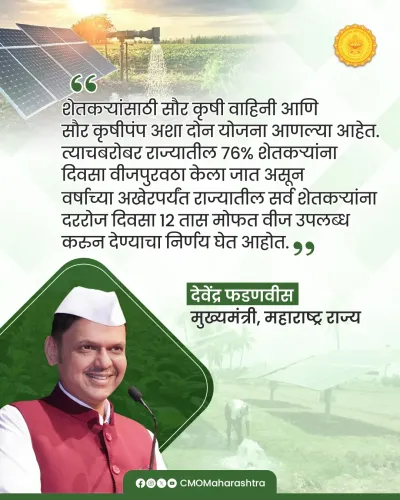
CM Devendra Fadnavis announced on 24 June that Maharashtra targets 100% daytime power supply for farmers by the end of 2025 .
75% of farmers already receive daytime electricity; the remaining 25% are to be brought on grid.
Over 10 lakh solar pumps installed across the state in the last three years under the Solar Agricultural Pump Scheme.
Infrastructure upgrades worth ₹25,000 crore are underway under the Centre's RDSS to modernise power distribution.
Maharashtra targets 78,000 MW power capacity by 2031–32 , backed by ₹60,000 crore in transmission investment over three years.
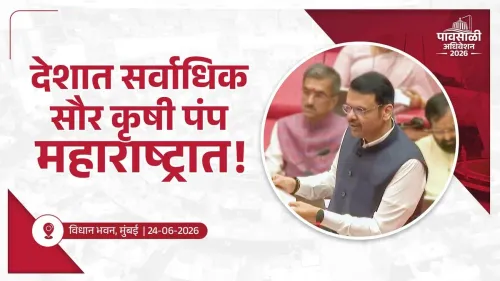
1 nationally in rooftop solar installations under PM-Surya Ghar Muft Bijli Yojana .
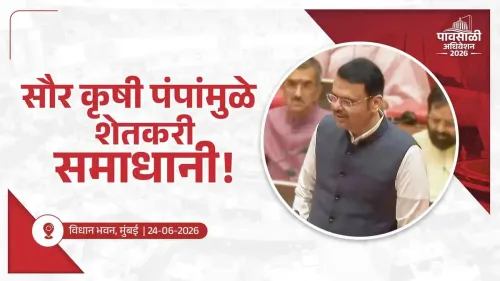
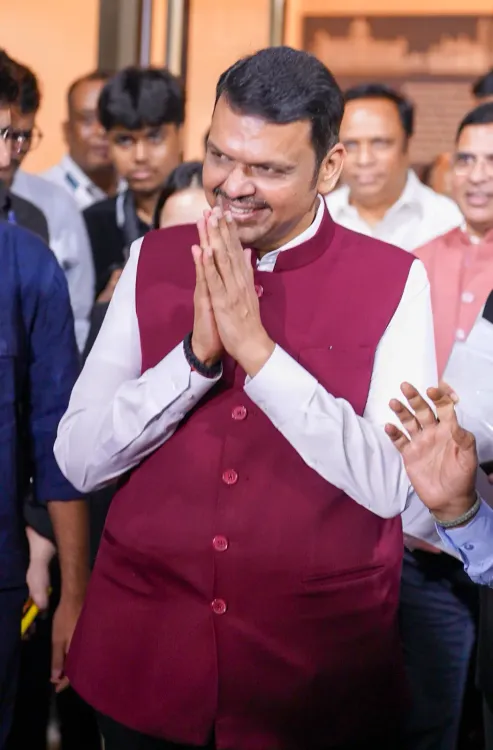
Maharashtra Chief Minister Devendra Fadnavis on Wednesday, 24 June told the state legislative council that the government is committed to delivering daytime electricity to all farmers in the state before the close of this year. The announcement came during Question Hour, in response to a query raised by legislator Sadabhau Khot, with follow-up questions from members Bachchu Kadu and Pravin Darekar.
Fadnavis confirmed that 75 per cent of Maharashtra's farmers already receive daytime power supply, and that plans are firmly in place to extend the same benefit to the remaining 25 per cent.
Current Power Supply Status
The Chief Minister reassured the House that Maharashtra is not facing any power shortage. Agriculture pumps across the state are currently provided with eight hours of daily electricity in line with state regulations.
Addressing concerns over brief load-shedding episodes in May, Fadnavis explained that simultaneous technical glitches at a few power plants had caused short-term disruptions. He clarified that no load shedding is presently occurring anywhere in the state.
Solar Agricultural Pump Scheme Progress
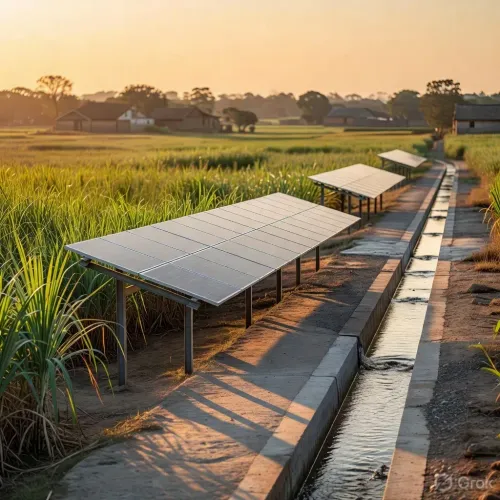
The Chief Minister highlighted the significant uptake of the Solar Agricultural Pump Scheme, noting that over 10 lakh solar pumps have been installed across Maharashtra in the last three years. The scheme has been adapted to accommodate diverse geographical terrains across the state.
Specialised pump models have been deployed accordingly: Monopole and Booster Pumps serve areas requiring water to be lifted from deep sources, riverbanks, and flood zones, while Floating Solar Pumps are operational across canals and open reservoirs. Farmers in 'dark zone' areas — where groundwater levels are critically depleted — are eligible for special subsidies covering higher-capacity models and booster pumps. Fadnavis added that solar pump users are entirely shielded from electricity billing complications.
Infrastructure Overhaul Under RDSS
To address systemic weaknesses in the state's power distribution network, infrastructure projects worth approximately ₹25,000 crore are underway under the Centre's Revamped Distribution Sector Scheme (RDSS). The work covers feeder separation, construction of new substations, installation of additional distribution transformers, and broader network modernisation.
Fadnavis expressed confidence that these upgrades will significantly reduce transformer failures over the next three years. This is a critical intervention — transformer burnouts have historically been among the leading causes of unplanned outages in rural Maharashtra.
Long-Term Capacity and Transmission Plans
Looking ahead, Maharashtra has charted a course to achieve a total power capacity of 78,000 MW by the fiscal year 2031–32. Transmission infrastructure work worth ₹16,000 crore has already commenced under the Tariff-Based Competitive Bidding (TBCB) framework to support this expanded capacity.
Over the next three years, the transmission sector is set to receive a cumulative investment of nearly ₹60,000 crore, according to the Chief Minister.
Mumbai Grid Security and Rooftop Solar
Fadnavis also provided an update on the Mumbai Islanding project, designed to insulate the state capital's power grid against regional collapses or emergencies. Major transmission corridors under the project have been completed, enabling an additional 3,000 MW of power to flow into Mumbai — ensuring the city's grid remains uninterrupted even during broader grid failures.
On the rooftop solar front, Fadnavis noted that Maharashtra has secured the top national rank in rooftop solar installations under the PM-Surya Ghar Muft Bijli Yojana. He urged residential housing complexes to adopt rooftop solar systems widely, citing the potential for substantial savings on shared monthly electricity bills. With ₹60,000 crore in transmission investment and a 78,000 MW capacity target on the horizon, Maharashtra's energy overhaul is one of the most ambitious state-level power programmes currently underway in India.
Point of View
And night-time pumping has long been a grievance among the farming community. But the 25% gap that remains is almost certainly the hardest to close: these are likely the most remote, infrastructure-poor areas where feeder separation and grid upgrades are most expensive. The ₹25,000 crore RDSS outlay is real money, but execution timelines for central-scheme infrastructure in Maharashtra have routinely slipped. The year-end deadline Fadnavis has set is ambitious — and will be a credibility test heading into the next electoral cycle.
NationPress
23 Sept 2026
Frequently Asked Questions
What did CM Devendra Fadnavis announce about farm electricity in Maharashtra?
CM Fadnavis announced on 24 June that the Maharashtra government aims to provide daytime electricity to all farmers in the state by the end of 2025. Currently, 75% of farmers already receive daytime power, and plans are in place to cover the remaining 25%.
How many solar pumps has Maharashtra installed for farmers?
Maharashtra has installed over 10 lakh solar pumps across the state under the Solar Agricultural Pump Scheme over the last three years. The scheme has been tailored to diverse terrains, including deep-water zones, riverbanks, canals, and reservoirs.
What is the RDSS and how does it affect Maharashtra's power network?
The Revamped Distribution Sector Scheme (RDSS) is a Central Government initiative under which Maharashtra is executing infrastructure upgrades worth approximately ₹25,000 crore. The work includes feeder separation, new substations, distribution transformer installation, and network modernisation aimed at reducing transformer failures.
What is Maharashtra's long-term power capacity target?
Maharashtra has set a target of achieving 78,000 MW of power capacity by the fiscal year 2031–32. To support this, ₹16,000 crore in transmission work has already begun under the TBCB framework, with a further ₹60,000 crore earmarked for the transmission sector over three years.
What is the Mumbai Islanding project?
The Mumbai Islanding project is a grid-security initiative designed to keep Mumbai's power supply uninterrupted during regional grid collapses or emergencies. Major transmission corridors under the project have been completed, enabling an additional 3,000 MW of power to be channelled into the city.