CM Fadnavis Unveils Agri Push at Krishi Samman 2026
Synopsis
Chief Minister Devendra Fadnavis and Governor Jishnu Dev Varma attended the Krishi Samman 2026 ceremony in Mumbai, where Fadnavis announced free 12-hour daytime power for all farmers by year-end, highlighted water conservation works in over 22,000 villages, and unveiled an ambitious flood-diversion project to drought-proof Maharashtra.
Key Takeaways
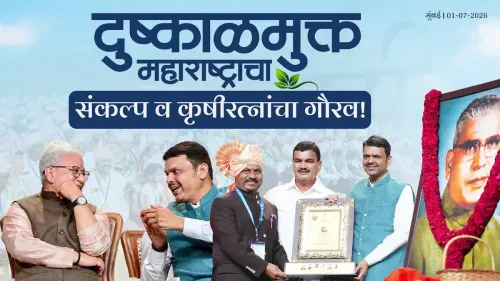
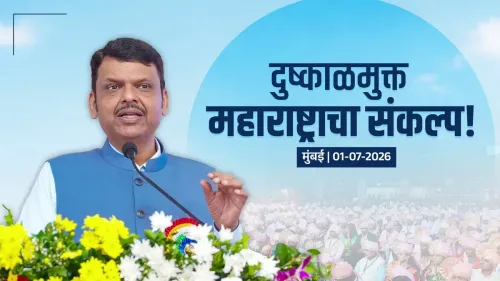
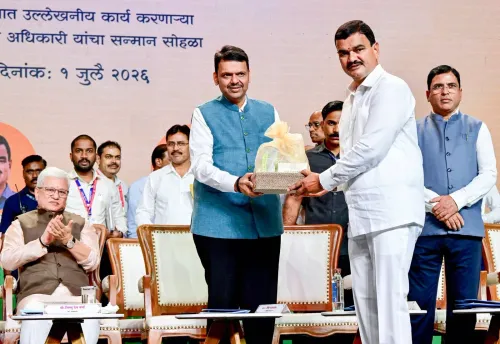
Governor Jishnu Dev Varma and CM Devendra Fadnavis attended the Krishi Samman va Puraskar Vitaran Samarambh 2026 in Mumbai on 1 July 2026 .
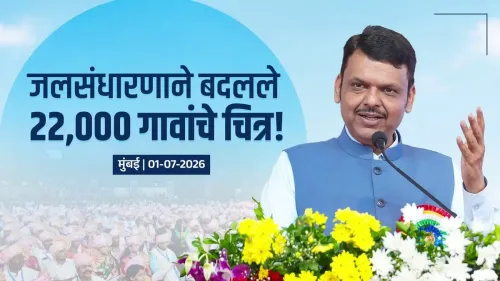
Water conservation works under Jalayukt Shivar Abhiyan and Magel Tyala Shet Tale have been carried out in more than 22,000 villages .
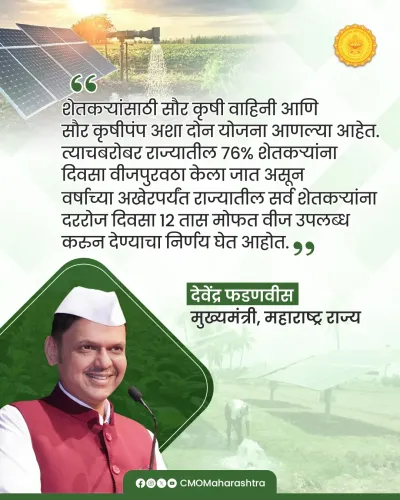
Maharashtra accounts for over 60% of all solar agricultural pumps installed across India; 75% of farmers currently receive daytime electricity.
The government targets 12 hours of free daytime power for all farmers by year-end, spending ₹28,000 crore annually on free farm electricity.
Agricultural mechanisation receives ₹1,500–₹2,000 crore annually with subsidies of 80%–100% on farm implements; online seed certification has been made mandatory.
A flood-diversion project is underway to route surplus water to drought-prone talukas and Marathwada via Ujani , with a goal of making Maharashtra drought-free.
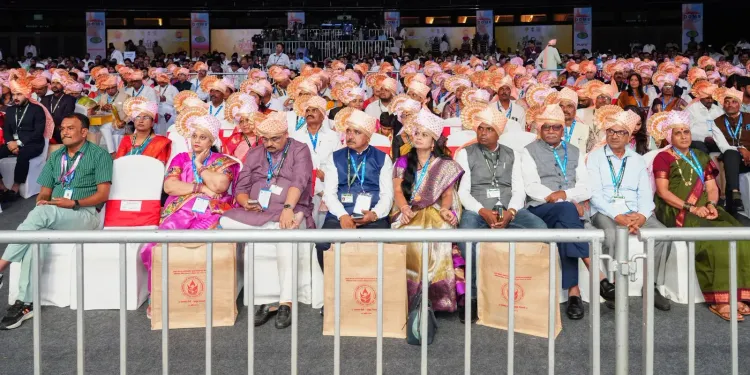
The Chief Minister's Office of Maharashtra announced on 1 July 2026 that Governor Jishnu Dev Varma and Chief Minister Devendra Fadnavis graced the 'Krishi Samman va Puraskar Vitaran Samarambh 2026' (Agriculture Honour and Award Distribution Ceremony 2026) held in Mumbai, felicitating farmers and officials who performed outstanding work in the agriculture sector during 2023 and 2024.
Context
The ceremony recognised exceptional contributions to farming across Maharashtra, with CM Fadnavis describing award-winning farmers as 'true ambassadors of the agriculture department.' He noted that their experimental and innovative farming practices — carried out even in adverse conditions — serve as inspiration for fellow farmers across the state.
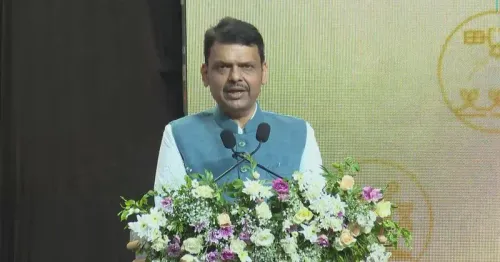
Addressing the gathering, Fadnavis said the honour is 'not merely a formal recognition but a celebration of our agricultural culture,' underlining the state government's commitment to modern farming and farmer empowerment.
Policy Backdrop
The Chief Minister outlined a multi-pronged strategy to make farming 'more capable, sustainable, and profitable.' Key interventions highlighted include water conservation, solar agricultural pumps, free daytime electricity, agricultural mechanisation, certified seeds, irrigation facilities, and financial support to farmers.
On water conservation, Fadnavis said the Jalayukt Shivar Abhiyan and the 'Magel Tyala Shet Tale' (farm pond on demand) scheme have enabled large-scale water storage works across more than 22,000 villages. These efforts have helped farmers in previously difficult regions shift from single-crop to two- and three-crop cultivation, and have enabled orchards to flourish where farming was once nearly impossible.
On energy, the Chief Minister stated that Maharashtra leads the country in installation of solar agricultural pumps, with the state accounting for more than 60% of all such pumps installed nationally. Currently, 75% of farmers in the state receive electricity during the day, and the government has set a target of providing all farmers 12 hours of free daytime power by the end of the current year. The state government, he added, spends ₹28,000 crore annually to supply free electricity to farmers.
For agricultural mechanisation, an annual allocation of ₹1,500 to ₹2,000 crore has been made, with subsidies of 80% to 100% on various farm implements. The government has also mandated online certification of all seeds to curb the sale of counterfeit seeds, ensuring only certified seeds remain available in the market.
Stakeholders and Impact
An ambitious flood-diversion project has been launched to channel surplus water from western Maharashtra to drought-prone talukas, and further through Ujani into Marathwada — a region historically vulnerable to severe water scarcity. Fadnavis stated that the long-term objective is to make Maharashtra drought-free, pledging that the next generation of the state will not face the hardship of drought.
The Chief Minister also reaffirmed the government's decision to implement a farm loan waiver as part of broader measures to provide financial relief to farmers, with the ultimate goal of increasing agricultural investment and making farmers economically self-reliant.
Deputy Chief Minister Sunetra Ajit Pawar, Minister Dattatray Bharane, Minister of State Adv. Ashish Jaiswal, and Minister of State Indranil Naik were among the dignitaries present at the event.
What's Next
The government's stated milestones to watch include achieving 12-hour free daytime electricity for all farmers before the end of the current year and advancing the flood-diversion canal project linking western Maharashtra with Marathwada. Award-winning farmers are expected to serve as grassroots ambassadors, disseminating modern farming techniques, new seed varieties, and successful agricultural experiments to villages across the state.
With Maharashtra positioning itself as a national leader in solar agricultural infrastructure and water conservation, the administration's ability to deliver on its year-end power target and complete long-gestation irrigation projects will be closely watched by farming communities and policymakers alike.
Point of View
A framing Fadnavis has consistently deployed across his tenures. The year-end deadline for universal 12-hour free power is an unusually specific public commitment, raising the political stakes considerably if the target slips. The flood-diversion project for Marathwada, if executed, could reshape the region's agricultural economy — but such long-gestation infrastructure projects in Maharashtra have historically faced implementation delays that test political credibility.
NationPress
30 Sept 2026
Frequently Asked Questions
What is the Krishi Samman 2026 ceremony in Maharashtra?
The Krishi Samman va Puraskar Vitaran Samarambh 2026 is an award ceremony organised by the Maharashtra government in Mumbai to honour farmers and officials who made outstanding contributions to the agriculture sector during 2023 and 2024.
What did CM Fadnavis announce for Maharashtra farmers at Krishi Samman 2026?
CM Devendra Fadnavis announced a target of providing all Maharashtra farmers 12 hours of free daytime electricity by the end of the current year, highlighted water conservation works in over 22,000 villages, and revealed a flood-diversion project to bring water to drought-prone Marathwada.
How many villages have benefited from Jalayukt Shivar Abhiyan in Maharashtra?
According to CM Fadnavis, water conservation works under the Jalayukt Shivar Abhiyan and the Magel Tyala Shet Tale scheme have been completed in more than 22,000 villages across Maharashtra.
What is Maharashtra's share of solar agricultural pumps in India?
CM Fadnavis stated that Maharashtra accounts for more than 60% of all solar agricultural pumps installed across the country, making it the national leader in this category.
What is the flood-diversion project announced for Marathwada?
An ambitious flood-diversion project has been launched to channel surplus water from western Maharashtra to drought-prone talukas, and further through the Ujani reservoir into Marathwada, with the long-term goal of making Maharashtra drought-free.