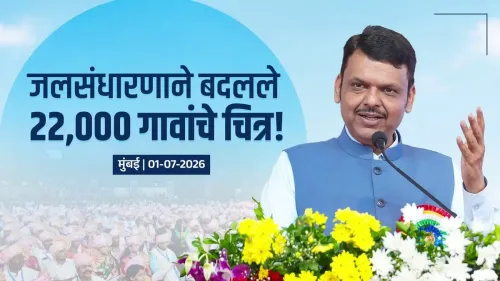
CM Fadnavis Honours Top Farmers at Krishi Sanman 2026
Synopsis
Maharashtra CM Devendra Fadnavis attended the Krishi Sanman 2026 ceremony in Mumbai with Governor Jishnu Dev Varma, honouring two farmers with the Dr. Panjabrao Deshmukh Krishi Ratna Puraskar and announcing seed certification rules, solar pump expansion, loan waivers, and a Ujani Dam drought diversion project.
Key Takeaways
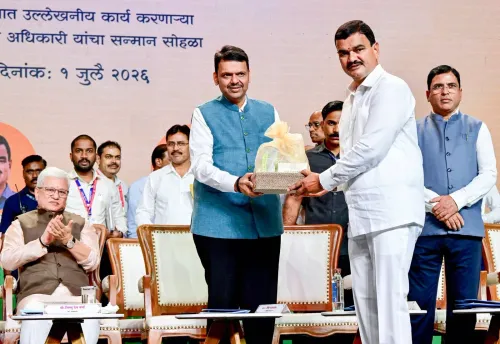
Sanjay Patil (Kolhapur) and Yagnesh Vasant Save (Palghar) received the Dr.
Panjabrao Deshmukh Krishi Ratna Puraskar for 2023 and 2024 respectively at the ceremony on 1 July 2026 .
The state has made online seed certification mandatory to prevent substandard seeds from reaching farmers.
A Ujani Dam floodwater diversion project will channel surplus water to drought-prone Western Maharashtra and Marathwada .
The government is providing free daytime electricity and expanding solar agricultural pumps to reduce input costs for farmers.
Loan waivers are being deployed alongside structural reforms to deliver immediate relief to indebted farm families.
Governor Jishnu Dev Varma , DCM Sunetra Pawar , and senior ministers attended the Mumbai event.
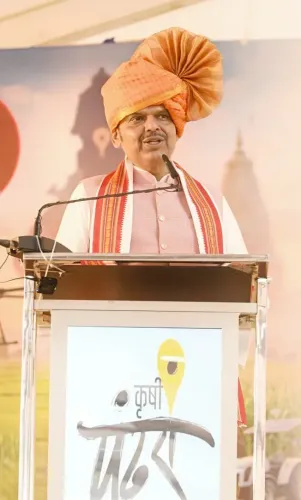
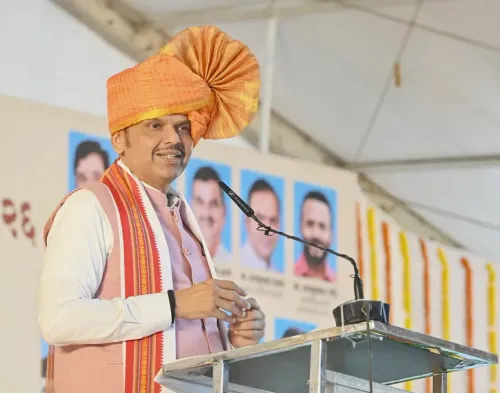
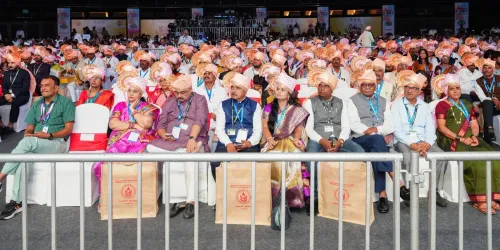
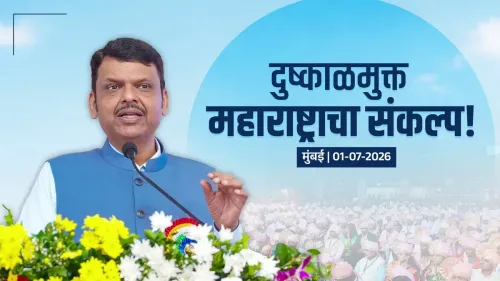
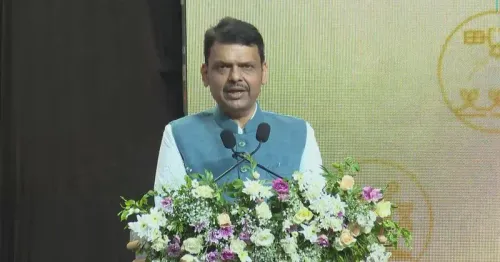
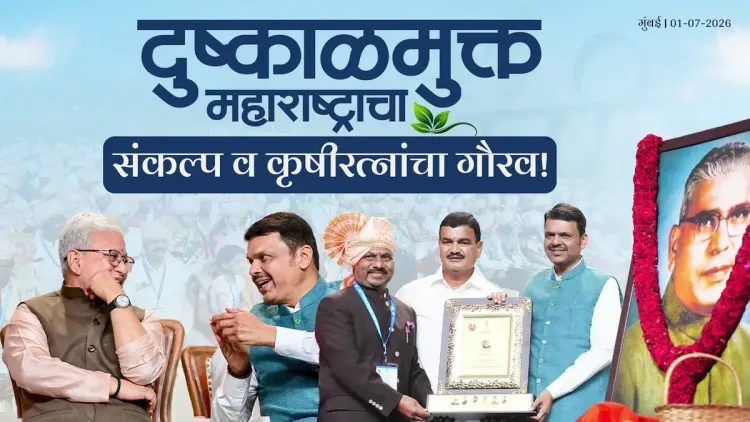
Maharashtra Chief Minister Devendra Fadnavis attended the Krishi Sanman and Awards Distribution Ceremony 2026 in Mumbai on Wednesday, 1 July 2026, alongside Governor Jishnu Dev Varma, honouring outstanding farmers and reaffirming the state government's commitment to a multi-pronged agricultural welfare agenda.
Context
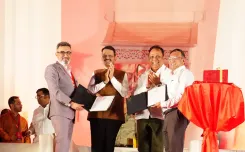
The ceremony recognised two farmers with the prestigious Dr. Panjabrao Deshmukh Krishi Ratna Puraskar — Maharashtra's highest agricultural honour, named after the late Union Agriculture Minister and agrarian reformer Dr. Panjabrao Deshmukh. Dr. Sanjay Patil from Kolhapur received the award for 2023, while Yagnesh Vasant Save from Palghar was conferred the honour for 2024, both recognised for 'outstanding contributions to agriculture.' Deputy Chief Minister Sunetra Pawar, Minister Dattatray Bharane, MoS Adv. Ashish Jaiswal, and MoS Indranil Naik were also present at the event.
Policy Backdrop
Fadnavis outlined a package of ongoing interventions covering both immediate relief and structural reform. On the regulatory front, the state has made online seed certification mandatory, ensuring that only certified seeds are sold — a move aimed at shielding farmers from substandard inputs that can devastate harvests. The government is also expanding access to free daytime electricity and solar agricultural pumps, continuing a push for renewable-powered farming that has been phased in since the earlier Fadnavis-led administration.
On water security, the Chief Minister highlighted a major drought mitigation project that will divert surplus floodwater through the Ujani Dam directly to the drought-prone regions of Western Maharashtra and Marathwada — two zones that have faced chronic water scarcity for decades. This infrastructure-led approach echoes earlier state initiatives such as the Jalyukta Shivar Abhiyan (Water Conservation Mission), which sought to revive water bodies in distressed districts from 2015 onwards.
Stakeholders and Impact
The dual track of long-term infrastructure and short-term relief is central to the state's farm welfare calculus. Loan waivers, which Fadnavis described as providing 'immediate financial relief to families in distress,' sit alongside the structural reforms; Maharashtra has periodically deployed such waivers, including a major programme in 2017, to address acute farmer indebtedness. The seed certification mandate has direct relevance for the upcoming Kharif sowing season, when farmers make critical input purchases.
Farmers in Marathwada and Western Maharashtra stand to benefit most from the Ujani Dam diversion scheme, as both regions have historically borne the brunt of erratic monsoons and inadequate irrigation coverage. The solar pump and free-power initiatives are expected to reduce input costs for smallholders across the state.
What's Next
The key tests for these commitments will be the pace of civil works on the Ujani Dam diversion canal and the enforcement reach of the online seed certification system in rural districts ahead of the Kharif season. Fadnavis called on his Agriculture Department team to 'keep moving forward with renewed energy and determination to build a more modern, resilient, and truly prosperous future for Maharashtra's farmers.' Progress on both fronts will be closely watched as the state enters the critical agricultural half of the year.
Point of View
The administration is signalling both responsiveness and long-range planning. The Ujani Dam diversion project, if executed, would represent one of the more consequential drought-mitigation moves in recent Maharashtra history, addressing a structural deficit that has fuelled agrarian distress in Marathwada for generations. The bundling of loan waivers with regulatory and infrastructure reform suggests the government is aware that relief alone, without systemic change, risks becoming a recurring political cost rather than a lasting solution.
NationPress
30 Sept 2026
Frequently Asked Questions
Who won the Dr. Panjabrao Deshmukh Krishi Ratna Puraskar in 2023 and 2024?
Dr. Sanjay Patil from Kolhapur received the award for 2023 and Yagnesh Vasant Save from Palghar was conferred the award for 2024 , both honoured at the Krishi Sanman ceremony in Mumbai on 1 July 2026 .
What is the Ujani Dam drought mitigation project in Maharashtra?
The Ujani Dam project aims to divert surplus floodwater from the dam to the drought-prone regions of Western Maharashtra and Marathwada , providing a long-term structural solution to recurring water scarcity in these areas.
What is the Dr. Panjabrao Deshmukh Krishi Ratna Puraskar?
It is Maharashtra's highest agricultural honour , named after former Union Agriculture Minister Dr. Panjabrao Deshmukh , awarded to farmers who make outstanding contributions to agriculture in the state.
What steps has Maharashtra taken to protect farmers from low quality seeds?
The Maharashtra government has made online seed certification mandatory , ensuring that only certified seeds are permitted to be sold in the state, shielding farmers from substandard inputs.
What farm welfare schemes did CM Fadnavis announce at Krishi Sanman 2026?
CM Fadnavis highlighted free daytime electricity , solar agricultural pumps , online seed certification , the Ujani Dam floodwater diversion project, and ongoing loan waivers for farmers in financial distress.