CM Fadnavis Orders High-Level Panel to Oversee Maharashtra Tenders
Synopsis
Chief Minister Devendra Fadnavis has ordered a high-level committee to monitor Maharashtra's government tender and procurement processes, deepening the state's decade-long push for procurement transparency beyond its existing digital infrastructure.
Key Takeaways
CM Devendra Fadnavis directed the formation of a high-level oversight committee for government tenders and procurement on 16 July 2026 .
The directive was announced by the Chief Minister's Office of Maharashtra via an official post on X.
Maharashtra mandated e-tendering for contracts above a threshold in 2015 and launched a centralised procurement portal in 2016-17 .
The new committee adds a supervisory layer to the existing digital framework rather than replacing it.
Key details — committee composition, terms of reference, and reporting timelines — are pending a formal gazette notification.
Primary stakeholders include state contractors and procurement officials across all government departments and public sector undertakings.
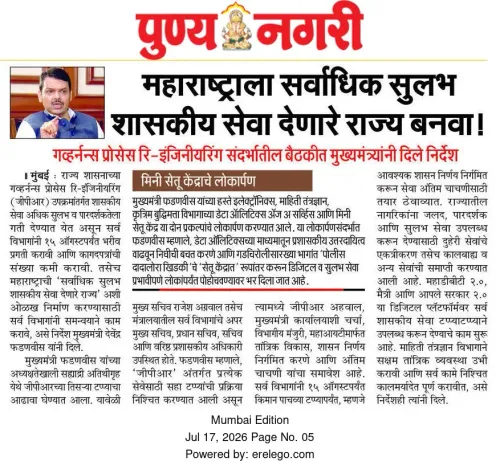
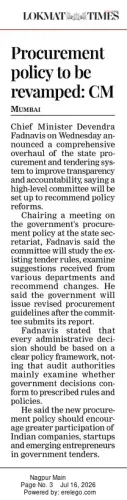
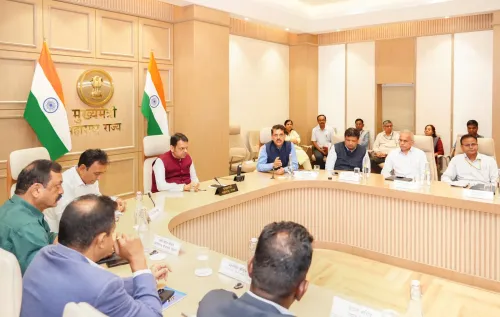
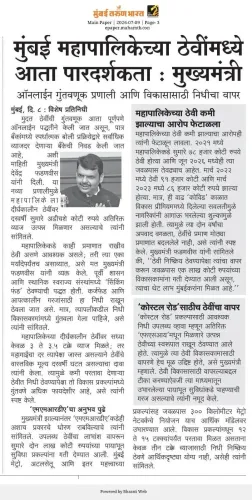
The Chief Minister's Office of Maharashtra announced on Thursday, 16 July 2026 that Chief Minister Devendra Fadnavis has directed the formation of a high-level oversight committee to monitor the state's government tender and procurement processes, signalling a fresh push for accountability in public spending.
Context
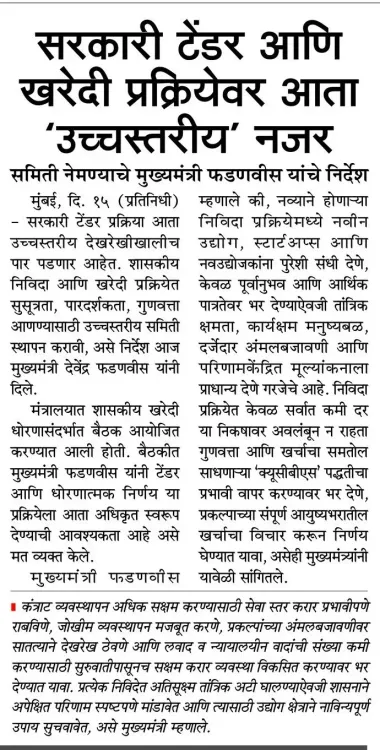
The CMO's post, shared in Marathi, states: 'सरकारी टेंडर आणि खरेदी प्रक्रियेवर आता उच्चस्तरीय नजर' — roughly translated as 'a high-level watch on government tenders and the procurement process, now.' CM Fadnavis has directed that a dedicated committee be constituted specifically to scrutinise how state departments and public sector undertakings award and execute contracts.
The directive comes amid a broader national conversation on procurement integrity, and places Maharashtra at the forefront of states actively layering institutional oversight on top of existing digital tendering infrastructure.
Policy Backdrop
Maharashtra has been an early mover in procurement reform. In 2015, the state mandated e-tendering for all government contracts above a specified threshold value, aiming to reduce discretionary awards and cartelisation. A centralised procurement portal, modelled on national Government e-Marketplace guidelines, followed in 2016-17.
The latest directive does not dismantle that digital framework but adds a supervisory layer — a 'high-level' committee — to watch over the process in real time. This approach mirrors a broader Indian governance trend in which states have progressively stacked oversight mechanisms onto digitised systems to close residual loopholes.
CM Fadnavis, who first served as Chief Minister from 2014 to 2019, has consistently positioned administrative reform and digital governance as signature priorities across both tenures.
Stakeholders and Impact
The committee's formation is expected to directly affect state contractors and procurement officials across all departments, who will now operate under heightened institutional scrutiny. Vendors participating in government tenders may face more rigorous process checks at multiple stages of the award cycle.
For the state exchequer, proponents of such oversight panels argue that tighter monitoring reduces inflated quotations and post-award variations, ultimately delivering better value on public contracts. Civil society groups tracking public finance in Maharashtra are likely to watch the committee's composition and mandate closely.
What's Next
The critical details — the committee's membership, its terms of reference, reporting timelines, and the categories of procurement it will cover — are expected to be formalised through an official gazette notification. Until that notification is issued, the precise scope of the panel's authority remains to be confirmed.
Observers will track whether the committee is granted independent audit powers or functions as an advisory body, a distinction that will determine how much practical weight its findings carry. The directive sets the political intent; the gazette order will define the institutional teeth.
Point of View
Using institutional layering rather than structural overhaul to address procurement vulnerabilities. Adding a high-level committee atop an already-digitised system is a politically low-risk move that signals intent without committing to specifics — a pattern common in pre-notification governance announcements. The real test will come with the gazette order: whether the panel has independent audit authority or merely advisory status will determine whether this is a meaningful accountability upgrade or an optics exercise. Either way, it raises the political stakes for procurement irregularities in the state during Fadnavis's current tenure.
NationPress
15 Oct 2026
Frequently Asked Questions
What did CM Devendra Fadnavis announce about Maharashtra government tenders?
CM Fadnavis directed the formation of a high-level committee to monitor and oversee the state's government tender and procurement processes, as announced by the Chief Minister's Office on 16 July 2026.
What is the purpose of the high-level procurement oversight committee in Maharashtra?
The committee is intended to add a supervisory layer over Maharashtra's existing digital tendering system to improve transparency, reduce discretionary awards, and ensure accountability in public procurement.
Has Maharashtra done procurement reforms before?
Yes. Maharashtra mandated e-tendering for government contracts above a threshold in 2015 and launched a centralised procurement portal in 2016-17, making it one of India's early adopters of digital procurement reform.
Who will be affected by the new procurement oversight committee in Maharashtra?
State contractors and procurement officials across all government departments and public sector undertakings in Maharashtra are the primary stakeholders affected by the new oversight directive.
When will the details of the Maharashtra procurement committee be known?
The committee's composition, terms of reference, and reporting timelines are expected to be confirmed through an official gazette notification, which had not been issued as of the announcement on 16 July 2026.