Fadnavis orders job-first industrial policies and MSME survey for Maharashtra
Synopsis
Maharashtra CM Devendra Fadnavis has ordered a sweeping overhaul of the state's industrial policy architecture — mandating a full MSME survey, making the MAITRI Portal compulsory for all clearances, and pushing AI-driven investor grievance tracking. With over a dozen new sectoral policies in the pipeline, this is one of the most ambitious simultaneous policy drafting exercises the state Industry Department has undertaken.
Key Takeaways
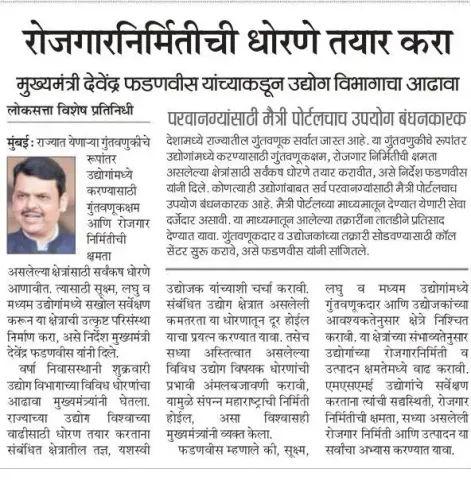
CM Devendra Fadnavis on 17 July directed Maharashtra's Industry Department to draft job-focused, investment-friendly industrial policies.
A comprehensive statewide MSME survey has been ordered to map operational status, employment, output, and future capacity.
The MAITRI Portal has been made strictly mandatory for all industrial clearances to eliminate red tape.
A dedicated investor call centre with AI-based call analysis is to be set up to identify and fix administrative bottlenecks.
Policies already finalised include the GCC Policy 2025 , AVGC-XR Policy 2025 , and Bio-Plastic Policy 2026 ; new proposals span defence, semiconductors, pharma, and biofuels.
MIDC has been asked to adopt a feasibility-based methodology for industrial land allocation to prevent underutilisation.
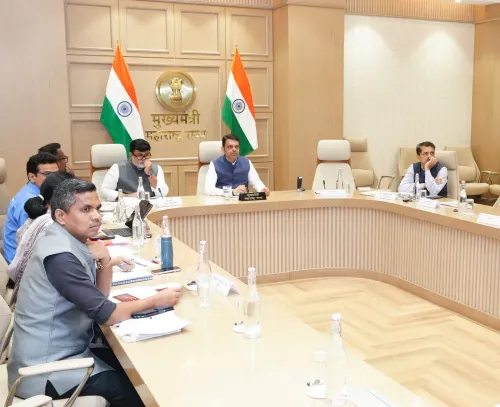
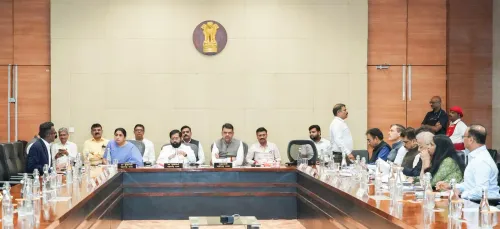
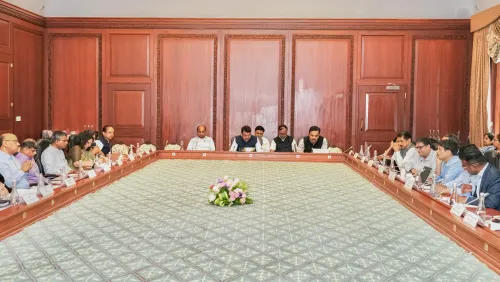
Maharashtra Chief Minister Devendra Fadnavis on Friday, 17 July directed the state Industry Department to formulate comprehensive, investment-friendly policies with a sharp focus on high-employment-generating sectors, aiming to convert incoming investment commitments into operational industries on the ground. The directive was issued at a high-level review meeting held at his official residence, Varsha, in Mumbai.
Key Directives from the Review Meeting
Fadnavis instructed officials to identify high-potential sectors and map specific Micro, Small, and Medium Enterprises (MSME) segments based on the actual requirements of modern investors and entrepreneurs. A comprehensive statewide survey of MSMEs was also ordered, covering current operational status, existing employment levels, production output, and future capacity.
The Chief Minister called for expanding production capacities and employment potential within identified sectors, and for introducing advanced technologies to modernise small-scale industries. Industry Minister Uday Samant was present at the meeting.
Ease of Doing Business and Red Tape Reduction
To eliminate administrative bottlenecks, Fadnavis made the use of the MAITRI Portal strictly mandatory for all industrial clearances. He stressed that services on the portal must maintain premium standards and include a rapid-response mechanism for investor grievances.
He also directed the Industry Department to establish a dedicated investor call centre, with all calls to be recorded and analysed using Artificial Intelligence (AI) to identify recurring administrative roadblocks and enable swift policy corrections. The Chief Minister emphasised that policy execution must remain collaborative and supportive of businesses at every level.
Sector-Specific Policy Focus Areas
Fadnavis highlighted several areas requiring immediate policy attention. He instructed officials to simplify Ease of Doing Business norms to facilitate the construction of mega-convention centres across Maharashtra's major cities. For chemical parks, he directed the integration of dedicated, state-of-the-art facilities within the upcoming Chemical Policy to streamline operations and generate jobs. A comprehensive policy to promote sustainable development and circular economic models was also sought.
On land allocation, the Chief Minister directed the Maharashtra Industrial Development Corporation (MIDC) to adopt a feasibility-based methodology when allotting industrial land, to prevent underutilisation of available plots.
Policies Reviewed and Proposed
The meeting reviewed several recently finalised policies, including the Industrial Investment and Services Policy 2025, Global Capability Centre (GCC) Policy 2025, AVGC-XR Policy 2025, Gems and Jewellery Policy 2025, Bamboo Industry Policy 2025, and the Bio-Plastic Policy 2026.
The Industry Department also proposed a fresh set of policies spanning leather, non-leather, footwear, apparel and accessories, garments, media and entertainment, pharmaceuticals and biotechnology, defence, nuclear and aerospace, electronics and semiconductors, MSMEs, chemicals, and biofuels. Together, these represent one of the broadest simultaneous policy drafting exercises the department has undertaken in recent years.
What Comes Next
Maharashtra continues to lead the country in attracting both foreign and domestic investment, according to official figures. Fadnavis underscored that efficient execution of existing industrial policies, alongside the new measures, would lay the groundwork for sustained economic growth across the state. Industry experts and successful entrepreneurs are to be consulted during the policy drafting process, as per the Chief Minister's instructions.
Point of View
But also execution risk. The MAITRI Portal mandate and AI-driven grievance tracking are the right instincts, but their impact will depend entirely on compliance by district-level machinery, which has historically been the weakest link in Maharashtra's industrial clearance chain. The MSME survey, if conducted rigorously, could fill a genuine data gap that has long hampered targeted policy. The real question is whether this review-meeting energy translates into notified, operational policies — or joins the state's long archive of announced-but-stalled industrial frameworks.
NationPress
16 Oct 2026
Frequently Asked Questions
What did CM Devendra Fadnavis announce for Maharashtra's industrial sector?
CM Devendra Fadnavis on 17 July directed the state Industry Department to draft comprehensive, job-focused industrial policies and conduct a statewide MSME survey. He also made the MAITRI Portal mandatory for all industrial clearances and called for an AI-enabled investor call centre to resolve grievances faster.
What is the MAITRI Portal and why has it been made mandatory?
The MAITRI Portal is Maharashtra's single-window platform for industrial clearances. Fadnavis has made its use strictly mandatory for all clearances to eliminate red tape and ensure a rapid-response mechanism for investor grievances, with premium service standards required.
Why is the Maharashtra government conducting an MSME survey?
The survey aims to establish a world-class industrial ecosystem by mapping the current operational status, employment levels, production output, and future capacity of all MSMEs in the state. The data is intended to help officials target specific MSME sectors based on the actual needs of modern investors and entrepreneurs.
Which new industrial policies are being proposed by Maharashtra?
Proposed policies include those covering leather and footwear, garments and apparel, media and entertainment, pharmaceuticals and biotechnology, defence and aerospace, electronics and semiconductors, MSMEs, chemicals, and biofuels. These are in addition to already finalised policies such as the GCC Policy 2025, AVGC-XR Policy 2025, and Bio-Plastic Policy 2026.
How will MIDC change its approach to industrial land allocation?
The Maharashtra Industrial Development Corporation has been directed to adopt a feasibility-based methodology when allocating industrial land, to prevent plots from remaining underutilised. The move is aimed at ensuring that land goes to investors with credible, executable plans.