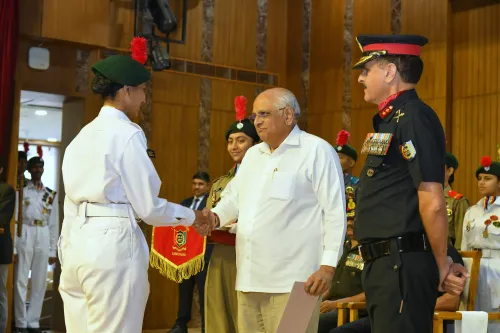
Gujarat to fund NCC national camp costs for private school, college cadets

Synopsis
Gujarat has ended a quiet but consequential inequality in its NCC ecosystem: private-school and college cadets selected for national-level camps will now have their full expenses covered by the state, just like their government-institution peers. The move removes a financial filter that had long shaped who could realistically compete for India's most prestigious NCC opportunities.
Key Takeaways
The Gujarat government will bear 100% of national-level NCC camp expenses for cadets from private schools and colleges from 1 September 2025 .
Covered camps include the RDC, TSC, YEP, VSC, NSC , and National Level Events .
Eligible expenses cover messing, travel, incidental charges , and POL costs , at Central government-prescribed rates.
Previously, only cadets from government institutions received camp allowances; private-institution cadets bore costs themselves.
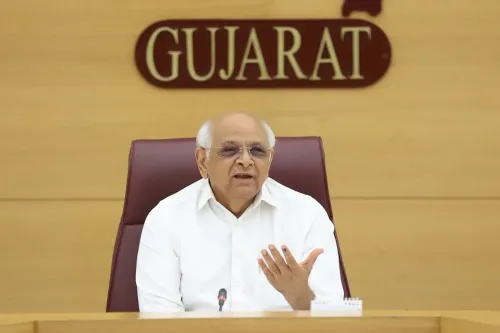
The decision was announced under Chief Minister Bhupendra Patel , Education Minister Pradyuman Vaja , and MoS Education Trikam Chhanga .
Selection will continue to be based on performance and merit , not financial capacity.
The Gujarat government has decided to extend full financial support for national-level NCC camps to cadets from private schools and colleges, ending a longstanding disparity that had forced these students to bear camp-related expenses on their own. The decision, announced on Tuesday, 1 September, places private-institution cadets on equal financial footing with their counterparts from government schools and colleges.
What the Decision Covers
Under the new arrangement, the state government will bear 100 per cent of eligible camp expenditure for private-institution cadets, at rates prescribed by the Central government. Covered expenses include messing, travel, generation, incidental charges, and petrol, oil and lubricant (POL) costs, as specified in the Education Department's resolution.
The camps covered under the decision are the Republic Day Contingent (RDC), Thal Sainik Camp (TSC), Youth Exchange Programme (YEP), Vayu Sainik Camp (VSC), Naval Sainik Camp (NSC), and National Level Events (NLE).
The Disparity That Existed
Until now, NCC cadets from government schools and colleges in Gujarat received camp allowances in line with applicable Central government norms. Cadets from private institutions, however, received no equivalent financial support from either the state or the Centre, leaving the burden on individual students or their institutions.
The government acknowledged that financial constraints had the potential to discourage promising cadets from private institutions from pursuing national-level selection, despite having the ability to compete. Selection for these camps is competitive, typically requiring participation in four to five qualifying camps before a cadet is chosen.
What the Government Said
'The decision has been taken under the leadership of Chief Minister Bhupendra Patel, with Education Minister Pradyuman Vaja and Minister of State for Education Trikam Chhanga. The Education Department has issued a resolution to provide support to eligible cadets from private institutions,' officials said.
The government stated that the move is intended to ensure that a cadet's ability to participate in national-level NCC activities is determined by performance, talent, and hard work — not by financial capacity or the type of institution they attend.
Broader Impact
NCC training is widely recognised for instilling discipline, leadership, responsibility, and a spirit of national service among young people. By removing the financial barrier, the Gujarat government expects more eligible cadets from private institutions to participate in national-level activities and compete alongside peers from government institutions.
This comes amid a broader push by several state governments to level the playing field in extracurricular and defence-oriented programmes, where private-institution students have historically faced structural disadvantages. The resolution sets a precedent that other states may look to replicate for similar schemes.
Point of View
In practice, been more accessible to government-school students simply by design. The real question is implementation: whether allowance disbursements reach cadets before camps begin, rather than as reimbursements that still require upfront spending. Financial parity on paper means little if the process places cash-flow burdens on families mid-selection cycle. Other states running similar NCC funding gaps should take note — the fix here required a resolution, not a budget overhaul.
NationPress
16 Oct 2026
Frequently Asked Questions
What has the Gujarat government decided regarding NCC cadets from private schools?
The Gujarat government has decided to fully fund national-level NCC camp expenses for cadets from private schools and colleges, covering 100% of eligible costs at Central government-prescribed rates. This puts them on equal financial footing with cadets from government institutions.
Which NCC camps are covered under the new Gujarat decision?
The camps covered include the Republic Day Contingent (RDC), Thal Sainik Camp (TSC), Youth Exchange Programme (YEP), Vayu Sainik Camp (VSC), Naval Sainik Camp (NSC), and National Level Events (NLE).
What expenses will the Gujarat government reimburse for private-institution NCC cadets?
The state will cover messing, travel, generation, incidental charges, and petrol, oil and lubricant (POL) costs, as specified in the Education Department resolution.
Why were private-school NCC cadets at a disadvantage before this decision?
Until this decision, only cadets from government schools and colleges in Gujarat received camp allowances under Central government norms. Private-institution cadets received no such support, leaving them or their institutions to bear all camp-related costs — a barrier that could discourage financially constrained but talented cadets.
Will selection criteria for national-level NCC camps change under the new policy?
No. Selection will continue to be based entirely on a cadet's performance, talent, and hard work. The financial support only removes the cost barrier; it does not alter the competitive selection process, which typically involves four to five qualifying camps.