Gujarat urban development budget hits ₹30,325 crore in 2025-26, up 45x in two decades
Synopsis
Gujarat's urban development budget has multiplied 45 times in two decades — from ₹660 crore in 2005-06 to ₹30,325 crore in 2025-26, with over ₹92,000 crore committed across five years. The scale of the jump, and the government's stated intent to extend services to outgrowth areas, signals that urban infrastructure is now the centrepiece of Gujarat's fiscal priorities.
Key Takeaways
Gujarat's urban development budget rose from ₹660 crore in 2005-06 to ₹30,325 crore in 2025-26 — a more than 45-fold increase.
The 2025-26 allocation is more than 40 per cent higher than the previous year's figure.
Over ₹92,000 crore has been allocated for urban welfare and development in the last five years under Chief Minister Bhupendra Patel .
The urban push traces its origins to the Swarnim Jayanti Chief Minister Urban Development Scheme launched by Narendra Modi in 2005 .
The government is extending basic amenities to new societies and outgrowth areas beyond established city limits.
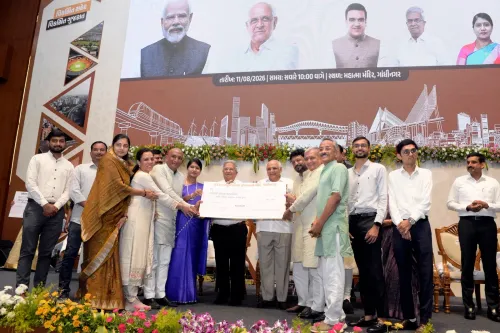
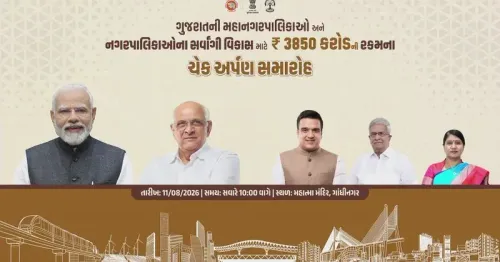
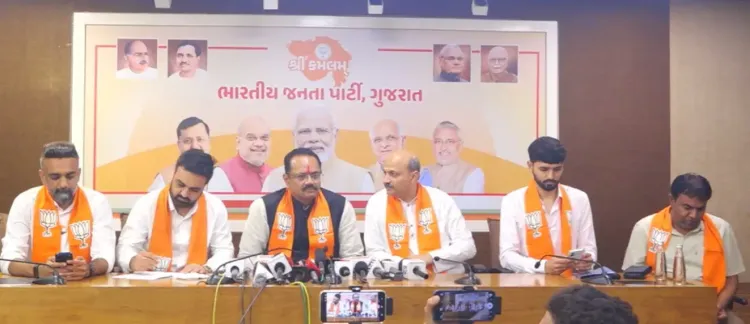
Gujarat's urban development budget has surged more than 45-fold over the past two decades, climbing from ₹660 crore in 2005-06 to ₹30,325 crore in 2025-26, state spokesperson and minister Jitu Vaghani announced on Tuesday, 11 August. The figure for the current year alone is more than 40 per cent higher than the previous year's allocation, according to Vaghani.
Five-Year Outlay and Current Scale
Speaking at a press conference in Gandhinagar, Vaghani said the state government had allocated more than ₹92,000 crore for urban welfare and development over the last five years under Chief Minister Bhupendra Patel. The Urban Development Department's current allocation of ₹30,325 crore for 2025-26 marks what the minister described as a 'historic' rise in public investment in city infrastructure and basic services.
Roots in the 2005 Urban Scheme
Vaghani traced the foundation of Gujarat's urban push to 2005, when the then Chief Minister — and current Prime Minister — Narendra Modi launched the 'Swarnim Jayanti Chief Minister Urban Development Scheme'. The programme was designed to equip Gujarat's cities with essential infrastructure and civic facilities. At the time of its launch, the state's urban development budget stood at just ₹660 crore, a fraction of today's outlay.
Expanding Services Beyond City Limits
The minister said the government's focus had broadened beyond established urban centres. 'Along with an emphasis on cleanliness in cities, special focus is being given to extending basic facilities to new societies and outgrowth areas,' Vaghani said. This signals a deliberate effort to address the rapid peripheral expansion of Gujarat's cities, where infrastructure often lags behind population growth.
Alignment with Viksit Bharat 2047
Vaghani framed the urban investment drive within the national objective of Viksit Bharat 2047, Prime Minister Modi's long-term development vision. He added that development works would not be stalled for want of funds — a commitment that positions urban infrastructure as a sustained budget priority for the state government going forward.
Point of View
But the more telling figure is the year-on-year jump: a 40 per cent rise in a single year suggests either a genuine acceleration or a pre-election optics push — and Gujarat goes to no immediate election, which lends some credibility to the former. The real accountability question is outcomes: with ₹92,000 crore committed over five years, independent assessments of service delivery in outgrowth areas — where infrastructure deficits are most acute — are conspicuously absent from the government's narrative. Budget allocation and actual expenditure are rarely the same number in Indian urban governance, and the gap between the two is where citizens' experience actually lives.
NationPress
26 Sept 2026
Frequently Asked Questions
How much has Gujarat allocated for urban development in the last five years?
Gujarat has allocated more than ₹92,000 crore for urban welfare and development over the five years under Chief Minister Bhupendra Patel, according to state minister Jitu Vaghani.
What is Gujarat's urban development budget for 2025-26?
The Urban Development Department has been allocated approximately ₹30,325 crore for 2025-26, which is more than 40 per cent higher than the previous year's allocation.
How much has Gujarat's urban development budget grown since 2005-06?
The budget has grown more than 45-fold, from ₹660 crore in 2005-06 to ₹30,325 crore in 2025-26, according to minister Jitu Vaghani.
What was the Swarnim Jayanti Chief Minister Urban Development Scheme?
It was an urban infrastructure programme launched in 2005 by then Chief Minister Narendra Modi, designed to provide Gujarat's cities with basic civic and infrastructure facilities. It is credited with laying the foundation for the state's urban development push.
Who benefits from Gujarat's expanded urban development spending?
The government says the spending targets both established urban areas and newer outgrowth zones and societies on the periphery of cities, where basic amenities have historically lagged behind population growth.