CMO Maharashtra urges Fadnavis to frame job creation policies
Synopsis
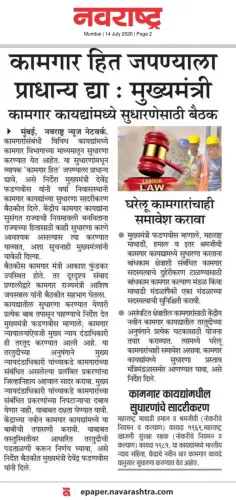
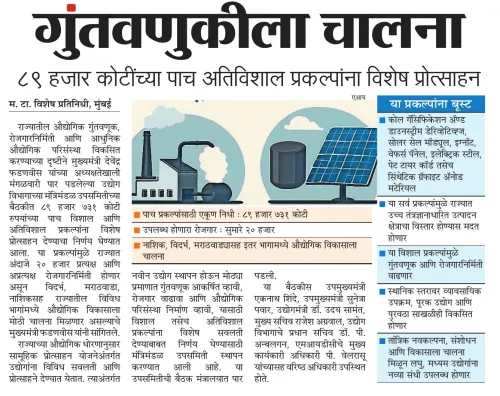
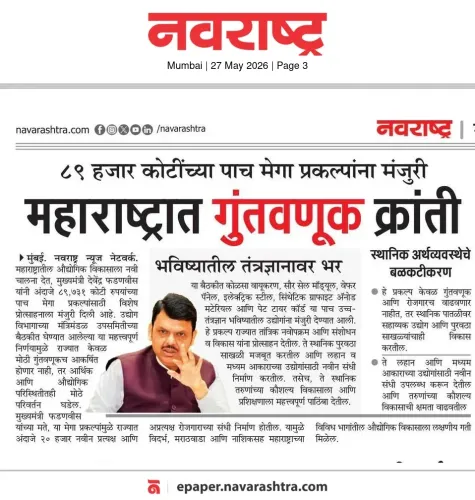
The Chief Minister's Office of Maharashtra on 18 July 2026 publicly urged CM Devendra Fadnavis to formulate employment generation policies, spotlighting job creation as a pressing priority for India's leading industrial state.
Key Takeaways
The official Chief Minister's Office of Maharashtra posted a public call on 18 July 2026 urging CM Devendra Fadnavis to frame employment generation policies.
The post was written in Marathi and tagged #IndustrialDevelopment , signalling a direct link between industrial policy and job creation.
Maharashtra is one of India's most industrially active states, with major manufacturing clusters in Pune , Nashik , Aurangabad , and the Mumbai Metropolitan Region .
The Magnetic Maharashtra summit of 2018 was a landmark effort under Fadnavis to attract investment with explicit employment targets.
The call aligns with national initiatives such as Make in India , which treat state industrial policies as primary vehicles for employment generation.
Policy watchers will monitor upcoming state budget presentations or revised industrial policy documents for concrete employment-linked commitments.
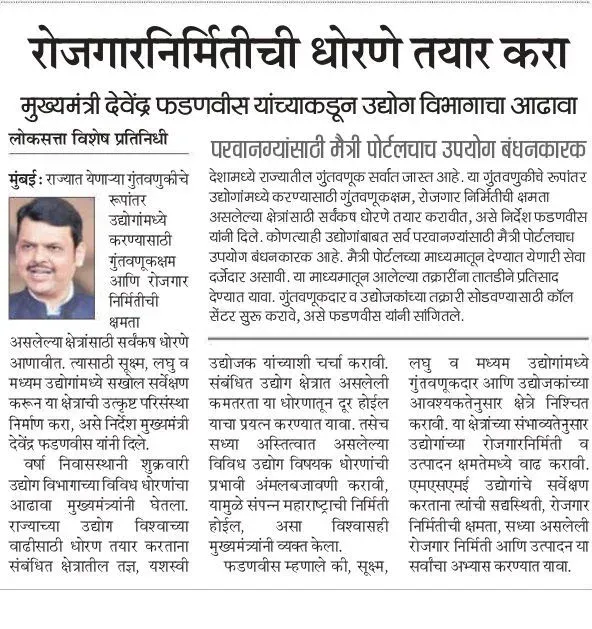
The Chief Minister's Office of Maharashtra on Saturday, 18 July 2026 posted a public call on X directed at Chief Minister Devendra Fadnavis, urging the government to formulate dedicated employment generation policies for the state. The post, tagged with #Maharashtra, #DevendraFadnavis, and #IndustrialDevelopment, reflects growing public and institutional attention on job creation as a policy priority.
Context
The post, written in Marathi, carries a direct instruction: 'रोजगारनिर्मितीची धोरणे तयार करा' ('Formulate policies for employment generation'), addressed to @Dev_Fadnavis. While the post is brief, its origin from the official CMO handle gives it institutional weight, signalling that job creation is being placed front and centre in the state's policy conversation. Maharashtra is among India's most industrially active states, making such a call particularly significant.
Policy Backdrop
Maharashtra governments have consistently linked industrial policy to employment targets. Under Devendra Fadnavis's earlier tenure, the state organised the Magnetic Maharashtra investment summit in 2018, which attracted investment proposals with explicit job creation commitments. The state has since updated its incentive structures and single-window clearance mechanisms to draw manufacturing investment aligned with national programmes such as Make in India. Employment-linked industrial policy has thus been a recurring theme across successive Maharashtra administrations.
Stakeholders and Impact
The primary beneficiaries of any new employment generation framework would be Maharashtra's large base of job seekers, particularly youth entering the labour market, and workers in the manufacturing and services sectors. Industrial stakeholders — from large anchor investors to small and medium enterprises in clusters across Pune, Nashik, Aurangabad, and the Mumbai Metropolitan Region — would also be directly affected by any revised incentive or skill-linkage policies. A clearly articulated employment policy could sharpen the state's pitch to domestic and foreign investors who increasingly weigh workforce development commitments when selecting investment destinations.
What's Next
Attention will now turn to whether the Fadnavis administration responds with a concrete policy directive, a revised industrial policy document, or employment-linked targets in an upcoming state budget presentation. Observers will watch for announcements around skill development programmes, sector-specific incentives, or new single-window mechanisms that tie investment approvals to verifiable job creation milestones. Any formal policy response would be a significant marker of the government's commitment to translating industrial growth into measurable employment outcomes for Maharashtra's workforce.
Point of View
Suggesting internal urgency around the jobs agenda rather than mere opposition pressure. Maharashtra's industrial clout means any new employment-linked policy framework here carries outsized national signalling value, especially as states compete to attract post-China manufacturing shifts. The explicit hashtag pairing of #IndustrialDevelopment with the employment demand reflects a broader political consensus in Maharashtra that industrial growth must be visibly translated into jobs to retain public support. How the Fadnavis administration responds — and how quickly — will be closely read as a gauge of the government's economic priorities heading into the next budget cycle.
NationPress
17 Oct 2026
Frequently Asked Questions
What did the CMO Maharashtra post about on 18 July 2026?
The Chief Minister's Office of Maharashtra posted a public call on X urging CM Devendra Fadnavis to formulate dedicated employment generation policies, tagging the post with #Maharashtra , #DevendraFadnavis , and #IndustrialDevelopment .
What does 'रोजगारनिर्मितीची धोरणे तयार करा' mean in English?
The Marathi phrase translates to 'Formulate policies for employment generation,' which was the direct instruction posted by the CMO Maharashtra account addressed to Chief Minister Devendra Fadnavis.
What is Maharashtra's track record on employment-linked industrial policy?
Maharashtra has a strong track record of linking industrial policy to job creation, highlighted by the Magnetic Maharashtra investment summit in 2018 under Fadnavis, which attracted investment proposals with explicit employment commitments. The state has also maintained single-window clearance mechanisms aligned with Make in India .
Who are the main stakeholders if Maharashtra frames new employment generation policies?
The primary stakeholders include job seekers and youth entering the labour market, workers in manufacturing and services, and industrial investors across clusters in Pune , Nashik , Aurangabad , and the Mumbai Metropolitan Region .
What should we watch for next after this CMO Maharashtra post?
Policy watchers will look for a formal response from the Fadnavis government, including possible announcements in state budget presentations, revised industrial policy documents, or new skill development and employment-linked incentive schemes.