CM Fadnavis Chairs Industry Review, Orders MSME Survey
Synopsis
Chief Minister Devendra Fadnavis chaired a sweeping Industries Department review at Varsha residence, Mumbai, ordering a comprehensive MSME survey, mandatory MAITRI portal use for all approvals, an AI-powered grievance call centre, and the framing of over a dozen new sector-specific industrial policies for 2025-2026.
Key Takeaways
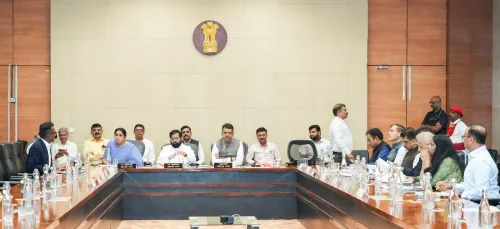
CM Devendra Fadnavis chaired an Industries Department review at Varsha residence, Mumbai to plan policies for industry, investment and employment.
Maharashtra is stated to attract the highest investment in India ; the meeting focused on converting that capital into actual industrial activity.
A deep survey of micro, small and medium enterprises (MSMEs) covering employment capacity, current jobs and production was ordered.
All industrial approvals are now mandatory to be processed through the MAITRI portal ; a dedicated grievance call centre with AI-based analysis of complaints was directed.
Over six policies — including GCC, AVGC-XR, Gems and Jewellery, Bamboo, and Bio-Plastics — were reviewed, while more than twelve new sector policies including Defence, Semiconductors and Pharmaceuticals were proposed.
MIDC was directed to assess viability before land allotment in industrial estates and to develop rational allocation methods.
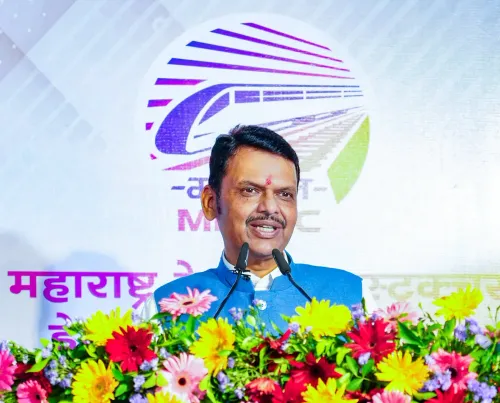
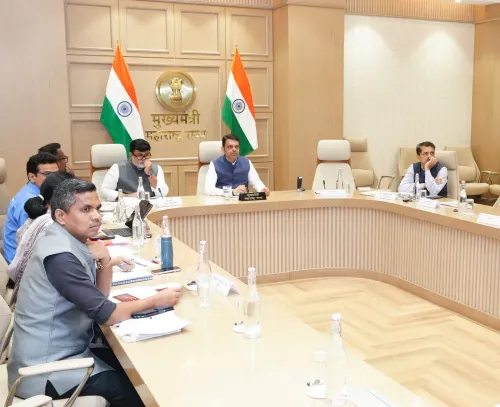
Chief Minister Devendra Fadnavis chaired a comprehensive review meeting of the Industries Department at Varsha residence, Mumbai, directing officials to frame holistic policies for industry, investment and employment to build a prosperous Maharashtra. The meeting covered the state's industrial progress, foreign and domestic investment planning, and a detailed review of services for the industrial sector.
Context
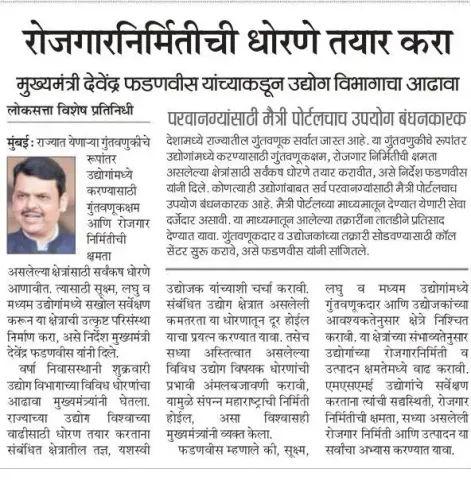
The CMO post, in Marathi, states that 'देशात सर्वाधिक गुंतवणूक महाराष्ट्रात येत आहे' ('Maharashtra receives the highest investment in the country') and that this capital must be converted into real industrial activity. CM Fadnavis directed departments to consult domain experts and successful entrepreneurs while drafting growth policies, and to use those policies to address existing sectoral gaps.
The Chief Minister also expressed confidence that effective implementation of existing and upcoming industrial policies would lead to the creation of a 'Sampann Maharashtra' — a prosperous Maharashtra.
Policy Backdrop
A sweeping set of sector-specific policies was reviewed and proposed at the meeting. Policies already under review include the Industry Investment and Services Policy 2025, Global Capability Centre Policy 2025, Animation, Visual Effects, Gaming and Comics — Extended Reality (AVGC-XR) Policy 2025, Gems and Jewellery Policy 2025, Bamboo Industry Policy 2025, and Bio-Plastics Policy 2026.
Proposed new policies span sectors including Leather, Non-Leather, Footwear, Apparels and Accessories; Garment and Apparel; Media, Entertainment and Arena; Pharmaceuticals, Biotechnology and Medical Devices; Defence, Nuclear and Aerospace; Electronics, Semiconductors, Fab and Display; MSME; Chemical Industry; and Biofuels. CM Fadnavis directed that the proposed Chemical Industry Policy must include Chemical Parks within the state, and that the Media and Arena Policy must ease business conditions for the construction of large convention centres in major cities.
He also called for a comprehensive policy for the development of a Circular Economy in the state, and instructed agencies to ensure all policies remain industry-friendly during implementation. Maharashtra has historically maintained the highest share of foreign direct investment among all Indian states, and successive governments have used policy updates to sustain that lead.
MSME Focus and MAITRI Portal Mandate
CM Fadnavis placed special emphasis on micro, small and medium enterprises, directing a deep survey of the MSME sector covering current status, employment generation capacity, existing employment levels and production. He instructed officials to identify sectors according to investor and entrepreneur requirements, and to develop new technology platforms to enhance MSME productivity and job creation — describing MSMEs as the 'highest employment-generating sector'.
In a significant administrative directive, the Chief Minister made it mandatory for all industrial approvals to be routed exclusively through the MAITRI portal. He ordered the launch of a dedicated call centre for resolving investor and entrepreneur grievances, with every call to be recorded and subjected to AI-based analysis to identify recurring complaints and enable policy-level corrective action.
On land allocation, CM Fadnavis directed the Maharashtra Industrial Development Corporation (MIDC) to assess viability before allotting land in industrial estates, and to develop rational, transparent allocation methods.
Stakeholders and What's Next
Industries Minister Uday Samant and senior officials were present at the meeting. The directives signal an imminent push to formally notify the reviewed 2025-2026 policies and operationalise the upgraded MAITRI portal and proposed call centre.
With Maharashtra cementing its position as India's top investment destination, the formalisation of these sector-specific policies — particularly in high-growth verticals such as semiconductors, defence, aerospace and green industries — will be closely watched by domestic and foreign investors as a benchmark for industrial governance in India's largest economy by output.
Point of View
Not a routine review. Mandating AI-driven grievance analysis on the MAITRI portal is a notable governance innovation that, if implemented, could shift industrial complaint resolution from reactive to predictive. The emphasis on MSME surveys and expert consultation before policy drafting reflects a lesson from earlier cycles where policies were notified but poorly implemented due to ground-level mismatches. Whether the sheer volume of proposed policies translates into timely notification and enforcement will be the real test of this administration's industrial ambition.
NationPress
16 Oct 2026
Frequently Asked Questions
What was decided at the Maharashtra Industries Department review meeting chaired by CM Fadnavis?
CM Devendra Fadnavis directed officials to draft comprehensive policies for investment and employment, conduct a deep MSME survey, mandate exclusive use of the MAITRI portal for all industrial approvals, and set up an AI-powered call centre for investor grievances.
What is the MAITRI portal and why has it been made mandatory?
MAITRI is Maharashtra's single-window portal for industrial approvals. CM Fadnavis made it mandatory for all approvals to ensure streamlined, transparent processing and directed that a call centre with AI-based analysis be set up to address investor complaints through the same platform.
Which new industrial policies are proposed by the Maharashtra government in 2025-2026?
Proposed policies include those for Leather and Footwear, Garments, Media and Entertainment, Pharmaceuticals and Biotechnology, Defence and Aerospace, Electronics and Semiconductors, MSMEs, Chemical Industry, and Biofuels, among others.
What did CM Fadnavis say about MSMEs at the industry review meeting?
CM Fadnavis called MSMEs the highest employment-generating sector and directed a comprehensive survey covering their current status, employment capacity, existing jobs and production, along with the introduction of new technology platforms to boost productivity.
What instructions were given to MIDC regarding land allotment?
CM Fadnavis directed the Maharashtra Industrial Development Corporation (MIDC) to assess the viability of applicants before allotting land in industrial estates and to develop rational, transparent allocation methods.