Mumbai Metropolitan Region gets ₹12.26 lakh crore development blueprint from CM Fadnavis
Synopsis
Maharashtra CM Devendra Fadnavis has committed ₹12.26 lakh crore — $147 billion — to transform the Mumbai Metropolitan Region into an $825 billion economy by 2047. Half the outlay is already in motion; the rest launches within three years. It is one of the largest sub-national infrastructure bets in India's history.
Key Takeaways
CM Devendra Fadnavis unveiled a ₹12,26,871 crore ($147 billion) development roadmap for the Mumbai Metropolitan Region (MMR) on 8 July 2025 .
The plan targets MMR GDP growth from $84 billion to $825 billion by 2047 , aligned with India's Viksit Bharat centenary.
Projects worth ₹6,14,871 crore are already underway; ₹6,11,836 crore worth of new projects will be launched over the next three years .
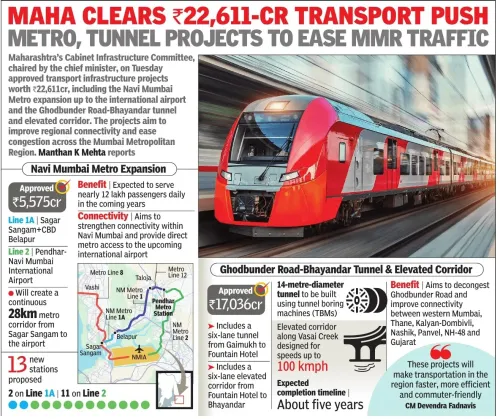
A 377-km high-speed Metro network and the Vadhavan Port project in Palghar are central to the transport strategy.
Eight foreign universities will set up campuses in the EduCity (Mumbai 3.0) with a combined intake of one lakh students .
The government has already redirected ₹2 lakh crore from low-yield municipal deposits into active capital works, targeting a 15% socio-economic return .
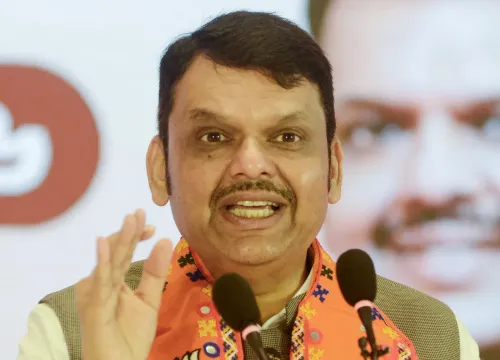
Chief Minister Devendra Fadnavis on 8 July 2025 unveiled a sweeping ₹12,26,871 crore ($147 billion) capital expenditure roadmap for the Mumbai Metropolitan Region (MMR), targeting a near-tenfold expansion of the region's economy — from $84 billion today to $825 billion by 2047, aligned with India's Viksit Bharat centenary. The announcement came as Fadnavis responded to a debate on a motion moved by treasury bench members under Rule 293 in the Maharashtra State Assembly.
Scale of the Blueprint
Of the total ₹12,26,871 crore outlay, development projects worth ₹6,14,871 crore are already at various stages of implementation. The remaining ₹6,11,836 crore worth of projects are slated for launch over the next three years. The plan spans multi-modal logistics, high-yield digital infrastructure, and a new ring of satellite business districts, reflecting a deliberate push to move economic activity beyond the spatial limits of traditional South and Central Mumbai.
Key Development Pillars
The blueprint is structured around several interconnected public infrastructure verticals. A 377-km high-speed Metro network forms the backbone of the transportation strategy, complemented by the mega Vadhavan Port project in Palghar. The plan also envisages signal-free industrial connectivity from Nariman Point to the proposed Virar Offshore Airport, cutting travel time to 50 minutes.
Beyond transport, the roadmap designates significant investment in world-class data centres and a dedicated 'Health City' cluster within the MMR, recognising data as a sovereign resource. An EduCity is also being developed in Mumbai 3.0, where eight leading foreign universities will establish campuses with a combined intake capacity of one lakh students.
The Chief Minister also flagged the development of Mumbai 0.3 beyond Navi Mumbai and Mumbai 0.4 around Vadhavan Port as crucial growth accelerators for the broader MMR.
Financing Strategy
Addressing concerns over how the mammoth outlay will be funded, Fadnavis pointed to a structural policy correction: redirecting public funds previously locked in low-yield municipal fixed deposits. 'We corrected a major structural error where massive amounts of public funds remained locked in municipal bank deposits earning a low 3 per cent yield, while inflation stood at 7 per cent, effectively eroding 4 per cent of their economic value annually,' he told the Assembly.
By unlocking surplus civic cash reserves, the government has already channelled ₹2 lakh crore directly into ongoing capital works. Fadnavis assured legislators that the strategy would generate a 15 per cent socio-economic return through improved logistics, productivity gains, and employment generation, while maintaining the financial stability of agencies including the Mumbai Metropolitan Region Development Authority (MMRDA) and the Brihanmumbai Municipal Corporation (BMC).
The Broader Economic Vision
'Urbanisation is accelerating rapidly. By 2047, nearly 70 per cent of our population will live in cities, contributing up to 80 per cent of our state's overall domestic product,' Fadnavis said. He framed the MMR as the primary locomotive for Maharashtra's broader ambition of becoming a $5 trillion economy by 2047.
Mumbai and the MMR have already emerged as hubs for fintech and startups, and the region is attracting rising levels of foreign direct investment (FDI), according to the Chief Minister. This blueprint, if executed as outlined, would represent one of the largest sub-national infrastructure commitments in India's post-independence history. Sectoral implementation timelines and independent fiscal assessments are awaited.
Point of View
Meaning the 'new' announcement is partly a repackaging of existing projects. The financing logic — redirecting municipal FD money into capex — is economically sound but raises questions about liquidity buffers for civic bodies like the BMC, which has its own debt obligations. Maharashtra has a history of mega infrastructure announcements that slip on execution timelines; independent fiscal scrutiny and a credible project-monitoring framework will determine whether this blueprint outlasts the political cycle that produced it.
NationPress
7 Oct 2026
Frequently Asked Questions
What is the ₹12.26 lakh crore MMR development plan announced by CM Fadnavis?
It is a multi-decade capital expenditure blueprint for the Mumbai Metropolitan Region, announced on 8 July 2025, with a total outlay of ₹12,26,871 crore ($147 billion). The plan aims to grow the MMR's economy from $84 billion to $825 billion by 2047, covering transport, data infrastructure, education, and new satellite business districts.
How will the ₹12.26 lakh crore plan be financed?
The Maharashtra government is funding a significant portion by redirecting surplus municipal funds previously locked in low-yield fixed deposits — earning 3% against 7% inflation — into active capital works. Fadnavis said ₹2 lakh crore has already been channelled this way, with a projected 15% socio-economic return on investment.
Which infrastructure projects are central to the MMR blueprint?
Key projects include a 377-km high-speed Metro network, the Vadhavan Port in Palghar, signal-free industrial connectivity from Nariman Point to the proposed Virar Offshore Airport (50-minute travel time), world-class data centres, a 'Health City' cluster, and an EduCity in Mumbai 3.0 hosting eight foreign universities.
How many of these projects are already underway?
Projects worth ₹6,14,871 crore are already at various stages of implementation. The remaining ₹6,11,836 crore worth of projects are planned for launch over the next three years.
How does the MMR plan connect to Maharashtra's $5 trillion economy target?
CM Fadnavis described the MMR as the 'primary locomotive' for Maharashtra's goal of becoming a $5 trillion economy by 2047. He argued that by 2047, cities will house 70% of the population and generate 80% of the state's domestic product, making MMR's exponential growth essential to the broader state target.