S.Y. Quraishi: 40 money-power tactics found during UPA-era elections
Synopsis
A former Chief Election Commissioner has put on record that the ECI identified 40 distinct methods of cash-based voter influence during the UPA years — from currency tucked inside morning newspapers to fake birthday parties. The admission that 'new methods have surely emerged since' is as damning as the history itself.
Key Takeaways
Quraishi identified 40 distinct methods of money-power abuse during his tenure starting 2010 .
Tactics allegedly included cash hidden inside newspapers , gold chains slipped door-to-door, and fake wedding and birthday parties used to feed voters.
The ECI created a dedicated Expenditure Monitoring Division headed by a CBDT Income Tax Service officer .
Cash seizures grew from crores to hundreds of crores of rupees during the Commission's crackdown.
Quraishi acknowledged the situation was not fully controlled, saying new methods have 'surely emerged' since.
The 40 modus operandi are documented in his book 'An Undocumented Wonder: The Making of the Great Indian Election' .
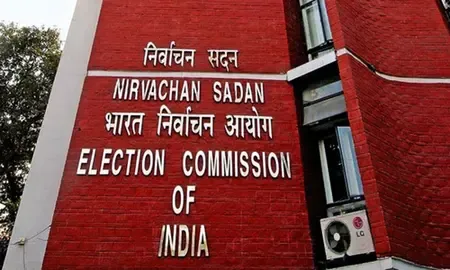
Former Chief Election Commissioner S.Y. Quraishi has revealed that tackling the influence of money power in elections was among his foremost priorities when he assumed charge of the Election Commission of India (ECI) in 2010. In a candid account of his tenure, Quraishi said the Commission catalogued 40 distinct methods through which cash was allegedly funnelled to voters — and went on to seize amounts that grew from crores to hundreds of crores of rupees.
How Voters Were Allegedly Reached
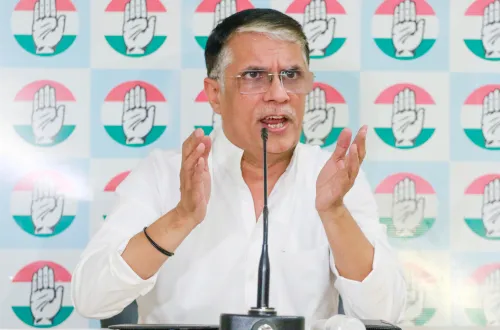
Quraishi described a range of tactics that political workers reportedly used to evade ECI scrutiny. 'You know how they were using money through newspapers. You know when you open the newspaper, the cash will flow, or they will go door to door. Slip in some gold chain, and they were holding fake marriage parties and birthday parties to host the voters to dinner and all that,' he said.
The methods ranged from cash tucked inside newspapers delivered to homes, to gold chains slipped in envelopes, to elaborate fake wedding and birthday gatherings used as cover to feed and influence voters — all reportedly designed to stay beneath the Commission's radar.
Quraishi's Two-Priority Mandate
Speaking about the challenges he set for himself at his inaugural press conference as CEC, Quraishi said: 'When I took over in 2010 as CEC, I gave myself, in my own inaugural press conference, two challenges. One was voter apathy, particularly of a so-called educated urban people, who were never voting and were bragging about it, and second was money power.'
This dual focus shaped the structural reforms he introduced at the Commission during the UPA government's tenure — a period when electoral spending was reportedly escalating sharply ahead of state and national polls.
The ECI's Institutional Response
To address voter apathy, the Commission brought in a professional from the Ministry of Information and Broadcasting as the first Director General of a newly created voter education division. On the money-power front, the ECI established a dedicated Expenditure Monitoring Division, headed by an Income Tax Service officer drawn from the Central Board of Direct Taxes (CBDT).
'He created the rules and regulations and all that, which we publicised; we gave training to politicians so that they do not make mistakes. We wanted to be preventive rather than punitive,' Quraishi said. The emphasis on prevention over prosecution marked a notable departure from earlier enforcement approaches.
Seizures and Limits of the Crackdown
The Expenditure Monitoring Division's early results were significant. 'Initially, we had great success because we started seizing money in crores and later on hundreds of crores,' Quraishi noted. He documented the 40 modus operandi of money-power abuse in his book 'An Undocumented Wonder: The Making of the Great Indian Election'.
However, Quraishi was candid about the limits of the Commission's success. 'We discovered all kinds of modus operandi. But I'm sure they have come up with many more. So, I would not say that we have controlled the situation as we would have wanted to,' he acknowledged. The admission underscores a persistent structural challenge: enforcement capacity has historically lagged the ingenuity of electoral spending networks.
Broader Significance
Quraishi's account offers rare institutional detail on how money power operated during the UPA era — and how the ECI attempted, with partial success, to contain it. With election expenditure limits remaining a contested issue and cash seizures continuing to set records in successive election cycles, the systemic problem he identified in 2010 remains unresolved. The ECI's Expenditure Monitoring Division, however, endures as one of his tenure's lasting structural contributions.
Point of View
The problem is not one of will or even capacity alone. Electoral finance in India remains essentially self-reported, and the Expenditure Monitoring Division's seizures, however record-breaking, represent a fraction of actual flows. Without statutory disclosure norms and independent audit of party accounts, successive CECs will keep cataloguing new modus operandi without closing the loop.
NationPress
14 Jul 2026
Frequently Asked Questions
Who is S.Y. Quraishi and when was he Chief Election Commissioner?
S.Y. Quraishi served as Chief Election Commissioner of India from 2010. He is also the author of 'An Undocumented Wonder: The Making of the Great Indian Election', in which he documented 40 methods of money-power abuse identified during his tenure.
What were the methods used to distribute cash to voters during the UPA era?
According to Quraishi, cash was reportedly distributed through at least 40 methods, including currency hidden inside newspapers, gold chains slipped into envelopes and delivered door-to-door, and fake wedding and birthday parties used to host voters. These tactics were allegedly designed to evade Election Commission monitoring.
What did the Election Commission do to counter money power in elections?
The ECI under Quraishi created two new divisions: a voter education division led by an official from the Ministry of Information and Broadcasting, and an Expenditure Monitoring Division headed by a CBDT Income Tax Service officer. The Commission focused on prevention over punishment, training politicians on expenditure rules.
How successful were the ECI's seizures of election cash?
Seizures grew from crores to hundreds of crores of rupees during Quraishi's tenure. However, Quraishi himself acknowledged the situation was not fully controlled, noting that new methods of distributing cash have likely emerged since the 40 tactics his team identified.
Why does electoral money power remain a concern despite ECI crackdowns?
Quraishi acknowledged that while the ECI achieved initial success, the scale of the problem outpaced enforcement. He said he was certain that new modus operandi had developed beyond the 40 his Commission documented, indicating that the structural challenge of money power in Indian elections persists.