Shiv Sena (UBT) slams Centre over CJP activists' arrest, calls it 'Police Raj'
Synopsis
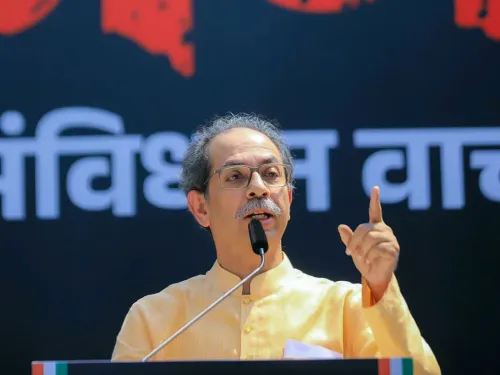
Shiv Sena (UBT)'s Saamana mouthpiece fired a broadside at the Centre, accusing it of 'Police Raj' after two CJP youth activists were jailed for seven days simply for holding the Tricolour at Jantar Mantar. The editorial's sharpest line: a government that fears flag-bearing citizens is not showing strength — it is displaying 'the peak of political paranoia.'
Key Takeaways
Shiv Sena (UBT) accused the BJP-led Centre of running a 'Police Raj' in an editorial in its mouthpiece Saamana on 23 October 2026 .
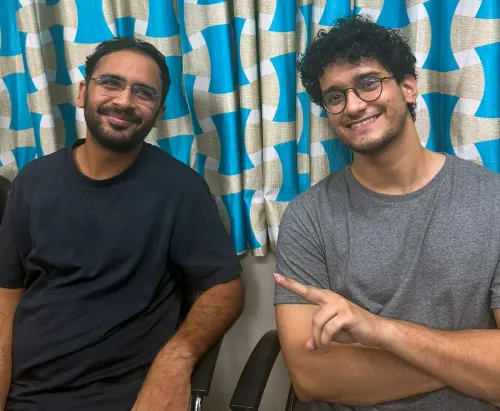
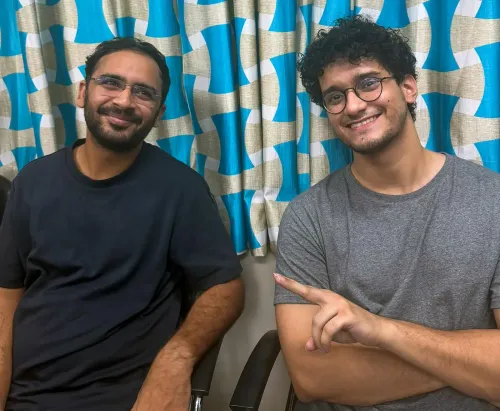
CJP activists Saurav Das and Ashutosh Ranka were arrested and held for seven days in Tihar Jail after protesting at Jantar Mantar .
The protest targeted Chief Election Commissioner Gyanesh Kumar ; the duo reportedly violated prohibitory orders linked to Jantar Mantar 's removal from approved protest sites.
The editorial drew a contrast with the suspended sentence of rape-convicted former politician Kuldeep Sengar , alleging selective application of the law.
The party cited Sonam Wangchuk , opposition MPs, and economist Parakala Prabhakar as examples of prominent figures who have protested without being labelled troublemakers.
Shiv Sena (UBT) urged courts to examine root causes of citizen discontent rather than lecturing protesters.
Shiv Sena (Uddhav Balasaheb Thackeray) on Friday, 23 October accused the Bharatiya Janata Party-led government at the Centre of running a virtual 'Police Raj', sharply criticising the arrest and seven-day detention of Citizens for Justice and Peace (CJP) youth activists Saurav Das and Ashutosh Ranka at Tihar Jail, New Delhi. The two were held after they carried the National Flag and protested peacefully at Jantar Mantar against Chief Election Commissioner Gyanesh Kumar.
What Saamana Said
The Uddhav Thackeray-led party voiced its criticism through an editorial in its party mouthpiece Saamana, questioning whether the government fears peaceful democratic protests or is 'terrified of young citizens holding the Indian National Flag.' The editorial condemned what it described as the systematic seizure of public protest venues — from Mumbai and Delhi to Patna, Lucknow, and Kolkata — calling it 'the outright choking of democracy.'
Jantar Mantar and the Prohibitory Orders
The editorial detailed how the two CJP activists were arrested after defying prohibitory orders, reportedly issued following a decision by Union Home Minister Amit Shah to remove Jantar Mantar from the list of approved protest sites. 'The children did not go to Jantar Mantar to play Dandiya; they went to raise their voice against corrupt electoral practices. If the government were truly generous and democratic, would it lock down Jantar Mantar?' the editorial asked. It further argued that demanding government permission before protesting against state injustice was 'absurd.'
The Contrast Drawn: Protests vs. Crime
Saamana drew a pointed contrast, noting that while courts reportedly lectured young flag-bearing idealists, justice appeared 'surprisingly lenient' towards those convicted of grave offences — citing the case of rape-convicted former politician Kuldeep Sengar, whose sentence was reportedly suspended by a judge. Critics argue this asymmetry reveals the selective application of state power.
Names Cited in the Editorial's Defence of Protest
Dismissing the government's argument that 'unscrupulous elements' could infiltrate rallies to justify police clearances, the Thackeray camp pointed to the fact that prominent figures such as climate activist Sonam Wangchuk, opposition members of parliament, and economist Parakala Prabhakar — husband of Union Finance Minister Nirmala Sitharaman — have themselves taken to the streets. 'Are these individuals also troublemakers?' the editorial asked. It further alleged that actual violence at protests stems from government-backed actors rather than demonstrators.
Judiciary and the Root Cause
Expressing disappointment over a High Court that reportedly lectured young protesters about student unrest in France and Albania, Shiv Sena (UBT) urged the judiciary to examine the root causes of citizen discontent rather than its symptoms. The editorial concluded that a government which fears peaceful, nation-loving youth holding the Tricolour signals 'not strength but the peak of political paranoia.' The party characterised this as a defining feature of what it called the Modi-Shah administration's approach to dissent.
The developments come amid a broader national debate over the right to protest, permissible public spaces, and the limits of state authority — a debate that is unlikely to recede ahead of upcoming electoral cycles.
Point of View
The chilling effect on dissent extends far beyond this one case. The Kuldeep Sengar contrast, while rhetorically charged, points to a genuine systemic inconsistency that courts and civil society alike should interrogate. And citing Parakala Prabhakar — the Finance Minister's own husband — as a protest participant is a sharp, difficult-to-dismiss move.
NationPress
23 Oct 2026
Frequently Asked Questions
Why were CJP activists Saurav Das and Ashutosh Ranka arrested?
They were arrested for defying prohibitory orders and staging a peaceful protest at Delhi's Jantar Mantar, carrying the National Flag against Chief Election Commissioner Gyanesh Kumar. The two were subsequently held in Tihar Jail for seven days.
What did Shiv Sena (UBT)'s Saamana editorial say about the arrests?
The Saamana editorial accused the BJP-led Centre of deep insecurity and establishing a 'Police Raj,' arguing that locking up flag-bearing youth protesters signals political paranoia rather than governance strength. It condemned the systematic closure of public protest venues across major Indian cities.
Why was Jantar Mantar removed from the list of approved protest sites?
According to the editorial, Union Home Minister Amit Shah unilaterally removed Jantar Mantar from the list of approved protest venues, leading to prohibitory orders that the CJP activists defied. The decision has drawn criticism from opposition groups who argue it curtails the constitutional right to peaceful assembly.
Who is Parakala Prabhakar and why was he mentioned in the editorial?
Parakala Prabhakar is an economist and the husband of Union Finance Minister Nirmala Sitharaman, who has himself participated in street protests. Shiv Sena (UBT) cited him alongside Sonam Wangchuk and opposition MPs to counter the government's claim that protest venues must be restricted to prevent 'unscrupulous elements.'
What is the Kuldeep Sengar comparison in the Saamana editorial?
The editorial noted that while young protesters holding the National Flag were jailed, rape-convicted former politician Kuldeep Sengar had his sentence reportedly suspended by a judge. Shiv Sena (UBT) used this contrast to allege selective and asymmetric application of law by the current administration.