Ferozepur Police seize 5.775 kg heroin in twin drug ops
Synopsis
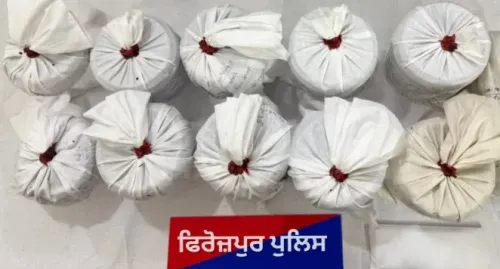
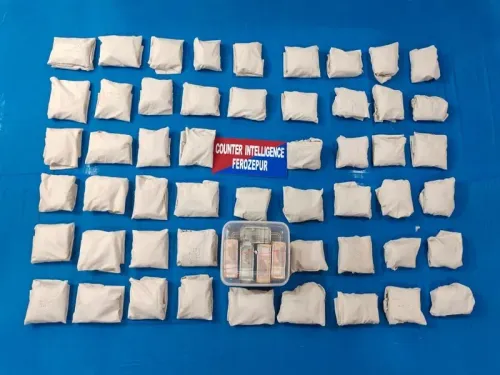
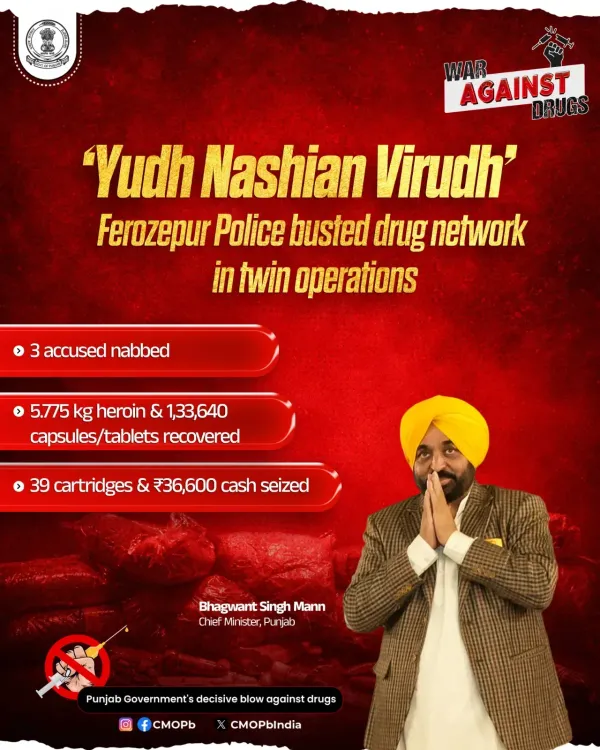
Ferozepur Police arrested three accused and seized 5.775 kg of heroin, over 1.33 lakh restricted capsules and tablets, 39 live cartridges, and ₹36,600 cash in two separate operations on 17 June 2026, the Chief Minister's Office of Punjab announced, marking a significant strike under the Yudh Nashian Virudh campaign.
Key Takeaways
5.775 kg of heroin recovered across two separate Ferozepur Police operations on 17 June 2026 .
1,33,640 restricted capsules and tablets seized, highlighting the scale of pharmaceutical drug trafficking in the region.
39 cartridges of KF 7.65 calibre recovered alongside narcotics, indicating armed criminal networks linked to drug supply chains.
Three accused arrested ; operations conducted under the statewide Yudh Nashian Virudh anti-narcotics campaign launched in 2022.
Ferozepur , a district bordering Pakistan, is a persistent hotspot for cross-border narcotics smuggling into Punjab.
Forensic tracing of seized heroin and follow-up arrests of associates are expected next steps in the investigation.
The Chief Minister's Office of Punjab announced on Wednesday, 17 June 2026 that Ferozepur Police conducted two separate anti-narcotics operations, arresting three accused and making significant recoveries of heroin, restricted pharmaceuticals, ammunition, and cash as part of the state's ongoing war against drugs.
What Was Seized
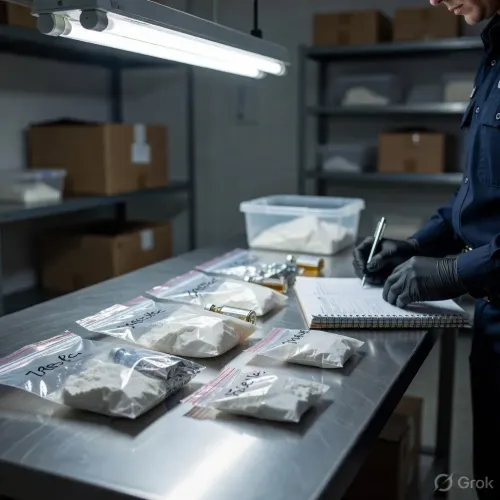
The twin operations yielded 5.775 kg of heroin, 1,33,640 restricted capsules and tablets, 39 cartridges (KF 7.65 calibre), and ₹36,600 in cash. The simultaneous recovery of narcotics and live ammunition underscores what security officials have long flagged — a dangerous overlap between drug trafficking syndicates and armed criminal networks operating in Punjab's border belt.
Three accused were apprehended across the two operations. The recoveries represent one of the larger single-district hauls reported under the Yudh Nashian Virudh (ਯੁੱਧ ਨਸ਼ਿਆਂ ਵਿਰੁੱਧ, meaning 'War Against Drugs') campaign in recent months.
Context
Ferozepur is a border district in southwestern Punjab sharing a boundary with Pakistan, making it a historically sensitive corridor for cross-border smuggling. Narcotics — particularly heroin — are frequently trafficked through this stretch, often via drones, border tunnels, or human couriers, before being distributed deeper into the state and beyond.
The recovery of KF 7.65 calibre cartridges alongside heroin is consistent with a broader pattern seen in Punjab's border districts, where drug syndicates often maintain access to small arms to protect their supply chains and intimidate witnesses.
Policy Backdrop
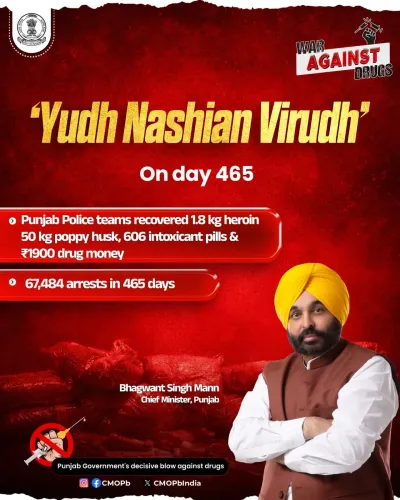
The Yudh Nashian Virudh campaign was launched by the Punjab government in 2022 as a structured, statewide offensive against narcotics networks. The campaign has two principal tracks: aggressive police action against traffickers and suppliers, and the rehabilitation of drug-dependent individuals through state-run programmes.
Since its launch, the campaign has driven hundreds of arrests and seizures across Punjab's districts. Border districts such as Ferozepur, Amritsar, and Tarn Taran have consistently featured in operation reports, reflecting the geographic concentration of trafficking activity along the international boundary.
Stakeholders and Impact
Punjab's youth remain the population most directly affected by the drug crisis, with heroin addiction rates in border districts significantly higher than the national average. Seizures of restricted pharmaceutical capsules and tablets — often used as cheaper substitutes or gateway substances — point to a layered narcotics market that extends beyond traditional heroin supply chains.
For border communities, each successful interdiction carries dual significance: it disrupts immediate supply and signals sustained state presence in areas that have historically seen enforcement gaps. The Ferozepur Police force, operating under considerable pressure given the district's proximity to smuggling routes, has been at the frontline of this enforcement push.
What's Next
Investigators are expected to pursue forensic analysis of the seized heroin to trace its origin and supply chain, a step that could yield intelligence on wider trafficking networks. Authorities will also likely seek to identify associates of the three arrested individuals to determine whether the operations have disrupted a larger syndicate or only its foot soldiers.
With the Yudh Nashian Virudh campaign continuing at pace, similar operations in adjoining districts of Amritsar and Tarn Taran are anticipated. The pattern of simultaneous narcotics and arms recoveries will remain a key indicator of whether Punjab's enforcement drive is reaching the organised upper tiers of the drug trade or primarily intercepting street-level couriers.
Point of View
But the simultaneous recovery of heroin and live ammunition signals that the state is still contending with organised, armed trafficking networks rather than isolated couriers. The scale of the pharmaceutical seizure — over 1.33 lakh restricted capsules — points to a parallel synthetic-drug market that enforcement agencies must address alongside heroin interdiction. Politically, the Chief Minister's Office amplifying district-level police action on social media reflects a deliberate governance narrative: that the state is delivering on its flagship anti-drug promise ahead of future electoral cycles. Whether these operations translate into dismantling supply-chain leadership, rather than replacing arrested foot soldiers, will be the true measure of the campaign's depth.
NationPress
20 Sept 2026
Frequently Asked Questions
How much heroin was seized by Ferozepur Police in June 2026?
Ferozepur Police seized 5.775 kg of heroin across two separate operations announced on 17 June 2026 , along with 1,33,640 restricted capsules and tablets, 39 cartridges, and ₹36,600 in cash.
What is the Yudh Nashian Virudh campaign in Punjab?
Yudh Nashian Virudh ('War Against Drugs') is a statewide anti-narcotics campaign launched by the Punjab government in 2022 , combining aggressive police action against drug traffickers with rehabilitation programmes for drug-dependent individuals.
Why is Ferozepur a drug trafficking hotspot?
Ferozepur is a border district in Punjab that shares a boundary with Pakistan, making it a key corridor for cross-border narcotics smuggling. Traffickers have historically used drones, tunnels, and couriers to move heroin and other drugs across this stretch.
What were the restricted capsules and tablets seized in the Ferozepur drug bust?
The 1,33,640 restricted capsules and tablets seized are pharmaceutical substances whose sale and distribution require legal authorisation. Their recovery indicates a parallel synthetic and pharmaceutical drug market operating alongside heroin trafficking in the region.
Were any weapons recovered in the Ferozepur drug operations?
Yes, 39 cartridges of KF 7.65 calibre were recovered alongside narcotics, which is consistent with a broader pattern of drug syndicates in Punjab's border districts maintaining access to arms to protect their supply chains.