FM Sitharaman Meets BMS Delegation Led by Girish Arya
Synopsis
India's largest trade union, the Bharatiya Mazdoor Sangh, led by Girish Arya, called on Finance Minister Nirmala Sitharaman on 9 July 2026. The meeting is part of structured government-union engagement on labour policy and worker welfare ahead of the next budget cycle.
Key Takeaways
A Bharatiya Mazdoor Sangh (BMS) delegation led by Girish Arya met Finance Minister Nirmala Sitharaman on 9 July 2026 .
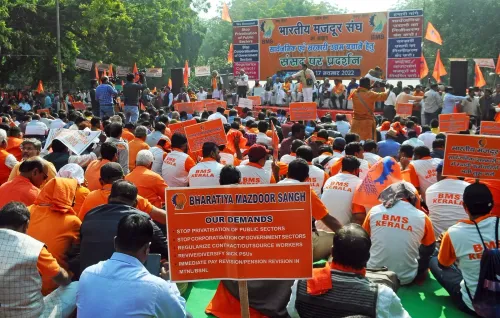
The BMS, founded in 1955 and RSS-affiliated, is India's largest central trade union representing workers in organised and unorganised sectors.
BMS delegations to the Finance Ministry typically raise issues such as minimum wages, provident fund policy, and social security coverage.
Parliament passed four labour codes between 2019 and 2020 ; their implementation remains a key point of union-government dialogue.
The meeting's agenda was not made public; any outcomes may surface in the next Union Budget or labour-ministry notifications.
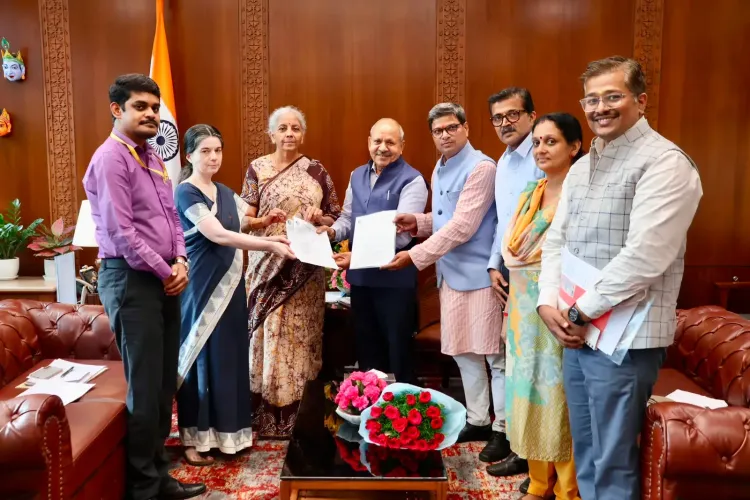
Union Finance Minister Nirmala Sitharaman received a delegation from the Bharatiya Mazdoor Sangh (BMS) on Thursday, 9 July 2026, with the workers' body represented by senior office-bearer Shri Girish Arya. The courtesy call reflects the structured engagement that India's largest trade union maintains with key economic ministries.
Context
The Bharatiya Mazdoor Sangh, founded in 1955 and affiliated with the Rashtriya Swayamsevak Sangh (RSS), is widely recognised as India's largest central trade union, with membership spanning organised and unorganised sectors. Its delegations to the Finance Ministry have historically addressed a range of worker welfare concerns, including minimum wages, social security coverage, and contract labour regulation. The meeting was led by Girish Arya, a senior BMS office-bearer known for leading such engagements with government.
Policy Backdrop
Labour policy has been a live area of reform under successive central governments. Parliament passed four labour codes between 2019 and 2020, consolidating and simplifying dozens of existing statutes covering wages, industrial relations, social security, and occupational safety. Central trade unions, including the BMS, have participated in tripartite consultations with the Ministry of Labour on the implementation of these codes since the 1990s. The Finance Ministry's role becomes particularly relevant during pre-budget consultations, when union bodies typically present their demands on taxation, provident fund structures, and worker welfare schemes.
BMS has historically maintained a position distinct from other central trade unions by engaging constructively with BJP-led governments while still pressing for worker-centric policy adjustments. Its access to senior ministers, including the Finance Minister, reflects the union's standing in the national labour landscape.
Stakeholders and Impact
The primary stakeholders in such engagements are industrial workers across organised and unorganised sectors, whose interests the BMS formally represents. Issues typically raised in Finance Ministry meetings include the tax treatment of provident fund contributions, the adequacy of minimum wage notifications, and the pace of social security extension to gig and informal workers. Any commitments or suggestions emerging from such meetings can influence the framing of the Union Budget or subsequent labour-ministry notifications on code rules.
Broader industry and employer bodies also watch BMS-government interactions closely, as union positions on labour-code implementation affect compliance timelines and industrial relations frameworks across sectors.
What's Next
The specific agenda of the 9 July 2026 meeting has not been made public. Observers will watch for any references to BMS suggestions in the next Union Budget speech or in upcoming Ministry of Labour notifications relating to the four labour codes. Structured consultations of this kind typically feed into the pre-budget exercise, making the timing — mid-year — consistent with the government's annual economic planning cycle. The BMS's continued access to the Finance Minister signals that labour voices affiliated with the ruling establishment remain part of the policy conversation ahead of the next budgetary round.
Point of View
Rather than only the Labour Ministry, underscores the union's elevated political standing within the ruling establishment's ecosystem. Such meetings serve a dual function: they allow the government to signal responsiveness to organised labour ahead of budget season, while giving the BMS a channel to shape fiscal and social-security provisions in its members' favour. The mid-year timing is consistent with the pre-budget consultation calendar, suggesting the interaction is part of a deliberate outreach rather than a one-off courtesy call. Sustained BMS engagement with economic ministries also positions the union to claim credit for any worker-friendly budget announcements that follow.
NationPress
8 Oct 2026
Frequently Asked Questions
What is the Bharatiya Mazdoor Sangh (BMS)?
The Bharatiya Mazdoor Sangh is India's largest central trade union, founded in 1955 and affiliated with the RSS. It represents workers across organised and unorganised sectors and engages with government on wages, social security, and labour law.
Why did the BMS meet Finance Minister Nirmala Sitharaman?
The BMS delegation, led by Girish Arya, called on Finance Minister Nirmala Sitharaman on 9 July 2026 as part of structured union-government engagement. Such meetings typically address issues like minimum wages, provident fund policy, and labour-code implementation.
Who is Girish Arya of BMS?
Girish Arya is a senior office-bearer of the Bharatiya Mazdoor Sangh who leads the union's delegations to central government ministries on labour and employment matters.
What are the four labour codes passed by Parliament?
Parliament passed four labour codes between 2019 and 2020 to consolidate India's labour laws, covering wages, industrial relations, social security, and occupational safety. Their implementation has been a subject of ongoing consultation with central trade unions including the BMS.
Will the BMS meeting influence the next Union Budget?
The specific agenda of the 9 July 2026 meeting has not been disclosed. Historically, suggestions raised by trade unions in Finance Ministry meetings can feed into the Union Budget speech or subsequent labour-ministry notifications, though no commitments have been confirmed from this meeting.