FM Sitharaman Meets Tamil Nadu Foodgrains Merchants
Synopsis
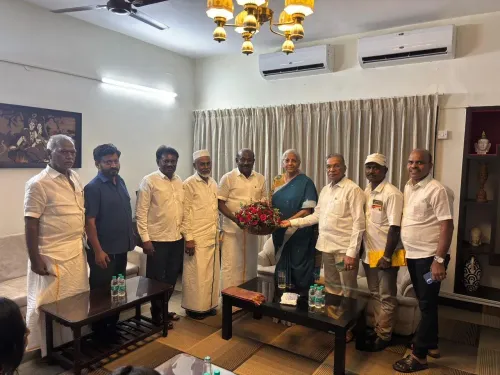
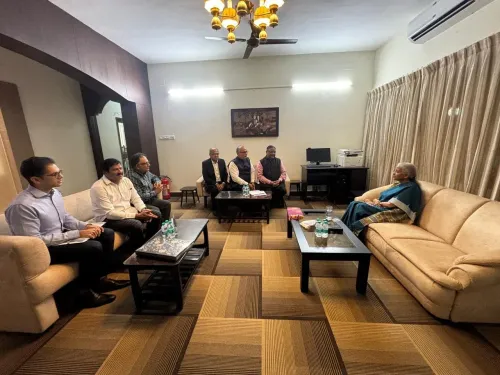
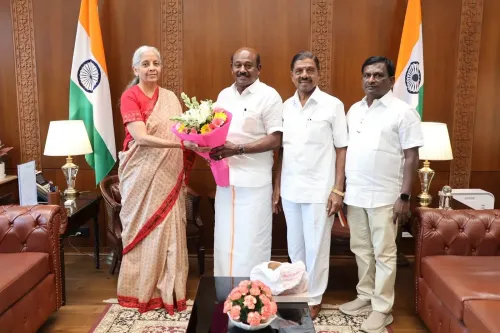
Union Finance Minister Nirmala Sitharaman received a delegation from the Tamilnadu Foodgrains Merchants Association on 26 May 2026. The courtesy call reflects the Finance Ministry's routine stakeholder outreach to regional trade bodies on issues including GST, procurement norms, and agri-trade facilitation ahead of the next Budget cycle.
Key Takeaways
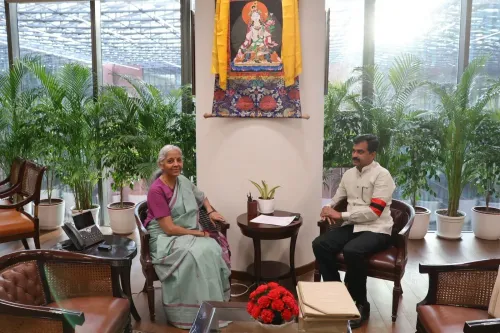
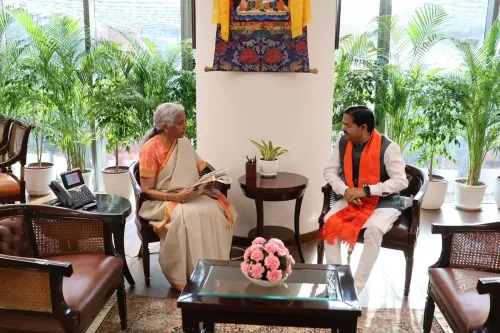
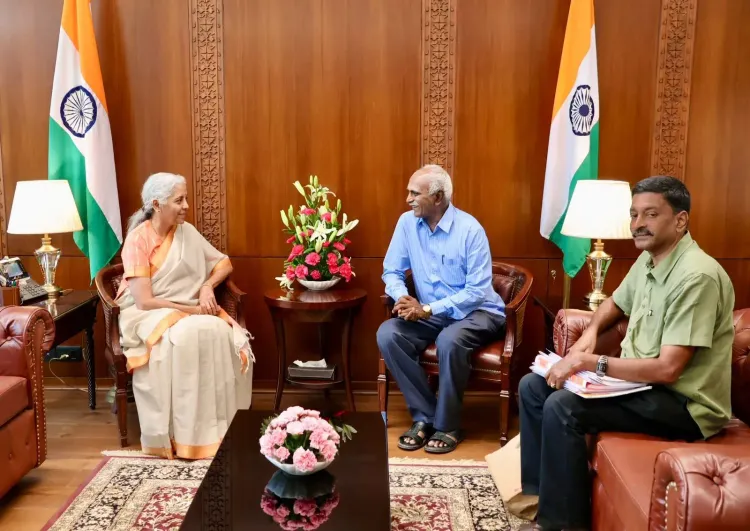
Union Finance Minister Nirmala Sitharaman met a delegation from the Tamilnadu Foodgrains Merchants Association on 26 May 2026 .
The meeting was described as a courtesy call ( மரியாதை நிமித்தமாக ) by the minister's office.
The association represents food grain traders across Tamil Nadu on issues of procurement, distribution, and regulatory compliance.
The Essential Commodities (Amendment) Act, 2020 removed stock limits on food grains, reshaping the regulatory landscape for such merchants.
Finance Ministry stakeholder meetings with regional trade bodies often inform pre-Budget policy deliberations and GST rationalisation decisions.
No specific agenda or outcome of the meeting has been officially disclosed.
Union Finance Minister Nirmala Sitharaman received a delegation from the Tamilnadu Foodgrains Merchants Association on Tuesday, 26 May 2026, in what the minister's office described as a courtesy call by representatives of the state-level trade body.
The post, shared in both English and Tamil, noted that the delegation met the Finance Minister மரியாதை நிமித்தமாக (as a mark of respect), signalling a formal introductory engagement rather than a crisis-driven meeting.
Context
The Tamilnadu Foodgrains Merchants Association is a state-level body that represents food grain traders and merchants across Tamil Nadu, with a mandate covering procurement, distribution, storage, and regulatory compliance. Such associations serve as an organised interface between the trade community and the Union government on issues ranging from GST rates to logistics and stock-limit norms.
Finance Ministry engagements with regional trade groups are a routine but significant part of the policy feedback loop, particularly in the run-up to budget deliberations and ahead of key parliamentary sessions.
Policy Backdrop
The foodgrains trade sector has been shaped in recent years by the Essential Commodities (Amendment) Act, 2020, which removed stock limits on food grains with the stated aim of facilitating freer trade and attracting private investment into agricultural supply chains. The reform was intended to reduce compliance burden on merchants and encourage larger private players to enter storage and distribution.
The Union Budget 2023-24 also carried provisions to strengthen agricultural value chains and extend support to traders in the food processing and agri-logistics space. Merchant bodies in states like Tamil Nadu have since been engaging with the Centre on issues such as GST rationalisation on food commodities, procurement norms under the National Food Security Act, and warehouse infrastructure.
Stakeholders and Impact
Food grain merchants in Tamil Nadu operate within a complex regulatory environment that spans state-level procurement agencies, the Food Corporation of India, and central tax structures. Any changes to GST rates on staple grains, storage regulations, or transportation subsidies directly affect the margins and working capital of small and mid-sized traders in this segment.
Associations like this one use direct ministerial access to flag ground-level concerns — from credit availability and interest subvention to digitisation of mandi records — that may not surface through formal Budget consultation papers. The Finance Ministry routinely solicits such feedback as part of its pre-Budget and inter-session stakeholder engagement.
What's Next
While the specific agenda of the 26 May 2026 meeting has not been disclosed, interactions of this nature often feed into policy deliberations ahead of the Monsoon Session of Parliament or the next Union Budget cycle. Observers will watch for any announcements on food grain trade facilitation, GST adjustments on agricultural commodities, or changes to stock-limit and procurement norms that may reflect the concerns raised by Tamil Nadu's merchant community.
The meeting underscores the Finance Ministry's continued outreach to state-level trade bodies as a channel for ground-up policy input in the agri-trade space.
Point of View
2020 — remain on the Centre's radar. Such courtesy calls rarely stay purely ceremonial; they typically precede formal representations that find their way into Budget annexures or GST Council agendas. For Tamil Nadu's merchant community, direct ministerial access is a strategic asset in a state where food grain distribution is politically and economically sensitive. The meeting fits a broader pattern of the Finance Ministry widening its consultative net beyond industry federations to include region-specific trade voices ahead of the Budget season.
NationPress
22 Sept 2026
Frequently Asked Questions
Why did the Tamilnadu Foodgrains Merchants Association meet Finance Minister Nirmala Sitharaman?
The delegation called on Finance Minister Nirmala Sitharaman on 26 May 2026 in a courtesy meeting. Such visits by state-level trade bodies are a standard channel for raising concerns on GST rates, procurement norms, and trade regulations with the Finance Ministry.
What is the Tamilnadu Foodgrains Merchants Association?
It is a state-level body representing food grain traders and merchants in Tamil Nadu, focusing on issues such as procurement, distribution, storage, and regulatory compliance affecting the foodgrains trade.
What policy issues do Tamil Nadu foodgrain merchants raise with the Centre?
Key concerns typically include GST rationalisation on food commodities, stock-limit norms under the Essential Commodities Act, credit and interest subvention for traders, and logistics and warehouse infrastructure support.
How does the Essential Commodities Amendment Act 2020 affect foodgrain merchants?
The 2020 amendment removed stock limits on food grains, reducing compliance burden on merchants and allowing larger private players into storage and distribution, though it also changed the competitive dynamics for smaller traders.
Could this meeting influence the next Union Budget?
Stakeholder meetings of this kind often feed into pre-Budget consultations. Any representations made by the Tamilnadu Foodgrains Merchants Association could potentially inform decisions on GST rates, agri-trade facilitation, or procurement policy in the next Budget cycle.