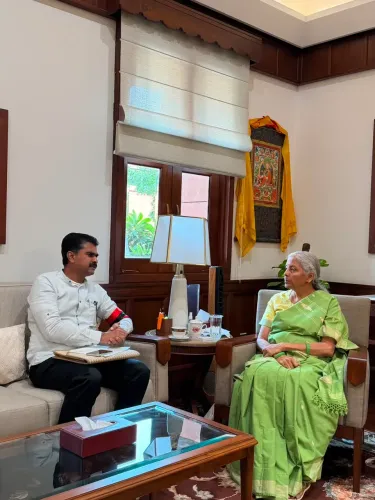
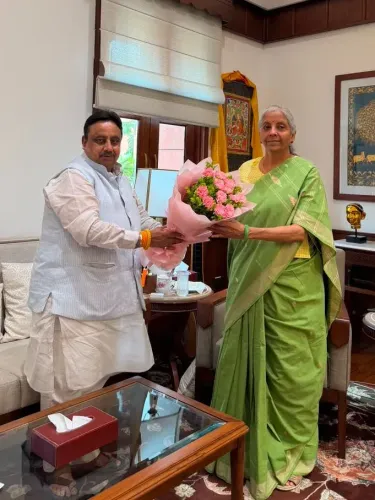
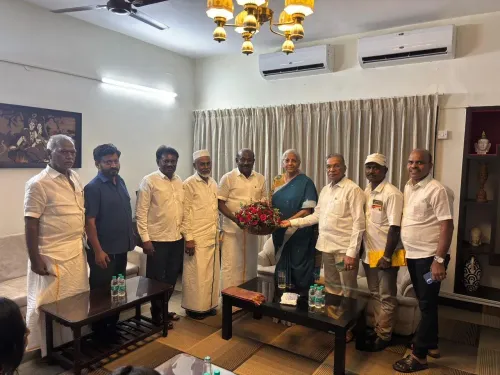
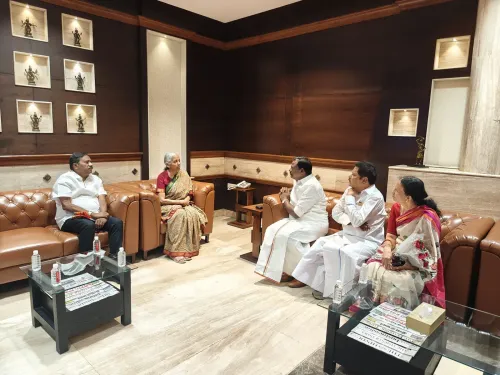
Sitharaman meets Tamil Nadu Traders Association chief
Synopsis
Union Finance Minister Nirmala Sitharaman met AM Vikramaraja, President of the Tamil Nadu Traders Association and Senior Vice President of CAIT, on June 2, 2026, continuing the Finance Ministry's structured engagement with national and state-level trade bodies on GST and retail policy issues.
Key Takeaways
AM Vikramaraja , President of the Tamil Nadu Traders Association and Senior Vice President of CAIT , called on Union Finance Minister Nirmala Sitharaman on June 2, 2026 .
CAIT is India's national apex trader body and has historically engaged the government on GST rationalisation, e-commerce competition, and logistics costs.
The Finance Ministry has conducted pre-Budget consultations with trade bodies since at least 2014 as a formal policy input mechanism.
The GST regime, introduced in July 2017 , remains a central subject of dialogue between the ministry and trader federations.
Inputs from such meetings may influence upcoming GST Council deliberations or Union Budget proposals affecting small traders and MSMEs .
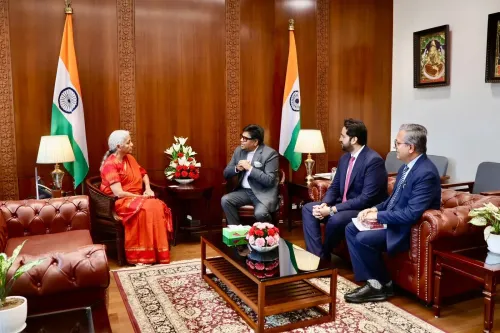
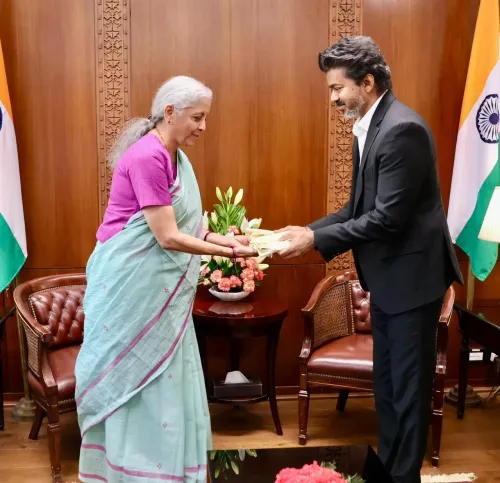
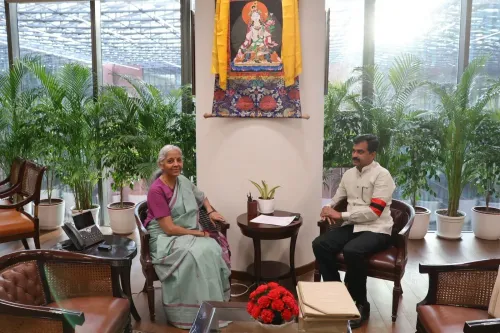
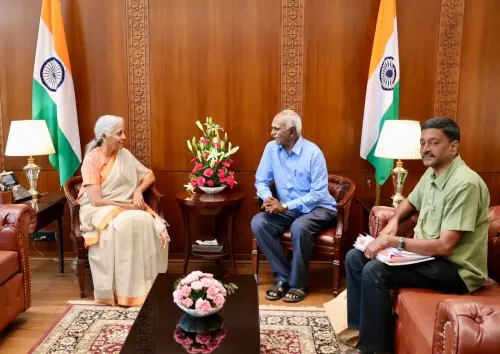
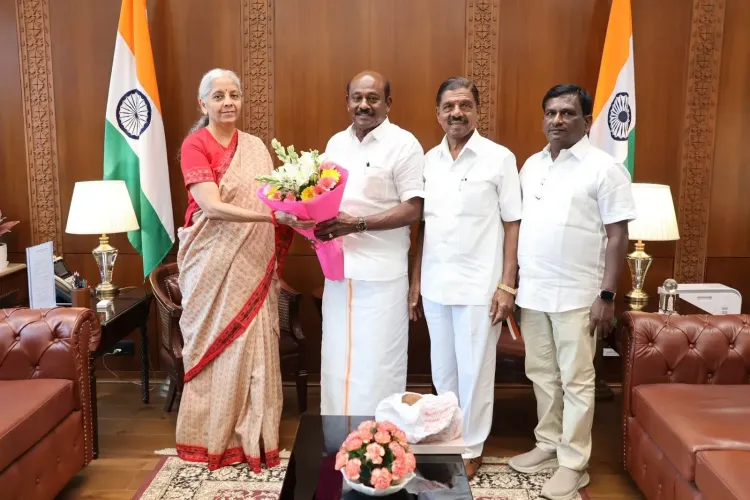
Union Finance Minister Nirmala Sitharaman received Shri AM Vikramaraja, President of the Tamil Nadu Traders Association and Senior Vice President of the Confederation of All India Traders (CAIT), at a meeting on Tuesday, June 2, 2026. The courtesy call brought together one of India's senior-most economic policymakers and a prominent voice for the country's retail and wholesale trading community.
Context
AM Vikramaraja occupies dual leadership roles — heading the state-level Tamil Nadu Traders Association while also serving as Senior Vice President of CAIT, the national apex body that aggregates the interests of millions of traders across India. His call on the Finance Minister signals an effort to place trader concerns directly before the government's top economic decision-maker. Such high-level access is a well-established channel through which organised trade bodies communicate ground-level business realities to the Finance Ministry.
Policy Backdrop
The Finance Ministry has maintained structured pre-Budget consultations with trade bodies since at least 2014, treating these engagements as a formal input mechanism for sector-specific policy calibration. CAIT has historically raised issues spanning GST rate rationalisation, compliance burdens on small traders, logistics costs, and the competitive pressure posed by large e-commerce platforms on brick-and-mortar retail. The GST regime, introduced in July 2017, fundamentally restructured indirect taxation and has been a recurring subject of dialogue between the Finance Ministry and trader federations ever since.
The Tamil Nadu Traders Association adds a regional dimension to these concerns, advocating on local taxation and business regulation issues specific to one of India's largest state economies. A meeting that combines both national and state-level trader representation signals a potentially broad agenda.
Stakeholders and Impact
India's retail and wholesale trading sector encompasses tens of millions of small and medium enterprises, making CAIT and its constituent bodies among the most consequential non-corporate voices in economic policymaking. Outcomes from consultations of this nature can influence GST Council agenda items, Union Budget proposals, and administrative relief measures directed at MSMEs and traders. Tamil Nadu's trading community, concentrated in commercial hubs such as Chennai, Coimbatore, and Madurai, would be directly affected by any policy shifts emerging from such dialogue.
The meeting also reflects the Finance Ministry's continued outreach to stakeholders outside the formal industry-chamber circuit, acknowledging that unorganised and semi-organised retail represents a critical pillar of India's consumption economy.
What's Next
Any inputs conveyed by Vikramaraja during the meeting could surface in deliberations ahead of the next Union Budget cycle or at forthcoming GST Council sessions. Observers will watch for follow-up statements from either CAIT or the Tamil Nadu Traders Association that might shed light on the specific demands or concerns tabled. As the government navigates the balance between formalising trade and easing compliance for smaller players, structured engagement with bodies like CAIT is likely to remain a fixture of the Finance Ministry's consultative calendar.
Point of View
Maintaining close ties with organised trader communities carries political as well as economic logic, given the community's historic alignment with the party. The timing, well ahead of the next Budget cycle, suggests the government is in active listening mode on issues such as GST rate structures and e-commerce regulation. How the Finance Ministry translates these inputs into concrete relief will be a test of the consultative process's substantive value beyond optics.
NationPress
16 Oct 2026
Frequently Asked Questions
Why did AM Vikramaraja meet Nirmala Sitharaman?
AM Vikramaraja , representing the Tamil Nadu Traders Association and CAIT , called on Nirmala Sitharaman as part of the Finance Ministry's ongoing consultative engagement with national and state-level trade bodies. The exact agenda was not disclosed publicly.
What is CAIT and what issues does it raise with the government?
The Confederation of All India Traders (CAIT) is India's national apex body for retail and wholesale traders. It has consistently raised concerns with the government on GST rate rationalisation, compliance burdens, logistics costs, and the competitive impact of large e-commerce platforms on small traders.
Does the Finance Ministry regularly meet trader associations?
Yes. The Finance Ministry has held structured pre-Budget consultations with trade and industry bodies since at least 2014 . These meetings serve as a formal channel for sector-specific inputs ahead of Union Budget and GST Council decisions.
What is the Tamil Nadu Traders Association?
The Tamil Nadu Traders Association is a state-level body that advocates for traders in Tamil Nadu on issues including local taxation, business regulation, and state-specific commercial policy. Its president, AM Vikramaraja , also serves as Senior Vice President of the national body CAIT .
Could this meeting affect the next Union Budget or GST Council?
Inputs from consultations between the Finance Minister and trade bodies like CAIT have historically informed Union Budget proposals and GST Council agenda items. Any specific demands raised by Vikramaraja could potentially surface in upcoming policy deliberations, though no outcomes have been confirmed.