BLO credentials misuse in Odisha: Former CEC OP Rawat flags electoral roll concerns
Synopsis
Former Chief Election Commissioner OP Rawat has flagged 'very concerning' allegations that BLOs in Dhampur, Odisha, had their identity cards and OTPs misused to delete voter names — just as the Election Commission filed a Supreme Court affidavit asserting all SIR decisions were unanimously approved. The two threads together put the integrity of India's electoral roll revision process under simultaneous judicial and public scrutiny.
Key Takeaways
Former Chief Election Commissioner O.P.
Rawat called allegations of BLO credentials misuse in Dhampur, Odisha , 'indeed very concerning' on 27 October 2026 .
10 BLOs in Odisha reportedly filed an FIR alleging officials used their ID cards and OTPs to delete voter names from electoral rolls.
The Election Commission of India filed a counter-affidavit in the Supreme Court , asserting all three SIR orders — issued in June 2025 , October 2025 , and May 2026 — were unanimously approved.
A petition before the Supreme Court alleged that Chief Election Commissioner Gyanesh Kumar took key decisions without the knowledge of Commissioners Sukhbir Singh Sandhu and Vivek Joshi .
The ECI maintained that individual members' observations during file processing do not constitute formal decisions of the Commission.
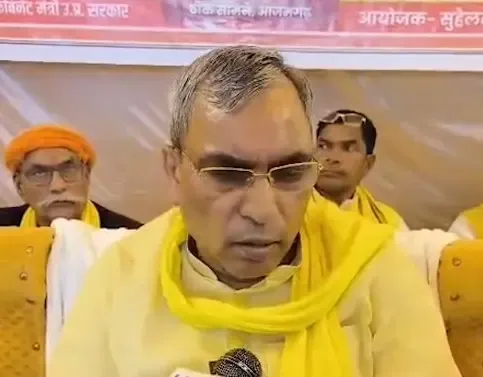
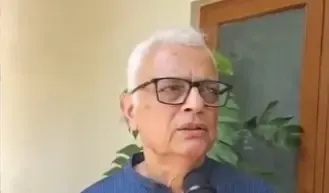
Former Chief Election Commissioner O.P. Rawat on Tuesday, 27 October 2026, expressed serious concern over allegations that Booth Level Officers' (BLO) identity cards and one-time passwords (OTPs) were misused to delete names from electoral rolls in Dhampur, Odisha. His remarks came as the Election Commission of India (ECI) filed a counter-affidavit in the Supreme Court defending its decisions on the Special Intensive Revision (SIR) exercise.
The BLO Complaint at the Heart of the Controversy
According to reports, 10 BLOs in Dhampur, Odisha, filed a First Information Report (FIR) alleging that officials used their identity cards and OTPs to delete several names from voter rolls without their knowledge. Rawat noted that such conduct, if proven, would represent a serious breach. 'This is indeed very concerning. Generally, BLOs or Election Commission employees report any wrongdoing to Election Commission officials,' he said. The fact that these officers chose to file an FIR — rather than escalate internally — underlines the gravity of the allegation.
What the Election Commission Told the Supreme Court
The Election Commission of India on Monday filed a counter-affidavit before the Supreme Court, asserting that all three orders relating to the SIR exercise — issued in June 2025, October 2025, and May 2026 — were approved unanimously by the three-member Commission. The affidavit was submitted in response to a petition challenging Chief Election Commissioner Gyanesh Kumar's functioning, which alleged that key decisions on electoral roll revision were taken without the knowledge or approval of the other two Commissioners, Sukhbir Singh Sandhu and Vivek Joshi.
Internal Objections and the Consensus Question
The controversy deepened after reports emerged that Commissioners Sandhu and Joshi had recorded objections to several decisions taken in the name of the poll panel over the past 10 months. The Commission, however, maintained in its affidavit that observations, suggestions, and queries noted by individual members during file processing did not constitute formal decisions of the Commission. It also clarified that Form 6, used for voter registration, had not been amended, and that the declaration introduced for the SIR was a separate document.
Rawat's Assessment of the Affidavit
Commenting on the Commission's legal filing, Rawat said formal decisions were expected to follow established procedural norms. 'I think it is correct because when the CEC and Election Commission's affidavit has come, it would be absolutely correct that all SIR-related decisions would have been taken on file, so all three would have signed it,' he said. He added that decisions reached during Commission meetings would inherently reflect consensus among its members. Rawat also noted that the point-wise response submitted by the poll panel should be assessed as legal proceedings progressed, and that fuller clarity would emerge once the matter was examined comprehensively.
What Happens Next
The Supreme Court is actively considering the petitions challenging the Commission's functioning and the legality of the SIR decisions. The ECI's counter-affidavit now forms part of the judicial record and remains subject to scrutiny. The BLO FIR in Odisha, meanwhile, adds a ground-level dimension to a dispute that has already reached the country's highest court — and could complicate the Commission's claim of orderly, unanimous decision-making.
Point of View
The integrity of every SIR exercise is open to question, regardless of how unanimous the Commission's formal approvals were. Rawat's measured concern carries weight precisely because he led the institution; his remarks implicitly acknowledge that internal reporting mechanisms may not be sufficient when the alleged wrongdoing originates within the system itself. The Supreme Court is now effectively being asked to adjudicate not just procedure, but the trustworthiness of the electoral infrastructure India will rely on at the next general election.
NationPress
27 Oct 2026
Frequently Asked Questions
What is the BLO credentials misuse allegation in Odisha?
Ten Booth Level Officers in Dhampur, Odisha, reportedly filed an FIR alleging that officials used their identity cards and OTPs to delete several names from electoral rolls without their authorisation. The allegation has raised concerns about the integrity of the Special Intensive Revision exercise.
What is the Special Intensive Revision (SIR) and why is it contested?
The Special Intensive Revision is an electoral roll revision exercise conducted by the Election Commission of India. It is being contested in the Supreme Court through a petition alleging that Chief Election Commissioner Gyanesh Kumar took key SIR-related decisions without the knowledge or approval of the other two Commissioners, Sukhbir Singh Sandhu and Vivek Joshi.
What did the Election Commission say in its Supreme Court affidavit?
The ECI's counter-affidavit, filed on Monday, maintained that all three SIR orders issued in June 2025, October 2025, and May 2026 were unanimously approved by the full three-member Commission. It also clarified that individual members' observations during file processing do not amount to formal Commission decisions.
Why is former CEC OP Rawat's reaction significant?
As a former Chief Election Commissioner, Rawat's concern carries institutional weight. His acknowledgment that the BLO allegations are 'very concerning' — while noting that such wrongdoing is typically reported internally — signals that the matter warrants serious scrutiny beyond routine administrative handling.
What happens next in the Supreme Court proceedings?
The Supreme Court is actively considering the petitions challenging the ECI's functioning and the legality of its SIR decisions. The Commission's counter-affidavit is now part of the judicial record, and further clarity is expected as the court examines the matter comprehensively.