Should Anyone Be Forced to Sing Vande Mataram?
Synopsis
Amidst political upheaval in Lok Sabha, Maulana Shahabuddin Rizvi emphasizes the need for freedom in reciting Vande Mataram, advocating for personal choice while reflecting on its historical significance. This discussion highlights ongoing debates surrounding national identity and individual rights in India.
Key Takeaways
Personal choice in singing Vande Mataram is essential.
Vande Mataram symbolizes India's historical struggle for independence.
The Supreme Court supports individual freedom regarding the song.
Political discussions reflect diverse views on national identity.
Vande Mataram continues to inspire future generations.
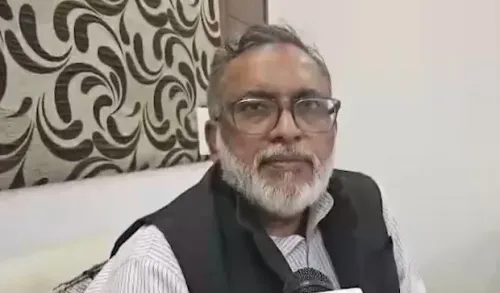
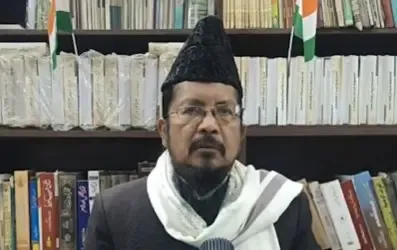
New Delhi, Dec 9 (NationPress) The leader of the All India Muslim Jamat, Maulana Shahabuddin Rizvi Barelvi, stated on Tuesday that the national anthem Vande Mataram should not be enforced on individuals, nor should anyone be prevented from singing it if they wish to do so. He highlighted that both the Constitution and judicial systems protect personal choice in such instances.
His comments arose amidst a heated debate in the Lok Sabha during a special session commemorating the 150th anniversary of the national song.
In an interview with IANS, Maulana Rizvi remarked, “Currently, there is unrest in the Lok Sabha about Vande Mataram. As we celebrate its 150th year since inception, both the ruling party and the Opposition are divided, each holding differing opinions.”
He continued, “To me, Vande Mataram is merely a song. Those who want to sing it should have the freedom to do so, while those who prefer not to should not face any pressure; they should act according to their own conscience. The Supreme Court, following the Madras High Court's ruling, declared that no individual should be coerced into singing it.”
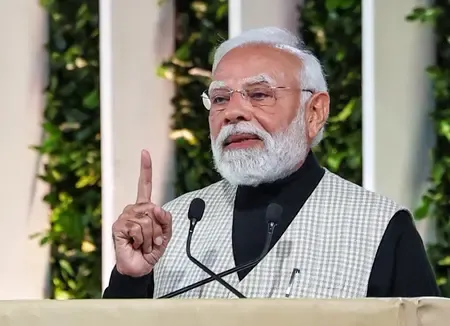
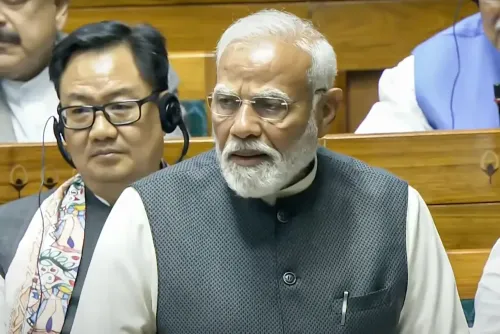
This statement followed Prime Minister Narendra Modi's invocation of the enduring spirit of Vande Mataram during a day-long discussion in the Lok Sabha, celebrating the song's 150 years. He described it as a hymn that stood “like a rock” against colonial rule, tracing its origins back to Bankim Chandra Chattopadhyay in 1875 and its significance during India’s freedom struggle.
The Prime Minister emphasized that Vande Mataram became “a current of emotion” that unified the nation, continuing to inspire generations, even during challenges like the COVID-19 pandemic.
He recalled Mahatma Gandhi’s description of the hymn as one that “connects us,” stating it remains a symbol of unity as India moves towards Atmanirbhar Bharat.
From historical bans and punishments for expressing its words to the countless freedom fighters who sacrificed their lives with Vande Mataram on their lips, the Prime Minister emphasized that the song embodies sacrifice, resilience, and hope.
PM Modi urged Parliament to ensure that the legacy and essence of Vande Mataram are preserved and passed down to future generations.
Point of View
It is essential to recognize the delicate balance between collective national identity and individual rights. Maulana Rizvi's remarks echo a broader sentiment in society that underscores the importance of personal choice in cultural expressions, especially in a diverse nation like India.
NationPress
10 Oct 2026
Frequently Asked Questions
What is the significance of Vande Mataram?
Vande Mataram is a national song that symbolizes India's struggle for independence and unity. It has been an anthem of hope and resilience throughout the nation's history.
Who is Maulana Shahabuddin Rizvi Barelvi?
Maulana Shahabuddin Rizvi Barelvi is the chief of the All India Muslim Jamat, known for his views on religious and cultural matters in India.
What does the Constitution say about individual rights?
The Constitution of India guarantees the right to freedom of speech and expression, which includes the right to choose whether or not to participate in cultural practices like singing Vande Mataram.
How has Vande Mataram evolved over time?
Vande Mataram has evolved from a literary piece composed by Bankim Chandra Chattopadhyay in 1875 to a significant national anthem that has been embraced by various movements and leaders in India's history.
Why is there a debate surrounding Vande Mataram?
The debate surrounding Vande Mataram often revolves around issues of national identity, individual rights, and political interpretations, reflecting the diverse opinions within Indian society.