Did Jawaharlal Nehru Limit Vande Mataram to Two Stanzas?
Synopsis
Union Home Minister Amit Shah launched a pointed critique against the opposition regarding their dismissal of the significance of Vande Mataram's 150th anniversary discussions. He highlighted historical instances of political maneuvering surrounding this national anthem, emphasizing its importance for India’s identity and future.
Key Takeaways
Amit Shah emphasizes the importance of discussing Vande Mataram in the context of its 150th anniversary.
He critiques the opposition's avoidance of national discussions.
Historical reference to Jawaharlal Nehru 's limitation of Vande Mataram highlights political maneuvering.
The significance of Vande Mataram as a unifying anthem transcends regional boundaries.
Shah calls for a renewed commitment to Vande Mataram in shaping India's future.
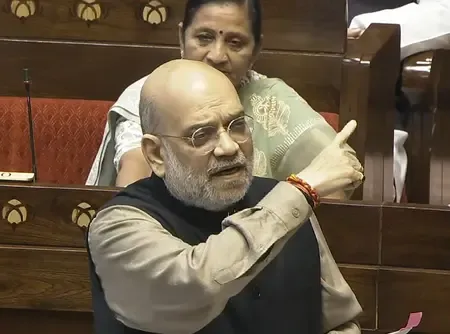
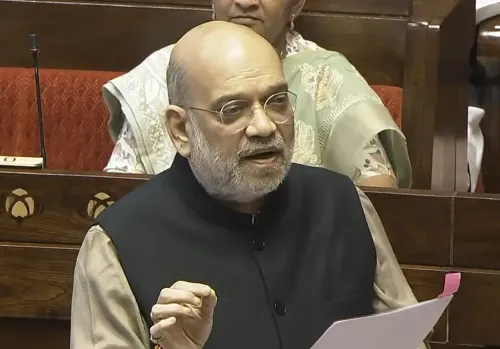
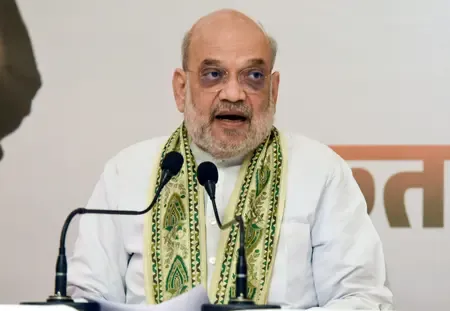
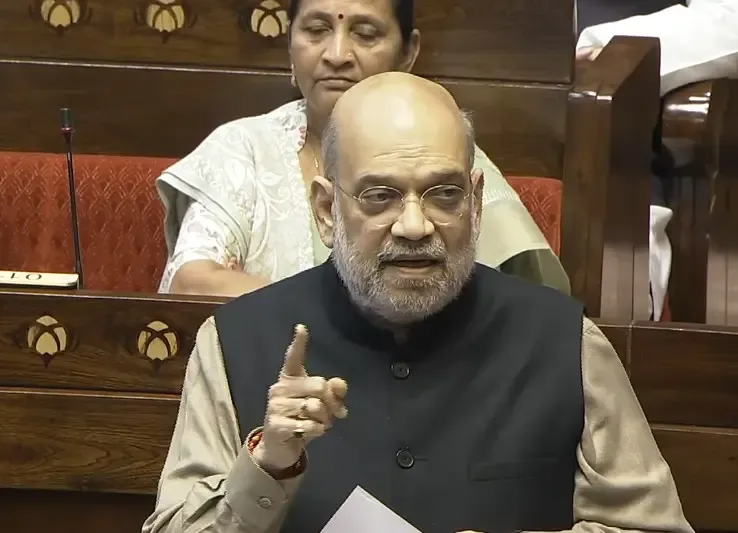
New Delhi, Dec 9 (NationPress) Union Home Minister Amit Shah fiercely criticized the opposition for questioning the relevance of discussing Vande Mataram in light of its 150th anniversary. He remarked that the trend of avoiding discussions is not a new phenomenon.
While addressing the Rajya Sabha, Shah stated, "Many members from the Congress party questioned the necessity of this discussion, labeling it a political maneuver to distract from pressing issues. We welcome discussions on national matters; it is not us who are boycotting Parliamentary sessions. If there is a desire for dialogue, boycotting must cease. We are unafraid and transparent, ready to debate any subject."
He emphasized the significance of this discussion, especially as the nation commemorates the 150th year of Vande Mataram's composition, saying, "It is crucial to acknowledge that evading discussions about Vande Mataram is not unprecedented. When Vande Mataram marked its 50th anniversary, we had yet to attain Independence. In 1937, during its golden jubilee, Jawaharlal Nehru split it into two and restricted the national anthem to just two stanzas."
He further asserted that this 'limitation' of Vande Mataram marked the beginning of appeasement politics.
"This appeasement contributed to the partition of our nation. Had Congress refrained from dividing Vande Mataram for its appeasement politics, our country might not have been split. In 100 years since its inception, while celebrations were anticipated, an Emergency was declared, suppressing voices that celebrated Vande Mataram. Under Indira Gandhi, those who championed Vande Mataram faced imprisonment," he stated.
Pointing out the discussions held in the Lok Sabha the previous day, Shah highlighted the absence of members from the Gandhi family, namely, Rahul Gandhi and Priyanka Gandhi Vadra.
"From Jawaharlal Nehru to the present leadership, Congress continues to resist Vande Mataram," he asserted.
He admonished the opposition's queries regarding the necessity of discussing Vande Mataram, stating, "The dedication to Vande Mataram was vital then, remains crucial now, and will always be significant as we strive for a remarkable India by 2047."
Shah also criticized the opposition for associating Vande Mataram with the impending West Bengal Assembly elections, asserting that "Vande Mataram transcends regional confines."
"Some believe that the discussion on Vande Mataram is merely an election strategy in Bengal, attempting to diminish its importance by linking it to the elections," he remarked.
"While it is indeed true that Bankim Babu, the composer of Vande Mataram, hailed from Bengal, the anthem itself is not limited to Bengal or even the country of its origin. Our freedom fighters sang it wherever they convened. Even today, when our soldiers at the border or police officers within the country sacrifice their lives, Vande Mataram is often their final utterance."
Point of View
It is essential to recognize the historical significance of Vande Mataram as a symbol of national identity. The discourse initiated by Amit Shah reflects ongoing tensions in Indian politics, where the interpretation and celebration of cultural symbols often become points of contention. A balanced approach is necessary to foster inclusivity and respect for diverse perspectives.
NationPress
10 Oct 2026
Frequently Asked Questions
What is the significance of Vande Mataram?
Vande Mataram is a national song symbolizing India's struggle for independence and unity.
Why did Amit Shah criticize the opposition?
He criticized the opposition for questioning the importance of discussing Vande Mataram during its 150th anniversary.
What historical event did Shah reference?
He referenced the limitation of Vande Mataram to two stanzas by Jawaharlal Nehru during its 50th anniversary.
What does Shah say about the need for discussion?
Shah emphasized the ongoing relevance of discussing Vande Mataram for India's future and unity.
How does Shah link appeasement politics to Vande Mataram?
He claims that the limitation of Vande Mataram led to appeasement politics, which contributed to the partition of India.