Jal Jeevan Mission: Denmark envoy attends Duhaua village water handover in Mirzapur
Synopsis
Denmark's Ambassador personally attended the handover of a Jal Jeevan Mission water scheme to villagers in Mirzapur — a ceremony that underlines both India's rural drinking water push and Denmark's unique status as the only international partner formally backing the mission. With 258 villages drawing water from the Belan River scheme, the question now is whether community institutions can sustain what external partnerships built.
Key Takeaways
Denmark's Ambassador Rasmus Abildgaard Kristensen attended the Jal Arpan ceremony in Duhaua village, Mirzapur on 16 September 2026 .
The event formally handed over the rural water supply scheme to the local community under the Jal Jeevan Mission .
The Water Treatment Plant at Lalganj supplies treated drinking water from the Belan River to 258 villages ; three are UNOPS intervention villages.
Denmark is described as the only international country partner formally supporting the Jal Jeevan Mission.
Village Water and Sanitation Committees (VWSCs) will now manage the scheme as micro-utilities responsible for sustained delivery.
UNOPS India expressed interest in expanding support to more villages across Mirzapur .
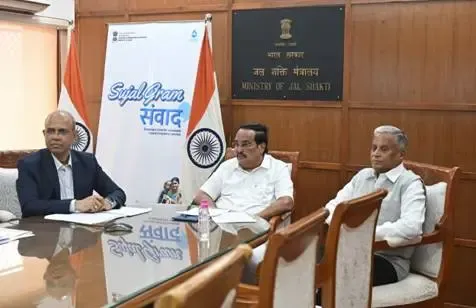
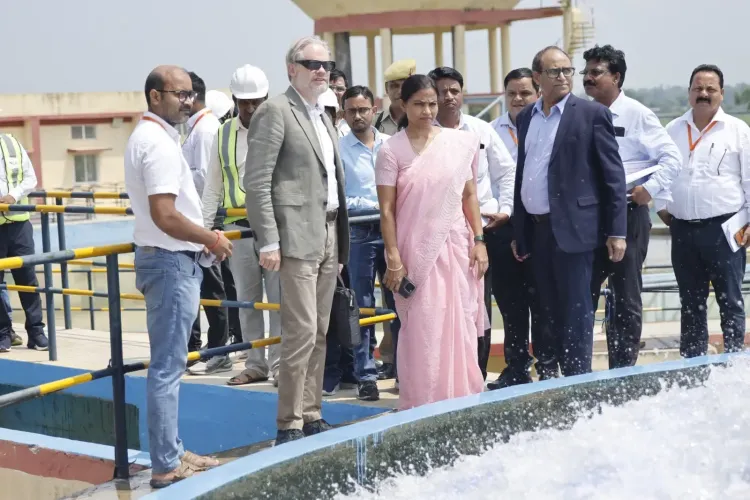
Denmark's Ambassador to India, Rasmus Abildgaard Kristensen, visited Duhaua village in Mirzapur, Uttar Pradesh, on 16 September 2026 to attend 'Jal Arpan' — a formal ceremony marking the handover of the village's rural water supply scheme to its local community under the Union government's flagship Jal Jeevan Mission. The event brought together senior district officials, United Nations Office for Project Services (UNOPS) representatives, and over 400 community members, with women forming a prominent part of the gathering.
Source to Tap: What the Visit Covered
Ambassador Kristensen first visited the Water Treatment Plant at Lalganj in Naraina Kala village, where he was briefed on plant operations and its Supervisory Control and Data Acquisition (SCADA) system. The plant draws water from the Belan River and is part of a multi-village scheme supplying treated drinking water to 258 villages across the district.
Among those 258 villages, three — Amravati, Bhawanipur, and Duhaua — are designated UNOPS intervention villages, receiving focused technical and community engagement support under the UNOPS-Denmark partnership.
Community Ownership at the Centre of Jal Arpan
The delegation then travelled to Duhaua, where Jal Sahelis trained by UNOPS received the Ambassador with a traditional welcome, followed by a transect walk to observe the water infrastructure in operation. At the Overhead Tank in Parsia, Kristensen spoke with the local pump operator and participated in the Jal Bandhan activity, symbolising collective commitment to water conservation. He also planted a tree sapling at the site.
The formal Jal Arpan ceremony was held at Jay Prakash Narayan Sarvodya Balak Vidyalaya, Parsia, and included a live water-quality testing demonstration, a children's role play on water and sanitation, and a collective Jal Shapath (water pledge). The Gram Pradhan of Duhaua addressed the gathering, alongside senior officials including Pawan Kumar Gangwar, District Magistrate; Vishal Kumar, Chief Development Officer; Vijeta, Additional DM, Namami Gange; and Vinod Mishra, Country Manager of UNOPS in India.
Denmark's Role and What Ambassador Kristensen Said
'Denmark and India have a long-standing and very strong partnership on water. We share a common understanding that water must be managed sustainably, efficiently and with the involvement of the communities who depend on it,' Ambassador Kristensen said at the event.
He added: 'Ultimately, a water supply scheme is not about pipes, pumps or infrastructure. It is about people. It is about a child being able to grow up with access to safe water; about families having water close to home; and about women and girls having more time for education, livelihoods and family life. That is why today's handover to the Village Water and Sanitation Committees is so important.'
Denmark is, according to the Ambassador, the only international country partner formally supporting the Jal Jeevan Mission — a distinction he described as a reflection of the 'trust and depth' of bilateral ties with India.
UNOPS and the Road Ahead for Mirzapur
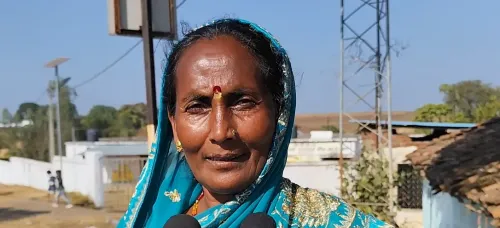
Amrita, a member of the Village Water and Sanitation Committee (VWSC), outlined how the community would manage the scheme going forward, underscoring the VWSC's role as a micro-utility responsible for sustained water service delivery.
Vinod Mishra of UNOPS India said the partnership aimed to develop an 'ideal village' model focusing on three dimensions: availability, accessibility, and quality of water. 'Moving forward, UNOPS is very interested in expanding our support to reach even more villages across Mirzapur,' he said. The Jal Arpan ceremony marks a significant milestone, but the durability of the scheme will ultimately depend on whether community institutions like VWSCs can sustain day-to-day operations without external support.
Point of View
But the mission's scale — hundreds of thousands of villages nationally — means bilateral support, however committed, can only be demonstrative. The real test for Mirzapur's 258 villages is whether state and local government fill that gap consistently.
NationPress
16 Sept 2026
Frequently Asked Questions
What is the Jal Arpan ceremony in Duhaua village, Mirzapur?
Jal Arpan is a formal handover ceremony under the Jal Jeevan Mission in which a completed rural water supply scheme is transferred from implementing agencies to the local community for self-management. The Duhaua event on 16 September 2026 marked the handover to the Village Water and Sanitation Committee (VWSC), which will now operate the scheme as a community micro-utility.
What is the Jal Jeevan Mission and what does it aim to achieve?
The Jal Jeevan Mission is the Union government's flagship programme to provide safe, piped drinking water to every rural household in India. In Mirzapur, the mission's multi-village scheme draws water from the Belan River through a treatment plant at Lalganj and supplies it to 258 villages.
Why is Denmark's involvement in the Jal Jeevan Mission significant?
Denmark is, according to Ambassador Rasmus Abildgaard Kristensen, the only international country formally partnering with India on the Jal Jeevan Mission. Working through UNOPS, Denmark has supported three intervention villages — Amravati, Bhawanipur, and Duhaua — in Mirzapur with technical assistance and community mobilisation.
Who are the Jal Sahelis and what role do they play?
Jal Sahelis are community women trained by UNOPS to champion water conservation and scheme management at the village level. At the Duhaua event, they welcomed the Danish Ambassador and participated in the transect walk, demonstrating the community's active stake in the water supply scheme.
What happens after the Jal Arpan handover?
Following the handover, the Village Water and Sanitation Committee (VWSC) assumes responsibility for operating and maintaining the water supply infrastructure as a local micro-utility. UNOPS has indicated interest in expanding its support to additional villages in Mirzapur, though long-term sustainability will depend on continued state and local government backing.