MP CMO highlights Jal Jeevan Mission tap water reach to 1.11 crore homes
Synopsis
The Chief Minister's Office of Madhya Pradesh said over 1 crore 11 lakh families in the state have been provided tap water connections under the Jal Jeevan Mission, calling it a resolve to deliver clean water to every home. The update credited CM Dr. Mohan Yadav and the Union Jal Shakti ministry.
Key Takeaways
Madhya Pradesh CMO reports over 1.11 crore families covered under Jal Jeevan Mission tap water rollout.
Mohan Yadav and the Union ministry handling minor irrigation and JJM.
JJM, launched in August 2019 , targets functional household tap connections for all rural homes.
Implementation in MP is led by the state Public Health Engineering Department.
Next milestone: state-wise progress updates from the Ministry of Jal Shakti .
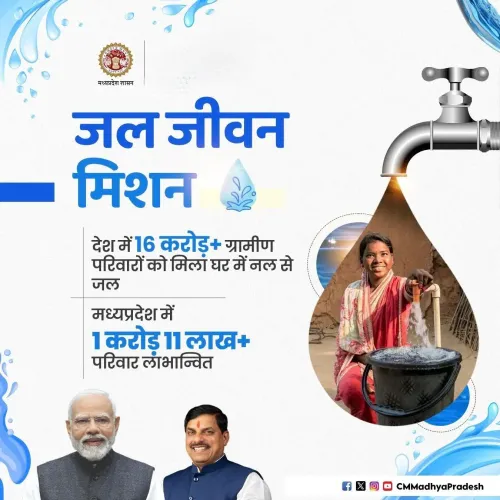
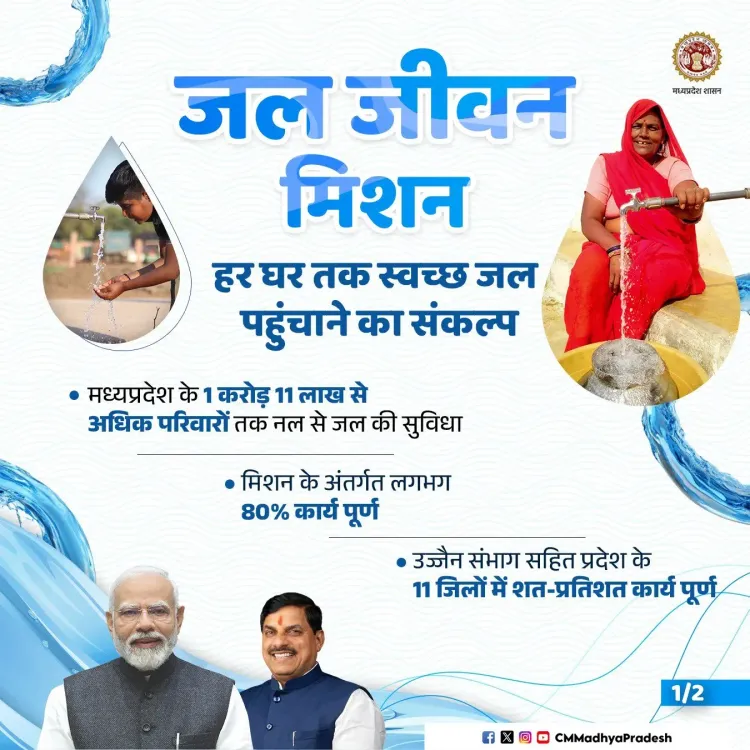
The Chief Minister's Office of Madhya Pradesh on Wednesday underscored the state's progress under the Jal Jeevan Mission, stating that more than 1 crore 11 lakh families in the state now have access to tap water connections at home. The post, tagged to Chief Minister Dr. Mohan Yadav and the Union Ministry concerned, framed the scheme as a 'resolve to deliver clean water to every household'.
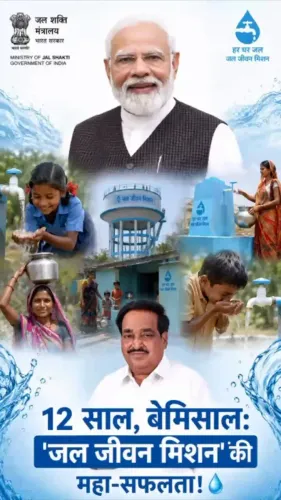
Translated from Hindi, the post reads: 'Jal Jeevan Mission — a resolve to bring clean water to every home. In Madhya Pradesh, over 1 crore 11 lakh families have been provided with tap water connections.' The communication was accompanied by a creative carrying the scheme's branding.
Context
The Jal Jeevan Mission (JJM) is a centrally sponsored programme announced by the Government of India in August 2019, with the objective of providing a functional household tap connection (FHTC) to every rural household for potable water on a regular and long-term basis.
Madhya Pradesh, one of India's largest states by geography and rural population, has been among the focus states for accelerated rollout, with implementation handled by the state Public Health Engineering Department in coordination with the Ministry of Jal Shakti.
Policy backdrop
JJM builds on earlier rural drinking water efforts, most notably the National Rural Drinking Water Programme, but shifts the unit of measurement from village-level supply to individual household tap connections. The mission also integrates source sustainability, greywater management and community participation through Village Water and Sanitation Committees.
The scheme aligns with Sustainable Development Goal 6 on clean water and sanitation, and progress is monitored on a public dashboard maintained by the Union ministry. State governments periodically release cumulative connection counts to track the gap between sanctioned and functional connections.
Stakeholders and impact
The primary beneficiaries are rural households, especially women and children who have traditionally borne the burden of fetching water over long distances. Improved access to piped water is also linked to lower incidence of waterborne illness and reduced school absenteeism among girls.
Implementation responsibility sits with the state's Public Health Engineering Department, panchayats and field-level Jal Samitis, while funding is shared between the Centre and the state under the mission's cost-sharing formula. Contractors, pump suppliers and pipeline manufacturers form the wider economic ecosystem around the rollout.
What's next
Attention will turn to the next round of progress reporting from the Ministry of Jal Shakti, which periodically publishes state-wise FHTC coverage. Sustainability of supply — measured by hours of daily water availability and quality testing — is likely to become the next benchmark beyond connection counts.
For the Madhya Pradesh government, the headline figure of 1.11 crore households is expected to feature in upcoming budget communications and rural development reviews, while last-mile connectivity in tribal-majority and hilly districts remains a continuing operational challenge.
Point of View
A pattern that has intensified as JJM approaches its saturation targets. For Madhya Pradesh, where rural water stress in tribal belts and the Bundelkhand region has long been a political issue, household tap connection counts double up as both welfare metric and electoral talking point. The next test is less about new connections and more about sustained supply, water quality and source security — areas where dashboards tend to be quieter.
NationPress
17 Oct 2026
Frequently Asked Questions
What is the Jal Jeevan Mission?
The Jal Jeevan Mission is a centrally sponsored scheme launched by the Government of India in August 2019 to provide functional household tap water connections to every rural home. It is implemented jointly by the Centre and states under the Ministry of Jal Shakti.
How many households in Madhya Pradesh have tap water under JJM?
According to the Madhya Pradesh Chief Minister's Office, more than 1 crore 11 lakh families in the state have been provided tap water connections under the Jal Jeevan Mission, as stated in its latest update.
Who is the Chief Minister of Madhya Pradesh leading this rollout?
Dr. Mohan Yadav is the Chief Minister of Madhya Pradesh and has been in office since December 2023. His government oversees the state-level execution of the Jal Jeevan Mission.
Which ministry runs the Jal Jeevan Mission?
The Union Ministry of Jal Shakti runs the Jal Jeevan Mission at the national level. It coordinates funding, technical guidelines and progress monitoring with state public health engineering departments.
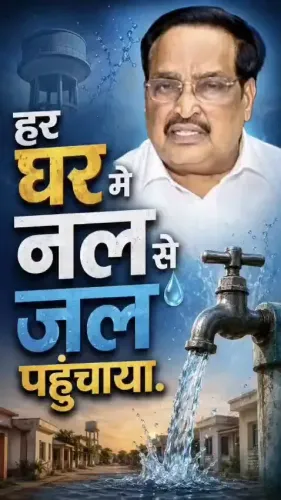
What does 'Har Ghar Nal Se Jal' mean?
'Har Ghar Nal Se Jal' translates to 'tap water for every home' and is the tagline of the Jal Jeevan Mission. It captures the scheme's goal of universal household-level piped water access in rural India.