Petroleum dealers seek MDR exemption on UPI fuel sales above ₹2,000
Synopsis
India's petrol pump dealers are pushing back against a new ₹5 MDR on UPI fuel transactions above ₹2,000 — a charge they say will erode already-thin commissions. With 30–40% of retail fuel purchases potentially affected, the AIPDA-Petroleum Ministry dialogue could reshape digital payment policy across essential sectors.
Key Takeaways
AIPDA representatives met Petroleum Ministry officials on 17 September 2026 to demand exemption from the new UPI MDR on fuel sales.
The revised UPI framework levies a flat ₹5 MDR per transaction on fuel purchases exceeding ₹2,000 .
Transactions above ₹2,000 account for roughly 30–40% of all retail fuel outlet purchases, according to dealers.
The Finance Ministry clarified MDR is not a government tax — it is distributed among banks and payment app providers to fund UPI infrastructure.
The same flat ₹5 MDR applies to railways, telecom, insurance, and agricultural inputs above ₹2,000 .
Dialogue between AIPDA and the government is ongoing; no resolution has been announced.
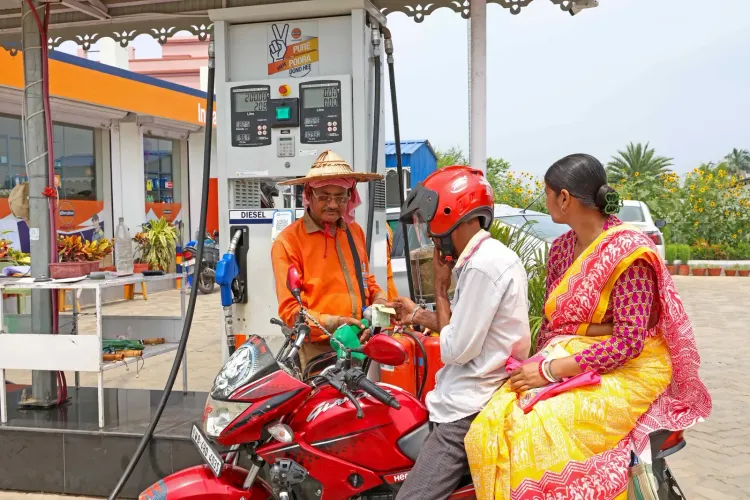
Representatives of the All India Petroleum Dealers Association (AIPDA) met senior officials of the Ministry of Petroleum and Natural Gas on Thursday, 17 September 2026, seeking a full exemption from the Merchant Discount Rate (MDR) levied on UPI transactions for fuel purchases at petrol pumps. The dealers argue the charge will squeeze already-thin margins on retail fuel sales, which operate on prescribed commissions.
What the New UPI Framework Entails
The revised UPI framework imposes a flat MDR of ₹5 per transaction on petrol and diesel purchases exceeding ₹2,000. According to AIPDA, transactions above this threshold account for approximately 30–40 per cent of total purchases across retail fuel outlets nationwide — making the charge a significant cost variable for dealers at scale.
Dealers' Concerns Over Margin Pressure
AIPDA noted that fuel retailers operate on government-prescribed commissions with limited room to absorb additional costs. The association emphasised that petroleum dealers have been early and consistent adopters of digital payments. 'Petroleum dealers have been at the forefront of adopting digital payments and have worked closely with the government to promote their use across the country,' AIPDA said in a statement. The body said it expects negotiations with the government to continue, adding: 'We look forward to continuing the dialogue towards a mutually beneficial solution for consumers, petroleum dealers, and all stakeholders in India's UPI ecosystem.'
Government's Rationale for Introducing MDR
Officials from the Petroleum Ministry explained that the MDR was introduced to fund the development of the next layer of India's UPI digital infrastructure. The Finance Ministry separately clarified that MDR is neither a tax nor a charge collected by the government or the National Payments Corporation of India (NPCI). Instead, it is distributed among payment ecosystem participants — including banks and payment application providers — to support UPI's ongoing operation and expansion.
Sectors Covered Under the Flat MDR Structure
The ₹5 flat MDR applies to UPI transactions above ₹2,000 in sectors deemed essential or thin-margin, including railways, telecommunications, insurance, fuel, and agricultural inputs. The government has said the flat-rate structure is designed to provide cost certainty for public services and businesses operating on narrow margins — though dealers argue that framing does not address the real burden on their commissions.
What Happens Next
AIPDA has signalled it will persist with its demand for a complete exemption for fuel retail transactions. The dialogue between the dealers' association and the Petroleum Ministry is ongoing, with no resolution announced as of Thursday. Given that the MDR touches hundreds of thousands of petrol pump transactions daily, the outcome of these discussions could have broad implications for how digital payments are structured across essential retail sectors in India.
Point of View
But essential-sector retailers — already locked into prescribed margins — have no mechanism to pass on new costs. Petroleum dealers were model digital-payment adopters precisely because transactions were free; charging them now risks undermining the goodwill that drove that adoption. The Finance Ministry's clarification that MDR is not a 'tax' is technically correct but politically thin — from a dealer's perspective, a mandatory deduction on every large transaction is functionally indistinguishable from one. The broader risk is precedent: if fuel gets an exemption, railways, telecom, and agri-input retailers will queue up with identical demands, leaving UPI's funding model in question.
NationPress
17 Sept 2026
Frequently Asked Questions
What is the new MDR on UPI fuel transactions?
A flat Merchant Discount Rate of ₹5 per transaction now applies to UPI payments above ₹2,000 at petrol pumps, under a revised UPI framework. The charge is distributed among banks and payment app providers to fund UPI infrastructure development, not collected by the government or NPCI.
Why are petroleum dealers seeking an MDR exemption?
Petroleum dealers say retail fuel sales operate on thin, government-prescribed commissions, leaving no room to absorb an additional per-transaction cost. Since 30–40% of retail fuel purchases exceed ₹2,000, the ₹5 MDR could materially erode dealer margins at scale.
What did the Finance Ministry say about MDR?
The Finance Ministry clarified that MDR is neither a tax nor a charge levied by the government or NPCI. It is shared among payment ecosystem participants — banks and payment app providers — to support the operation and expansion of the UPI network.
Which other sectors are covered by the flat ₹5 MDR?
Beyond fuel, the flat ₹5 MDR on transactions above ₹2,000 also applies to railways, telecommunications, insurance, and agricultural inputs — sectors the government has classified as essential or thin-margin.
Has any resolution been reached between AIPDA and the government?
No resolution has been announced as of 17 September 2026. AIPDA has said it will continue dialogue with the Petroleum Ministry toward a 'mutually beneficial solution' for consumers, dealers, and the broader UPI ecosystem.