Gadchiroli marks first 'Maoism-Free Diwali' in Binagunda after 40 years
Synopsis
For the first time in 40 years, firecrackers — not gunfire — echoed through Binagunda as Gadchiroli Police celebrated a 'Maoism-Free Diwali' across all 70 stations. The milestone follows Operation Antim Prahar and the opening of a new armed outpost, marking what officials call a turning point in one of India's longest-running insurgencies.
Key Takeaways
Gadchiroli Police celebrated a 'Maoism-Free Diwali' on 8 November 2026 across all 70 police stations, outposts and assistance centres in the district.
The remote village of Binagunda marked its first-ever Diwali celebration after 40 years of Maoist influence.
The Binagunda Armed Outpost was established in January 2026 , followed by Operation Antim Prahar in May 2026 , credited with eliminating Maoist presence locally.
Ramesh personally visited Binagunda and attributed success to personnel from C-60 , CRPF , SRPF and the Gadchiroli District Police .
Diwali was also celebrated with surrendered Maoist cadres at Navjeevan Vasahat rehabilitation centre.
Foodgrains and essential supplies were distributed to farmers in drought-affected remote areas with support from social organisations.
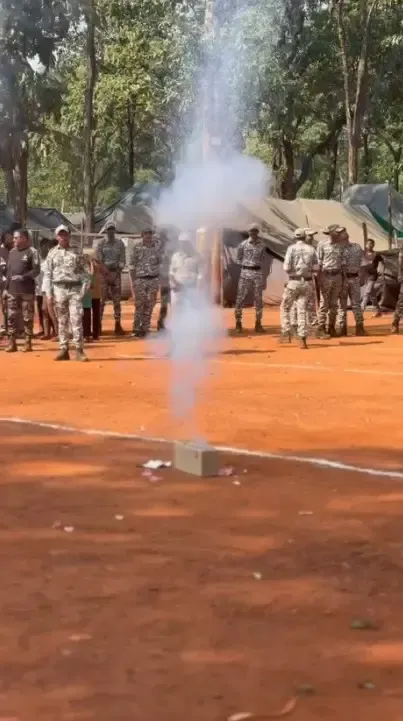
Gadchiroli district in Maharashtra witnessed a historic milestone on 8 November 2026 as the Gadchiroli Police celebrated Diwali under the theme 'Maoism-Free Diwali' — a first in decades for the region. The celebrations were especially significant in the remote village of Binagunda, once deep within Maoist-controlled territory, where firecrackers lit up the night sky for the first time under a new security environment.
What Changed in Binagunda
The transformation of Binagunda did not happen overnight. Superintendent of Police (SP) M. Ramesh credited two key developments: the establishment of the Binagunda Armed Outpost in January 2026, followed by the success of 'Operation Antim Prahar' in May 2026, which together effectively eliminated organised Maoist influence from the village and its surroundings.
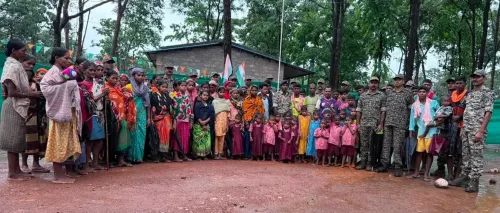
SP Ramesh personally visited the Binagunda Police Assistance Centre to celebrate the festival alongside villagers and security personnel, distributing sweets and firecrackers. 'Earlier, the darkness of Maoist fear prevailed in these forests, and the sound of gunfire echoed through the region. Today, after 40 years of struggle, the sound of Diwali firecrackers can be heard here. We are visiting homes, lighting lamps and spreading light and confidence in people's hearts,' Ramesh said.
Celebrations Across All 70 Police Stations
The 'Maoism-Free Diwali' initiative was rolled out across all 70 police stations, outposts and police assistance centres in Gadchiroli district, under the guidance of SP Ramesh. Senior officers travelled to remote locations to join residents in the festivities. Similar events were organised at Gardewada, Pendhri and Jimalgatta under the supervision of senior officers.
SP Ramesh credited the security success to personnel from C-60, CRPF, SRPF and the Gadchiroli District Police, calling their sacrifices and dedication central to the breakthrough.
Reaching Surrendered Cadres and Drought-Hit Farmers
In a notable humanitarian dimension, police personnel also celebrated Diwali with surrendered Maoist cadres residing at Navjeevan Vasahat in Gadchiroli — a rehabilitation centre for former insurgents. Separately, with the support of social organisations, foodgrains, festive snacks and essential supplies were distributed to farmers in drought-affected remote areas of the district.
Development and Trust as Pillars of a Naxalism-Free Future
SP Ramesh emphasised that security operations alone are insufficient to sustain the peace. He stated that 'peace, public participation, mutual trust and development' are equally critical to building a permanently Naxalism-free Gadchiroli. This comes amid broader state and central government efforts to accelerate development spending in left-wing extremism-affected districts. The first Diwali without the shadow of Maoist fear in Binagunda is, for many residents, not just a celebration — it is proof that four decades of conflict may finally be turning a corner.
Point of View
But symbols require structural follow-through. Operation Antim Prahar and the Binagunda outpost have created a security window — the question is whether the state will use it to accelerate development before the vacuum refills. Historically, counter-insurgency gains in central India have been reversed where policing outpaced governance. The inclusion of surrendered cadres and drought-hit farmers in the celebrations suggests an awareness of this trap, but awareness and sustained investment are different things. For Binagunda's residents, 40 years is a long time to wait for a first Diwali — and they will be watching whether the lights stay on.
NationPress
8 Nov 2026
Frequently Asked Questions
What is the 'Maoism-Free Diwali' celebrated in Gadchiroli?
It is a district-wide Diwali celebration organised by the Gadchiroli Police on 8 November 2026 under the theme 'Maoism-Free Diwali', marking the significant reduction of Maoist influence across the district. The celebrations spanned all 70 police stations, outposts and assistance centres, with the remote village of Binagunda observing its first-ever festive event after 40 years of conflict.
Why is Binagunda significant in Gadchiroli's anti-Maoist effort?
Binagunda was a remote, once Maoist-controlled village where normal civic life had been suppressed for decades. The establishment of the Binagunda Armed Outpost in January 2026 and the success of Operation Antim Prahar in May 2026 together broke Maoist hold over the area, making the 2026 Diwali its first celebration in a new security environment.
What was Operation Antim Prahar?
Operation Antim Prahar was a security operation conducted in May 2026 in Gadchiroli district, credited by SP M. Ramesh with playing a crucial role in eliminating Maoist influence in the region. It followed the opening of the Binagunda Armed Outpost in January 2026 and is considered a turning point in the district's decades-long counter-insurgency effort.
Who are the security forces credited with the gains in Gadchiroli?
SP M. Ramesh credited C-60 (the elite Gadchiroli commando unit), the Central Reserve Police Force (CRPF), State Reserve Police Force (SRPF) and the Gadchiroli District Police with the sacrifices and dedication that enabled the security breakthrough.
What happens to surrendered Maoists in Gadchiroli?
Surrendered Maoist cadres in Gadchiroli are housed at Navjeevan Vasahat, a rehabilitation facility in the district. During the 2026 Diwali celebrations, police personnel joined the former cadres there to mark the festival, reflecting a broader effort to integrate them back into civil society.