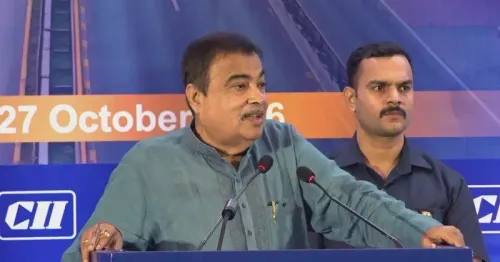
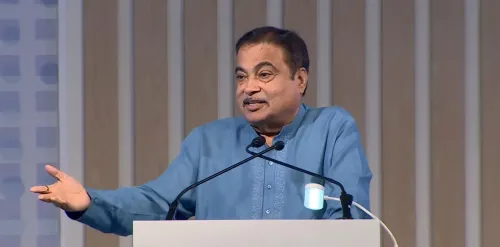
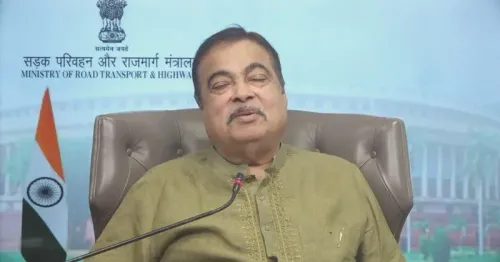
Gadkari Addresses 14th CII Bioenergy Summit in New Delhi

Synopsis
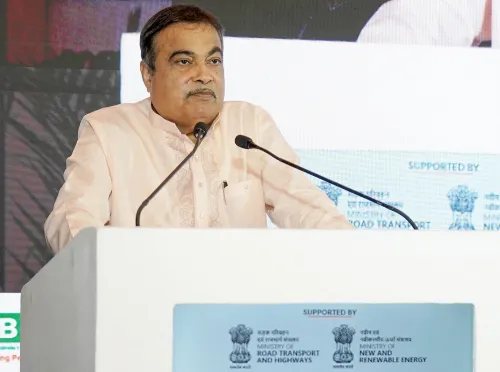
Union Minister Nitin Gadkari addressed the 14th CII Bioenergy Summit in New Delhi on November 17, 2026, spotlighting India's biofuel blending drive and the Road Transport Ministry's role in embedding renewable fuels into highway and vehicle policy.
Key Takeaways
Nitin Gadkari addressed the 14th CII Bioenergy Summit in New Delhi on November 17, 2026 .
The Confederation of Indian Industry (CII) has hosted this annual bioenergy platform for over a decade, bringing together industry and government on renewable fuel policy.
India's National Policy on Biofuels (2018) underpins the country's ethanol and biodiesel blending framework.
The Road Transport Ministry has linked bioenergy adoption to vehicle emission standards and highway fuel infrastructure .
Industry observers watch such addresses for signals on revised blending mandates, procurement policy updates, and infrastructure norms ahead of budget and regulatory cycles.
At the intersection of climate ambition and energy security, Union Road Transport and Highways Minister Nitin Gadkari took the podium at the 14th CII Bioenergy Summit in New Delhi on Tuesday, November 17, 2026 — signalling once again that bioenergy sits squarely at the top of India's transport and fuel agenda.
Why Gadkari and Bioenergy Are Inseparable
No minister in India's recent political history has spoken as consistently, or as combatively, about weaning the country off fossil fuels as Gadkari. The Road Transport Ministry has long argued that biofuels are not a supplement to India's energy mix — they are a strategic necessity. With the country importing billions of dollars worth of crude oil annually, every percentage point of ethanol or biodiesel blended into the fuel supply directly shrinks that import bill.
The Confederation of Indian Industry (CII) has held this bioenergy summit annually as a platform where industry and government negotiate ambition against feasibility. The 14th edition marks over a decade of that conversation — and the stakes have only grown sharper.
The Policy Architecture Behind the Summit
India's biofuel push has institutional roots. The National Policy on Biofuels, notified in 2018, set the foundational framework for ethanol and biodiesel blending targets, linking sugarcane surplus, agricultural residue, and waste biomass to the fuel supply chain. Since then, blending targets have been revised upward repeatedly, and the Ministry of Road Transport has embedded biofuel compatibility into vehicle emission and fuel-infrastructure standards for national highways.
Gadkari has personally championed flex-fuel vehicles, green hydrogen, and compressed biogas — technologies that transform farm waste and municipal organic matter into movement. His appearances at platforms like the CII Bioenergy Summit are as much policy signals as they are speeches: industry reads the minister's emphasis as a preview of what budget allocations and regulatory notifications may follow.
What the Industry Is Watching
For biofuel producers, sugarcane farmers, and clean-transport entrepreneurs in the room, the summit is a listening exercise as much as a networking one. Any directional statement on revised blending mandates, procurement policy updates, or highway fuel-station infrastructure norms could move investment decisions in the months ahead. The Road Transport Ministry's reach — across highway design, vehicle standards, and fuel retail policy — means Gadkari's words at an event like this carry tangible regulatory weight.
India's bioenergy sector stands at a moment where intent must convert into infrastructure. The minister's presence at the 14th CII Bioenergy Summit is a reminder that for this government, that conversion is a priority — not a footnote.
Point of View
Compressed biogas, and biodiesel infrastructure. The summit's outcomes, particularly any hint at tightened blending targets or new procurement norms, will be read as a forward indicator for India's clean-transport regulatory pipeline in the coming budget cycle.
NationPress
17 Nov 2026
Frequently Asked Questions
What is the CII Bioenergy Summit?
The CII Bioenergy Summit is an annual event organised by the Confederation of Indian Industry to bring together policymakers, industry leaders, and investors to discuss bioenergy policy, technology, and investment in India. The 2026 edition is its 14th iteration.
What is India's National Policy on Biofuels?
India's National Policy on Biofuels was notified in 2018 to promote the blending of ethanol and biodiesel into conventional fuels, reduce crude oil imports, and support the use of agricultural residues as feedstock for energy production.
Why does Nitin Gadkari focus so much on bioenergy?
As Union Minister for Road Transport and Highways, Gadkari oversees vehicle emission standards and highway fuel infrastructure — two key levers for scaling biofuel adoption. He has consistently argued that biofuels are essential to cut India's oil import bill and reduce vehicular emissions.
What could come out of the 14th CII Bioenergy Summit?
Industry watchers look for directional signals on revised ethanol and biodiesel blending targets, updates to procurement policy, and norms for bioenergy fuel stations on national highways, any of which could inform upcoming budget or regulatory notifications.
What is the current status of ethanol blending in India?
India has progressively raised its ethanol blending targets under the National Policy on Biofuels, with the government aiming to increase the share of ethanol in petrol to reduce dependence on imported crude oil and support the farm sector through feedstock procurement.