Gadkari addresses Ayurveda-cancer seminar in Nagpur
Synopsis
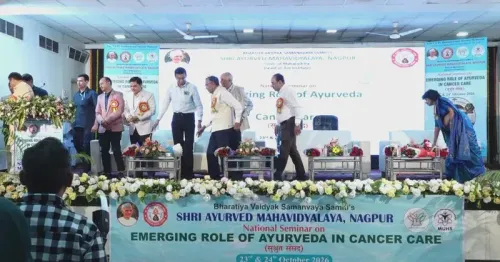
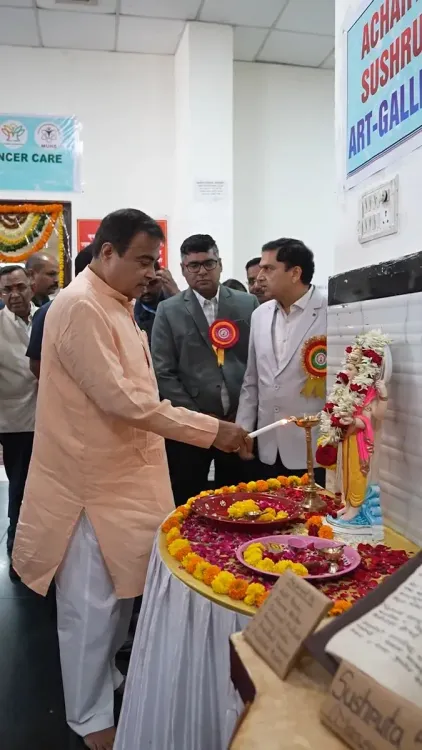
Union Minister Nitin Gadkari addressed a national seminar on 'Emerging Role of Ayurveda in Cancer Care' hosted by Shri Ayurvedic Mahavidyalaya in Nagpur on 24 October 2026, lending senior political visibility to India's AYUSH-driven integrative oncology agenda.
Key Takeaways
Nitin Gadkari addressed the national seminar on 24 October 2026 in Nagpur .
The event was organised by Shri Ayurvedic Mahavidyalaya , a prominent Ayurvedic institution in Nagpur.
The seminar focused on the 'Emerging Role of Ayurveda in Cancer Care' — a frontier area of integrative medicine research.
India's Ministry of AYUSH , established in 2014 , and the National AYUSH Mission (2015) provide the policy and funding backbone for such research.
Senior political participation signals continued government-level backing for evidence-based integration of traditional medicine with modern oncology.
Updated AYUSH guidelines on integrative cancer protocols are anticipated as ongoing research matures.
At a moment when integrative medicine is moving from the margins to the mainstream, Union Road Transport and Highways Minister Nitin Gadkari stepped into a different kind of policy conversation on Saturday, 24 October 2026 — addressing a national seminar on the emerging role of Ayurveda in cancer care, hosted by Shri Ayurvedic Mahavidyalaya in Nagpur.
A road minister at an Ayurveda seminar — and why that signals something
Gadkari's presence at the event is notable precisely because he holds no health portfolio. Senior political figures crossing into the AYUSH space typically signal institutional momentum — the kind that draws government attention and, often, funding. Shri Ayurvedic Mahavidyalaya, a long-standing Ayurvedic college and research institution in Nagpur, organised the seminar to examine how traditional medicine systems can complement modern oncology.
Nagpur is Gadkari's home turf and political base, and the city has served as a recurring venue for national-level academic and policy events in the traditional medicine space.
The AYUSH framework powering this conversation
The seminar sits squarely within a policy architecture that has been building for over a decade. The Ministry of AYUSH, created in 2014, was designed to pull Ayurveda, Yoga, Unani, Siddha and Homeopathy out of the institutional periphery and into the national healthcare mainstream. A year later, the National AYUSH Mission (2015) added research, education and delivery infrastructure — including specific attention to studying Ayurvedic interventions in non-communicable diseases such as cancer.
The result has been a steady stream of clinical research collaborations between AYUSH institutions and allopathic oncology departments, aimed at generating evidence for integrative protocols rather than replacing conventional treatment.
Why cancer care is the frontier for integrative medicine
Cancer is the stress test for any integrative medicine claim. Patients and clinicians demand evidence; regulators demand safety data. Yet it is precisely in oncology — where treatment side effects can be debilitating and quality-of-life outcomes matter enormously — that Ayurvedic supportive care has attracted serious research interest. Seminars like this one serve as peer-review forums where practitioners, researchers and policymakers align on what the evidence actually supports. The Ministry of AYUSH is expected to issue updated guidelines on integrative cancer protocols as ongoing funded research matures.
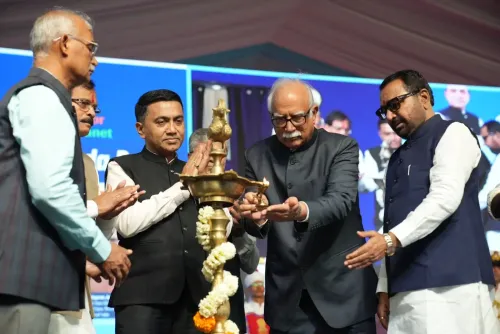
For Gadkari, addressing such a forum reinforces a pattern of senior BJP leaders lending political visibility to the AYUSH agenda — a signal to institutions that traditional medicine research carries government-level backing beyond the dedicated ministry itself.
Point of View
A pattern the BJP has cultivated since 2014 to mainstream traditional medicine without waiting for a dedicated ministry to carry the load alone. It positions Ayurveda not as alternative medicine but as a complementary system worthy of institutional and scientific investment, particularly in high-stakes disease areas like cancer. The move also reinforces Nagpur's role as a hub for BJP-aligned civic and academic events, deepening Gadkari's local institutional footprint. As AYUSH-funded oncology research approaches publishable outcomes, political visibility at forums like this one helps shape the narrative ahead of any new national guidelines.
NationPress
24 Oct 2026
Frequently Asked Questions
What was the seminar Nitin Gadkari attended in Nagpur about?
The seminar, organised by Shri Ayurvedic Mahavidyalaya in Nagpur, focused on the 'Emerging Role of Ayurveda in Cancer Care' — exploring how traditional Ayurvedic medicine can complement modern oncology treatments.
What is Shri Ayurvedic Mahavidyalaya?
Shri Ayurvedic Mahavidyalaya is an Ayurvedic college and research institution based in Nagpur that regularly hosts national-level seminars on traditional medicine and its applications in modern healthcare.
What is India's AYUSH framework and how does it relate to cancer care?
The Ministry of AYUSH, created in 2014, promotes Ayurveda, Yoga, Unani, Siddha and Homeopathy within the national healthcare system. The National AYUSH Mission (2015) funds research into traditional medicine for non-communicable diseases, including cancer, encouraging evidence-based integration with allopathic oncology.
Why did a road minister address an Ayurveda seminar?
Senior BJP leaders frequently lend political visibility to AYUSH events to signal government-level backing for traditional medicine research beyond the dedicated ministry, reflecting a broader policy strategy of mainstreaming Ayurveda.
What are the next steps for Ayurveda in cancer treatment in India?
The Ministry of AYUSH is expected to release updated guidelines on integrative cancer care protocols as ongoing funded research projects mature and generate publishable clinical evidence.