Gadkari launches Concessional Local Pass for highway-side residents
Synopsis
Union Minister Nitin Gadkari has announced a Concessional Local Pass for non-commercial vehicle owners living within 20 km of National Highway Fee Plazas, effective 1 November 2026, under the government's 'Ease of Living' initiative.
Key Takeaways
The Concessional Local Pass scheme launches on 1 November 2026 for eligible non-commercial vehicle owners.
Beneficiaries must reside within 20 kilometres of a National Highway Fee Plaza .
The move is positioned under the government's 'Ease of Living' agenda to reduce routine toll burdens on local residents.
Implementation sits with the National Highways Authority of India (NHAI) , with FASTag expected to be the delivery mechanism.
The policy builds on local-user concession provisions in the National Highways Fee Rules that date back to the early 2000s.
Detailed eligibility criteria, verification process and FASTag integration are to be confirmed via official gazette notification before November.
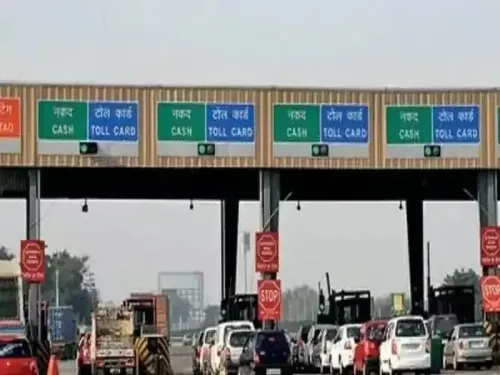
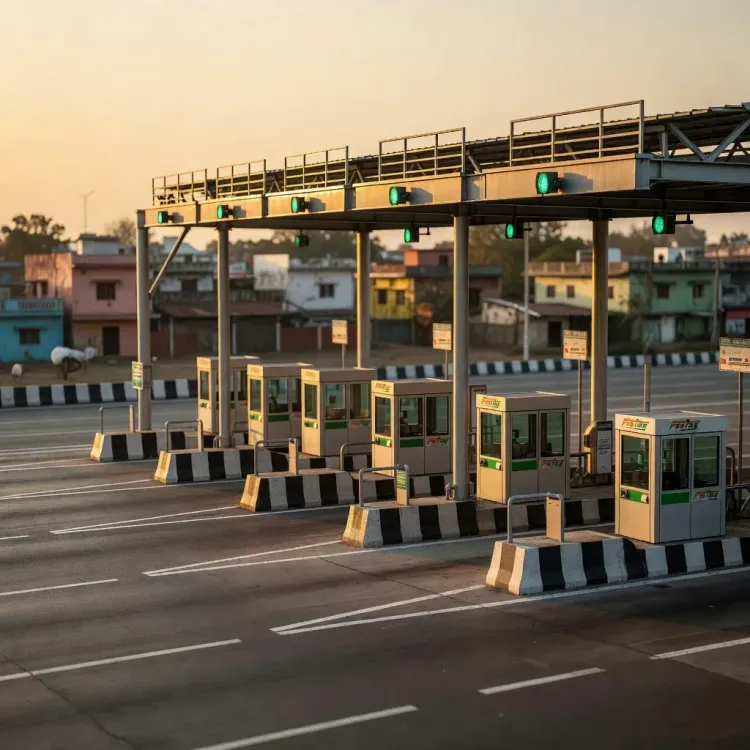
Starting 1 November 2026, millions of Indians living close to national highway toll plazas are set for meaningful relief at the booth — Union Road Transport and Highways Minister Nitin Gadkari announced a Concessional Local Pass for eligible non-commercial vehicle owners residing within 20 kilometres of National Highway Fee Plazas.
Who gets the pass — and why it matters
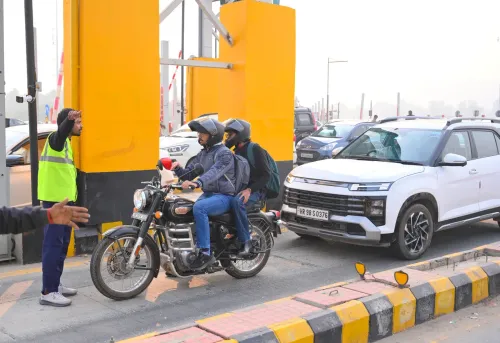
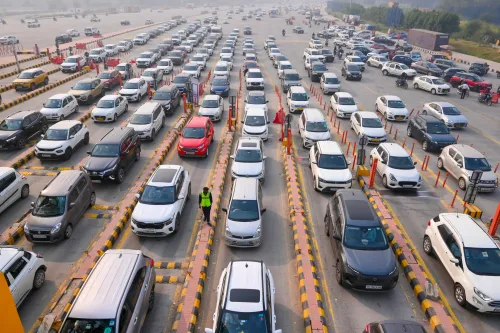
The scheme targets a long-standing grievance: residents who live near a national highway but must cross a toll plaza for routine, everyday errands — a school run, a hospital visit, a trip to the local market. For them, toll charges accumulate into a real, recurring household cost. The Concessional Local Pass is designed to cut that burden directly.
Gadkari framed the move squarely within the government's 'Ease of Living' agenda — the broader push to simplify citizen services and reduce friction in everyday life. The announcement links to an official Ministry of Road Transport and Highways press release, signalling a formal policy notification rather than a proposal still in the works.
Bharatmala's double edge — and how concessions answer it
India's highway network has expanded dramatically under the Bharatmala Pariyojana, adding thousands of kilometres of new and upgraded corridors. More highways, however, also means more fee plazas cutting across communities that previously had open, free access to adjacent roads. The concessional-pass mechanism is the government's recurring answer to that tension — a targeted carve-out that lets infrastructure growth proceed without pricing locals off roads they depend on daily.
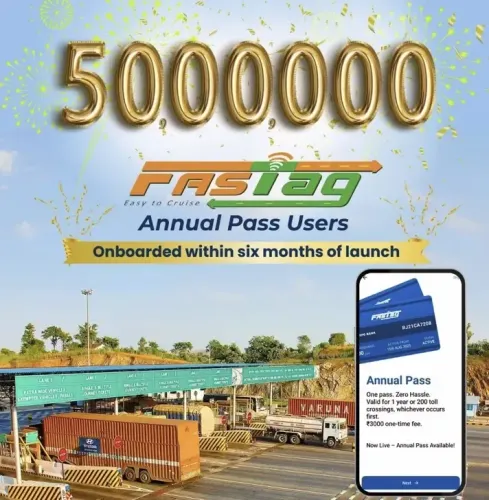
The policy lineage runs back to amendments of the National Highways Fee (Determination of Rates and Collection) Rules, which have included local-user provisions since the early 2000s. What has changed is scale: with FASTag now the mandatory, cashless backbone of national highway toll collection since December 2019, administering such concessions digitally — rather than through manual gate passes — is finally practical at a national level.
November 1 deadline and what to watch
The National Highways Authority of India (NHAI), which operates fee plazas across the country, will be the implementation arm. The precise eligibility criteria — which vehicles qualify, what proof of residence is required, and exactly how the pass integrates with FASTag-linked accounts — are expected to be detailed in the official gazette notification ahead of the rollout date.
For the roughly 20-km radius catchment around each plaza, the announcement is concrete and time-bound. A date is set. A benefit is named. Now the machinery has to deliver it.
If NHAI's FASTag infrastructure absorbs the concessional pass smoothly, the model could become a template for future local-concession expansions — a citizen-centric layer built quietly into the digital toll system that already handles crores of transactions every day.
Point of View
Toll plazas increasingly bisect communities, generating local resentment that can quietly erode support for infrastructure projects. By formalising a digital concession tied to FASTag, the Ministry converts a long-running grievance into a visible 'Ease of Living' win without denting the broader tolling revenue model. The real test is operational — whether NHAI can build a clean, fraud-resistant verification layer into its FASTag ecosystem before the November 1 deadline. A smooth rollout strengthens the case for wider, technology-driven concession programmes across India's rapidly expanding highway network.
NationPress
27 Oct 2026
Frequently Asked Questions
What is the Concessional Local Pass for National Highway toll plazas?
It is a discounted toll pass announced by Union Minister Nitin Gadkari for eligible non-commercial vehicle owners who live within 20 km of a National Highway Fee Plaza, effective from 1 November 2026.
Who is eligible for the Concessional Local Pass on national highways?
Eligible applicants are non-commercial vehicle owners who reside within 20 kilometres of a National Highway Fee Plaza. Exact verification criteria are expected in the official gazette notification before November 2026.
When does the highway Concessional Local Pass start?
The scheme is set to begin on 1 November 2026, as announced by the Ministry of Road Transport and Highways.
Will the Concessional Local Pass work with FASTag?
The pass is expected to be integrated with FASTag, India's mandatory digital toll collection system, though the precise mechanics will be confirmed in the official gazette notification ahead of the rollout.
Which body will implement the Concessional Local Pass at toll plazas?
The National Highways Authority of India (NHAI), which operates fee plazas across the national highway network, is the primary implementation body for the scheme.