Gadkari Reviews 10,064 km of Rajasthan National Highways
Synopsis
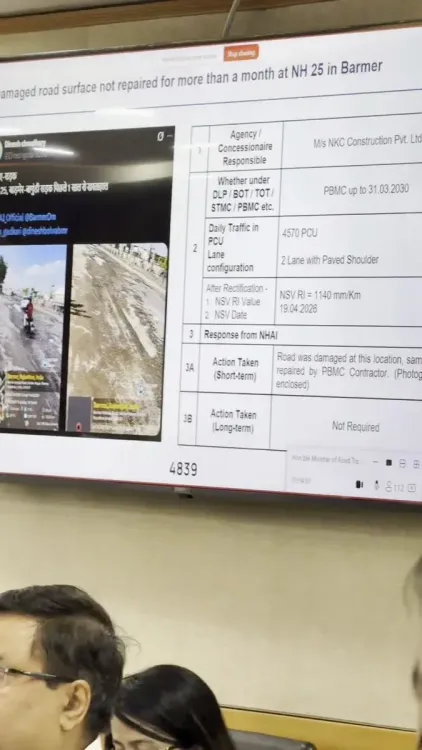
Union Minister Nitin Gadkari reviewed the quality and maintenance of 10,064 km of Rajasthan national highways in New Delhi on 25 May 2026, directing officials on timely delivery, quality benchmarks, technology integration, and monsoon preparedness.
Key Takeaways
10,064 km of National Highways in Rajasthan were reviewed for quality and maintenance status on 25 May 2026 .
The review was convened in New Delhi and attended by MoS Ajay Tamta , H.D.
Malhotra , and officials from NHAI and MoRTH .
Minister Gadkari stressed timely project delivery, stringent quality benchmarks, and integration of advanced technologies.
Officials were directed to ensure complete monsoon preparedness through proactive measures and robust response mechanisms.
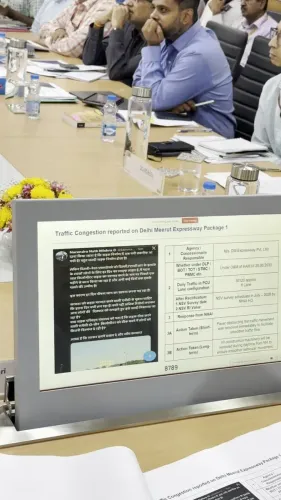
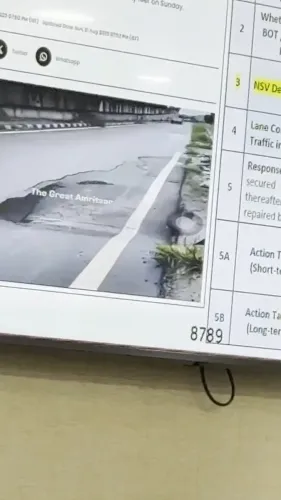
The review was triggered by inputs received through media and social media platforms , reflecting a responsive governance approach.
The exercise aligns with Bharatmala Pariyojana and PM Gati Shakti frameworks targeting highway quality and multimodal connectivity.
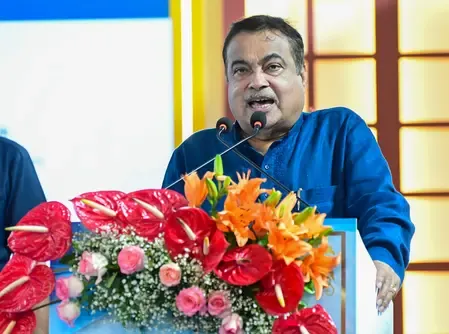
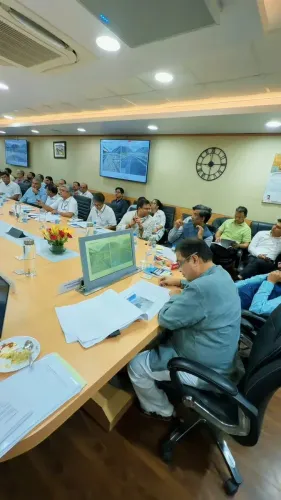
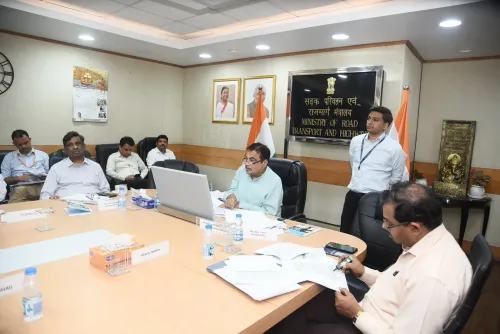
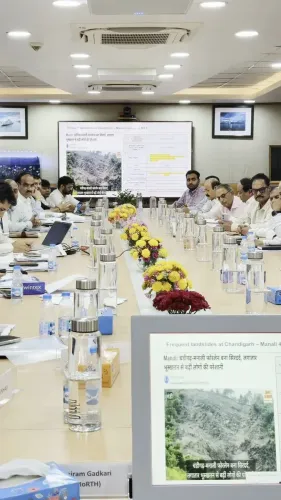
Union Road Transport and Highways Minister Nitin Gadkari on Monday, 25 May 2026, chaired a comprehensive review meeting in New Delhi covering the quality and maintenance status of 10,064 km of National Highways in Rajasthan, alongside Union Minister of State Ajay Tamta, H.D. Malhotra, and senior officials from NHAI, MoRTH, and project contractors. The review was prompted by inputs gathered through media and social media platforms flagging concerns about highway conditions in the state.
Context
Gadkari noted that the meeting stressed 'the importance of timely project delivery, adherence to stringent quality benchmarks, and the integration of advanced technologies to build sustainable and efficient highways.' Officials were also directed to ensure complete monsoon preparedness through proactive measures and robust response mechanisms to maintain road safety and long-term durability. The review is notable for being triggered in part by citizen and media feedback channelled through social platforms, reflecting a shift toward responsive governance in infrastructure oversight.
Rajasthan is a critical node in India's north-western highway network, serving as a logistics corridor connecting the National Capital Region with Gujarat, Punjab, and Haryana, and onward to key ports and border crossings. The state's vast geography and arid terrain make highway maintenance particularly demanding, with monsoon-season damage a recurring challenge for contractors and NHAI project managers alike.
Policy Backdrop
The review sits within the broader framework of Bharatmala Pariyojana, approved in 2017, which targets the development of over 34,000 km of economic corridors and national highways across India. The PM Gati Shakti national master plan, launched in 2021, added a layer of digital coordination, integrating road projects with satellite mapping and multimodal logistics planning to accelerate execution and reduce inter-agency delays.
The National Infrastructure Pipeline, announced in 2019, earmarked substantial allocations for road sector modernisation and maintenance — a commitment that has translated into heightened scrutiny of contractor performance and project timelines at the ministry level. Gadkari's instruction to integrate 'advanced technologies' aligns with earlier ministerial directives on deploying real-time quality monitoring tools at construction sites.
Stakeholders and Impact
The most immediate beneficiaries of an improved Rajasthan highway network are the state's logistics and freight sector, which relies on national highways for the movement of agricultural produce, minerals, and manufactured goods to ports and consumption centres. Commuter safety — a recurring concern on stretches flagged through social media — also stands to improve if the ministry's quality benchmarks and monsoon-preparedness directives translate into on-ground action by contractors.
NHAI contractors operating in Rajasthan face tighter accountability following the review, with officials instructed to enforce quality norms more rigorously. The involvement of MoS Ajay Tamta and H.D. Malhotra signals that follow-through will be monitored at the ministerial level, not left solely to field engineers. Civil society groups and freight associations in the state have long flagged pothole-prone stretches and delayed repair work as barriers to economic activity.
What's Next
The ministry is expected to initiate follow-up state-level inspections and accelerate the rollout of technology-based monitoring systems under existing highway projects as part of the 2026-27 budget cycle. Monsoon preparedness — a time-sensitive directive given the approaching June-September rain season — will likely be the first metric against which the review's outcomes are measured. Sustained improvement in Rajasthan's highway network would reinforce the Centre's broader push to reduce logistics costs and improve freight efficiency across the north-western corridor.
Point of View
Directing contractors now limits the political liability of viral pothole videos. Embedding the review within the Gati Shakti and Bharatmala frameworks allows the ministry to present routine quality monitoring as part of a grand connectivity vision, reinforcing the BJP's infrastructure-led development narrative ahead of state and national electoral cycles. The presence of two junior ministers alongside NHAI and contractor officials also suggests the Centre is tightening the accountability chain at the field level, not merely issuing top-down directives.
NationPress
8 Oct 2026
Frequently Asked Questions
Why did Gadkari review Rajasthan national highways in May 2026?
Minister Gadkari convened the review after receiving inputs through media and social media platforms about the quality and maintenance condition of national highways in Rajasthan, covering 10,064 km of the network.
What is Bharatmala Pariyojana and how does it relate to Rajasthan highways?
Bharatmala Pariyojana , approved in 2017 , is a central government programme to develop over 34,000 km of economic corridors and national highways across India, with Rajasthan forming a key part of the north-western connectivity grid.
What is PM Gati Shakti and its role in highway projects?
PM Gati Shakti , launched in 2021 , is a national master plan that uses digital and satellite tools to coordinate multimodal infrastructure projects, helping reduce delays and improve planning across road, rail, and logistics networks.
Who attended the Rajasthan highway review meeting with Gadkari?
The meeting was attended by Union MoS Ajay Tamta , H.D. Malhotra , and officials from NHAI , MoRTH , and project contractors.
What are the key directives issued after the Rajasthan highway review?
Gadkari directed officials to ensure timely project delivery, adhere to stringent quality benchmarks, integrate advanced technologies, and implement complete monsoon preparedness measures to maintain road safety and long-term highway durability.