Gadkari Visits FIEM R&D Centre in Gurugram, Backs Innovation-Led Manufacturing
Synopsis
Union Minister Nitin Gadkari visited the FIEM R&D and Global Innovation Centre in Gurugram on 14 July 2026, praising its cutting-edge research and calling such institutions vital to India's vision of an innovation-led, globally competitive manufacturing economy.
Key Takeaways
Nitin Gadkari visited the FIEM R&D and Global Innovation Centre in Gurugram on 14 July 2026 .
The minister described the facility as showcasing 'cutting-edge research, innovation, and technological excellence.' FIEM Industries is an Indian automotive components maker specialising in lighting and signalling systems with multiple R&D centres.
The visit aligns with the Make in India initiative (launched 2014 ) and the PLI scheme for automobiles notified in September 2021 .
Gurugram is a major hub for automotive and technology R&D within the National Capital Region industrial corridor.
Further PLI expansions targeting auto-sector R&D are expected to be signalled at upcoming Budget or Auto Expo events.
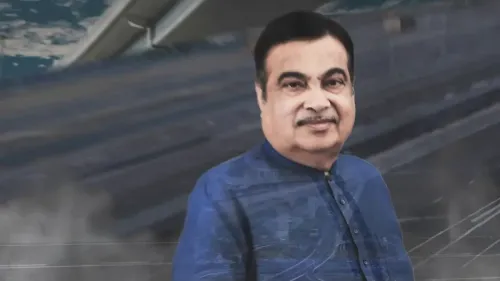
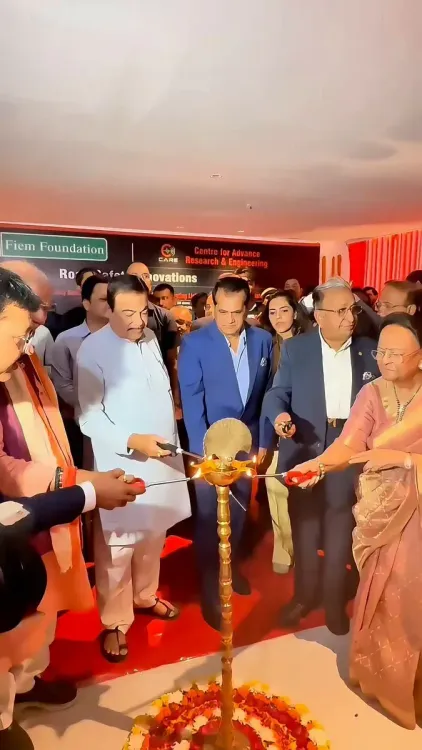
Union Road Transport and Highways Minister Nitin Gadkari on Tuesday, 14 July 2026, visited the FIEM R&D and Global Innovation Centre in Gurugram, Haryana, calling the facility an encouraging example of cutting-edge research and technological excellence driving India's manufacturing capabilities.
Context
Sharing his impressions on X, Gadkari said he found it 'encouraging to witness cutting-edge research, innovation, and technological excellence driving India's manufacturing capabilities.' He added that 'such institutions play a vital role in strengthening our vision of an innovation-led, globally competitive India.' The visit to Gurugram — a key node in the National Capital Region industrial corridor — underlines the minister's ongoing engagement with private-sector R&D facilities aligned with national manufacturing goals.
Policy Backdrop
FIEM Industries is an Indian automotive components manufacturer specialising in lighting, signalling, and related systems, with multiple R&D facilities across the country. The company's Global Innovation Centre in Gurugram represents the kind of private investment in advanced engineering that successive governments have sought to catalyse through landmark programmes.
The Make in India initiative, launched in September 2014, set out to position India as a global manufacturing destination by attracting foreign direct investment and raising manufacturing's share of GDP. Building on that foundation, the government released the Automotive Mission Plan 2016–2026 in 2015, targeting $300 billion in sectoral turnover and higher technology absorption. The Production Linked Incentive (PLI) scheme for automobiles and auto components, notified in September 2021, further incentivised domestic value addition and private R&D investment.
Gurugram and the broader Delhi-NCR region have emerged as preferred locations for automotive and technology R&D centres, with multiple global and Indian firms establishing engineering hubs there to serve both domestic and export markets.
Stakeholders and Impact
The primary beneficiaries of this policy direction are automotive component manufacturers, engineering and R&D workforces, and the broader manufacturing ecosystem. When a senior Union minister visits and publicly endorses a private R&D facility, it signals continued government support for moving up the value chain — from assembly to design and innovation — without direct public funding of the facility itself.
For FIEM Industries, the ministerial visit represents visible recognition of its investments in domestic innovation infrastructure. For the wider auto-components sector, it reinforces that government policy remains oriented towards rewarding firms that build indigenous research capability rather than relying solely on imported technology.
What's Next
Industry observers and policymakers will watch for any further expansion of PLI incentives specifically targeting auto-sector R&D, as well as announcements related to new testing and homologation centres that could support the development of next-generation vehicle technologies in India. Upcoming Union Budget discussions and major automotive industry events are expected to be the next forums where such policy signals may crystallise into concrete measures.
Minister Gadkari's consistent pattern of visiting manufacturing and innovation sites suggests that public endorsement of private R&D investment will remain a key instrument of industrial diplomacy as India pursues a larger share of global automotive supply chains.
Point of View
The engagement is a reminder that India's manufacturing ambitions depend as much on private capital and indigenous engineering as on state incentives. The choice of Gurugram — the NCR's automotive and tech R&D nerve centre — also reinforces the government's implicit preference for clustering high-value industry in established corridors. Stakeholders will read the visit as a soft signal ahead of Budget season that PLI and allied schemes for auto components remain politically and administratively alive.
NationPress
14 Jul 2026
Frequently Asked Questions
Why did Nitin Gadkari visit the FIEM R&D Centre in Gurugram?
Gadkari visited the FIEM R&D and Global Innovation Centre on 14 July 2026 to witness its research and innovation capabilities firsthand, calling such institutions vital to India's goal of becoming an innovation-led, globally competitive manufacturing nation.
What is FIEM Industries and what does it make?
FIEM Industries is an Indian automotive components manufacturer that specialises in lighting, signalling, and related systems, with multiple R&D facilities across India including its Global Innovation Centre in Gurugram.
How does this visit relate to Make in India?
The Make in India initiative, launched in September 2014, aims to raise India's manufacturing share of GDP and attract investment. Ministerial visits to private R&D centres like FIEM's are part of the government's broader effort to publicly endorse facilities that embody this vision.
What is the PLI scheme for automobiles?
The Production Linked Incentive scheme for automobiles and auto components was notified in September 2021 and offers financial incentives to manufacturers that invest in domestic production and value addition, including R&D activity.
What can we expect next from India's auto-sector R&D policy?
Industry watchers anticipate possible announcements on expanded PLI incentives for auto R&D and new testing or homologation centres at upcoming Union Budget deliberations or major automotive industry events.