Amarnath Yatra 2026: Ganderbal Police holds mock drill at key security points
Synopsis
With Amarnath Yatra 2026 starting 3 July, Ganderbal Police ran multi-agency mock drills at three key locations on 28 June — testing evacuation, emergency response, and inter-agency coordination. This year's pilgrimage carries added complexity: the route beyond both base camps is a declared no-fly zone, leaving ground forces as the sole emergency responders for lakhs of devotees.
Key Takeaways
Ganderbal Police conducted mock drills on 28 June 2025 at Model Naka Chinner , Kijpora , and Margund in Jammu and Kashmir .
Drills involved CAPF , SDRF , Fire and Emergency Services , and the Health Department , among others.
Amarnath Yatra 2026 begins 3 July and concludes 28 August on Raksha Bandhan.
The cave shrine sits at 3,880 metres above sea level in Anantnag district .
The route beyond both base camps is designated a no-fly zone this year — no helicopter services available to pilgrims.
Pilgrims can use the Pahalgam route (four days) or the Baltal route (same-day darshan).
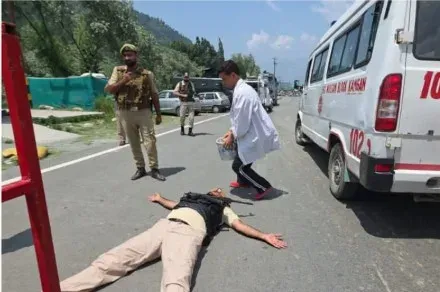
Ganderbal Police on Sunday, 28 June conducted comprehensive mock drills at multiple strategic locations across Ganderbal district in Jammu and Kashmir, stepping up security preparations for the Shri Amarnath Ji Yatra (SANJY) 2026, which begins on 3 July. The exercises tested inter-agency coordination, evacuation protocols, and emergency response capabilities ahead of the annual high-altitude pilgrimage.
Locations and Agencies Involved
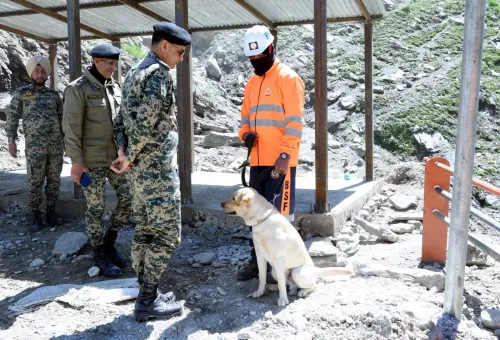
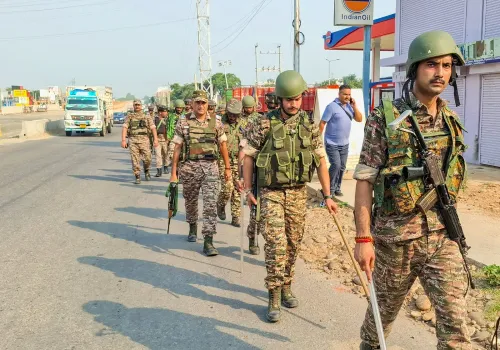
The drills were carried out at Model Naka Chinner, Kijpora, and Margund — three locations identified as strategically significant along the Yatra corridor. Participating agencies included Ganderbal Police, Central Armed Police Forces (CAPF), the State Disaster Response Force (SDRF), Fire and Emergency Services, the Health Department, and other concerned stakeholders.
According to a police statement, the exercises simulated various emergency scenarios to assess 'operational readiness, inter-agency coordination, evacuation procedures and response mechanisms.' Participating teams demonstrated prompt action, effective communication, and coordinated adherence to Standard Operating Procedures (SOPs).
Key Security Commitment
Ganderbal Police reiterated its commitment to providing a 'safe, secure and hassle-free pilgrimage experience' to devotees throughout the Yatra period. Officials said all contingency plans have been thoroughly tested and streamlined following Sunday's exercises.
This comes amid heightened security consciousness in the Kashmir valley, where the Amarnath Yatra has historically required extensive multi-agency deployment. Notably, this is one of several preparatory drills being conducted across districts in the weeks leading up to the pilgrimage's commencement.
Yatra Route and Shrine Details
The Amarnath Yatra 2026 runs from 3 July to 28 August, concluding on Shravan Purnima coinciding with Raksha Bandhan. The cave shrine, situated at an altitude of 3,880 metres above sea level in the Kashmir Himalayas in Anantnag district, houses a naturally formed ice stalagmite that devotees believe symbolises the mythical powers of Lord Shiva. The structure reportedly waxes and wanes with the phases of the moon.
Pilgrims may travel via the longer Pahalgam base camp route — a four-day trek — or the shorter Baltal base camp route, which allows same-day darshan and return. Significantly, the route beyond both base camps has been declared a no-fly zone this year, meaning no helicopter services are available to devotees for SANJY 2026.
What to Watch
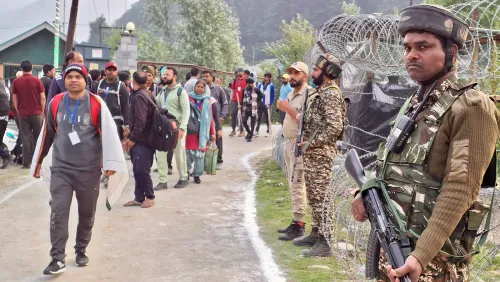
With the Yatra less than a week away, security agencies are expected to ramp up presence at both base camps and along the trekking routes. The no-fly zone restriction adds logistical pressure on ground-level emergency response, making drills like Sunday's exercise in Ganderbal especially critical this season.
Point of View
But the no-fly zone declaration this year changes the calculus materially. Helicopter evacuation has historically been the fastest fallback for medical emergencies at altitude — removing that option places the entire burden on ground teams operating in terrain that is both remote and weather-volatile. Whether the SOPs tested on Sunday are genuinely stress-tested for that scenario, or are largely symbolic rehearsals, is the question that deserves scrutiny. The Amarnath Yatra draws lakhs of pilgrims annually, many elderly and altitude-naive; the gap between a well-choreographed drill and real emergency response in the Himalayas can be consequential.
NationPress
27 Sept 2026
Frequently Asked Questions
When does Amarnath Yatra 2026 begin and end?
Amarnath Yatra 2026 begins on 3 July and concludes on 28 August, coinciding with Shravan Purnima and Raksha Bandhan. The pilgrimage runs for approximately 57 days.
Why did Ganderbal Police conduct a mock drill before the Yatra?
Ganderbal Police conducted the mock drill on 28 June to test inter-agency coordination, evacuation procedures, and emergency response mechanisms ahead of the Amarnath Yatra 2026. The exercises aimed to ensure all Standard Operating Procedures are streamlined before pilgrims arrive.
Are helicopters available for Amarnath Yatra 2026?
No. The route beyond both the Pahalgam and Baltal base camps has been declared a no-fly zone this year, meaning no helicopter services are available to devotees during SANJY 2026. All emergency response will rely on ground-level agencies.
What are the two routes to the Amarnath cave shrine?
Pilgrims can choose between the Pahalgam base camp route, a longer trek that takes four days to reach the shrine, or the Baltal base camp route, which allows same-day darshan and return to base camp.
Where is the Amarnath cave shrine located?
The Amarnath cave shrine is located in the Kashmir Himalayas in Anantnag district, Jammu and Kashmir, at an altitude of 3,880 metres above sea level. It houses a naturally formed ice stalagmite revered by Hindu devotees as a symbol of Lord Shiva.