Rahul Gandhi Meets Family of NEET Suicide Victim Pradeep Meghwal
Synopsis
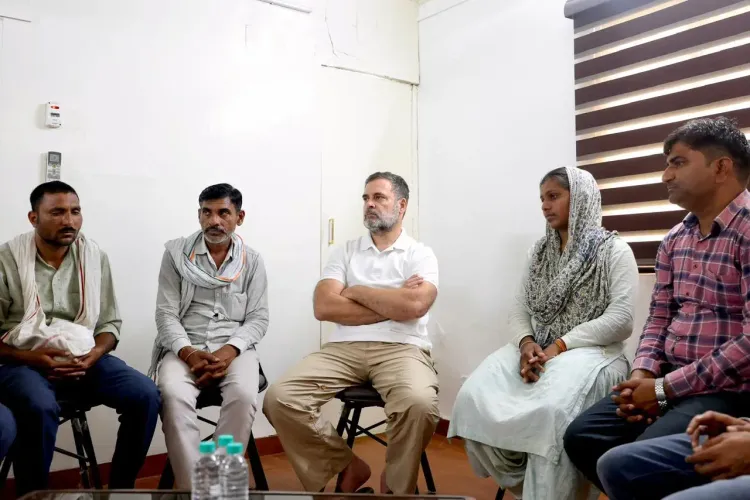
Congress leader Rahul Gandhi met the family of Pradeep Meghwal, a student who died by suicide following the NEET paper leak, on May 27, 2026. Gandhi called the family's grief immeasurable and highlighted the systemic pressure millions of Indian students face amid repeated examination integrity failures.
Key Takeaways
Rahul Gandhi, Leader of the Opposition, met the family of Pradeep Meghwal on May 27, 2026 , a student who died by suicide after the NEET paper leak.
Gandhi described the parents' grief as beyond words, emphasising that 'the son was lost through no fault of their own.' He highlighted that crores of Indian students live under intense pressure from studies, competition, and an uncertain future.
NEET, India's sole undergraduate medical entrance test, has faced repeated paper leak allegations, most notably in NEET-UG 2024 , which triggered a CBI probe and Supreme Court monitoring.
The National Testing Agency (NTA) , under the Ministry of Education, conducts NEET and has faced sustained scrutiny over systemic vulnerabilities in exam conduct.
Opposition pressure for structural examination reform is expected to intensify ahead of the next NEET cycle.
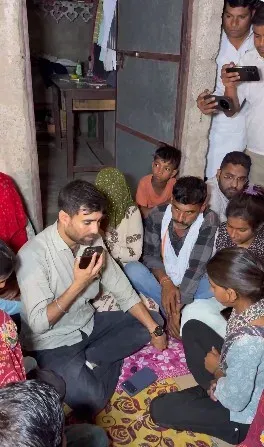
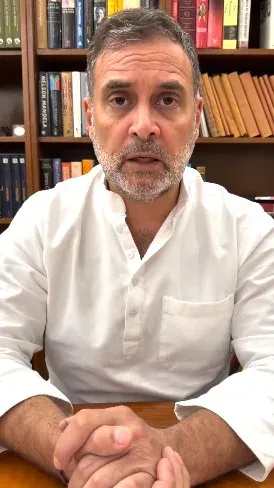
Congress leader Rahul Gandhi, Leader of the Opposition in the Lok Sabha, on Wednesday, May 27, 2026, met the family of Pradeep Meghwal, a young student who died by suicide after being devastated by the NEET paper leak. Gandhi shared the meeting on X, expressing grief over the family's loss and calling attention to the pressure faced by millions of students across India.
Context
In his post, Gandhi wrote: 'आज NEET पेपर लीक से आहत होकर आत्महत्या करने वाले होनहार छात्र प्रदीप मेघवाल के परिवार से मिला' — 'Today I met the family of talented student Pradeep Meghwal, who died by suicide, devastated by the NEET paper leak.' He added that the family's grief 'cannot be contained in words' and that the parents had 'lost their son through no fault of their own.'
Gandhi further noted that 'crores of children in this country are living under the pressure of studies, competition, and their future' — and that paper leaks compound that burden in a deeply unjust way.
Policy Backdrop
The National Eligibility cum Entrance Test (NEET) is India's single nationwide undergraduate medical entrance examination, conducted by the National Testing Agency (NTA), an autonomous body under the Ministry of Education. Introduced in 2013 and made the sole medical entrance test from 2016 after the Supreme Court upheld its validity, NEET replaced a patchwork of state-level examinations.
India has witnessed repeated instances of paper leaks and irregularities in high-stakes national examinations over the past decade. In NEET-UG 2024, widespread allegations of paper leaks triggered student protests across the country, prompted a CBI probe ordered by the Union government, and led the Supreme Court to monitor related petitions. Despite incremental tightening of exam protocols, systemic vulnerabilities in centralised testing have persisted across successive administrations.
The pattern has drawn sustained scrutiny from opposition parties, student organisations, and the judiciary alike, with questions repeatedly raised about the NTA's preparedness and the integrity of the examination infrastructure.
Stakeholders and Impact
Medical aspirants and their families bear the most immediate cost of examination failures. For students from economically marginalised backgrounds — many of whom invest years of preparation and family savings into a single NEET attempt — a compromised examination can be catastrophic. The case of Pradeep Meghwal has put a human face on what policy debates often treat as an administrative problem.
Gandhi's visit signals that the Congress party intends to keep the issue of examination integrity in the political foreground. As Leader of the Opposition, Gandhi has previously raised NEET-related concerns in Parliament and in public communications, framing the repeated failures as a systemic governance failure rather than isolated incidents.
What's Next
Observers will watch for any fresh directives from the Supreme Court or the parliamentary standing committee on education regarding exam reforms and the NTA's preparedness ahead of the next NEET cycle. Gandhi's public outreach to the affected family is likely to intensify opposition demands for accountability — including questions about whether structural reforms to examination conduct have been implemented in the years since the 2024 NEET controversy.
The broader debate over whether a single centralised examination can equitably serve India's vast and diverse student population — numbering in the lakhs of aspirants annually — remains unresolved, and cases like Pradeep Meghwal's are expected to re-energise calls for comprehensive reform.
Point of View
Designed to keep the human cost of examination failure at the centre of public discourse rather than allowing it to recede into bureaucratic debate. By naming the student and meeting the parents, he anchors a systemic policy argument — the repeated failure of centralised testing — in individual grief, a tactic that has historically proven effective in mobilising public opinion on education issues. The move also signals that the Congress party views examination integrity as a durable electoral and parliamentary pressure point, not a one-cycle controversy. Whether it translates into concrete legislative action depends on whether the opposition can sustain coordinated scrutiny of the NTA and the Ministry of Education.
NationPress
25 Sept 2026
Frequently Asked Questions
Who was Pradeep Meghwal?
Pradeep Meghwal was a young student who died by suicide after being devastated by the NEET paper leak, according to Rahul Gandhi's post on May 27, 2026. Specific details of his case have not been independently verified.
Why did Rahul Gandhi meet Pradeep Meghwal's family?
Rahul Gandhi met the family to express condolences and to highlight what he described as the unbearable pressure faced by millions of Indian students due to paper leaks and examination irregularities in NEET.
What is the NEET paper leak controversy?
NEET-UG 2024 faced widespread allegations of paper leaks, prompting a CBI probe ordered by the Union government and Supreme Court monitoring of related petitions. India has seen repeated such incidents in high-stakes national examinations over the past decade.
What is the National Testing Agency (NTA)?
The National Testing Agency is an autonomous body under India's Ministry of Education responsible for conducting NEET-UG and several other national-level entrance examinations. It has faced sustained criticism over systemic vulnerabilities in its examination processes.
What reforms are being demanded for NEET after paper leak incidents?
Opposition parties, student groups, and the Supreme Court have called for structural reforms to examination conduct, greater accountability for the NTA, and a broader review of whether a single centralised test can equitably serve India's millions of medical aspirants.