Giriraj Singh Highlights 8 Tourist Spots Surging Under Modi Push
Synopsis
Union Textiles Minister Giriraj Singh flagged a rise in visitor numbers at eight Indian destinations, attributing the trend to PM Modi's domestic tourism drive. The post echoes the government's long-running Dekho Apna Desh and Swadesh Darshan campaigns, which have repositioned domestic travel as a pillar of India's economic and cultural strategy.
Key Takeaways
Giriraj Singh shared a post on 25 May 2026 highlighting tourist surges at eight Indian destinations linked to PM Modi's domestic tourism push.
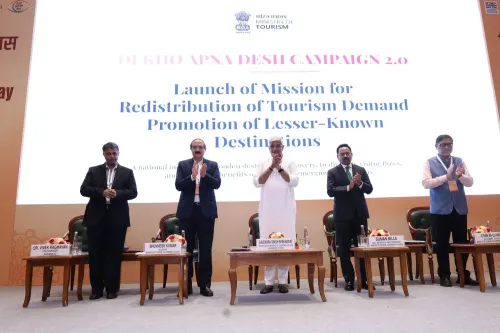
The Dekho Apna Desh campaign, launched in January 2020 , has been a central plank of the government's effort to boost domestic travel.
The Swadesh Darshan scheme, introduced in 2014-15 , funds integrated development of theme-based tourist circuits across India.
Rising domestic tourist footfall benefits local economies including hospitality, handicrafts, transport, and food sectors.
The textile sector has an indirect stake in tourism growth, as visitor traffic drives demand for traditional handlooms and craft products.
Ministry of Tourism annual arrival data will be the key metric to watch for confirming whether the reported surge is sustained.
Union Textiles Minister Giriraj Singh on Monday, 25 May 2026, shared a post highlighting eight domestic tourist destinations that have seen a surge in visitor numbers following Prime Minister Narendra Modi's sustained push for domestic tourism in India.
Context
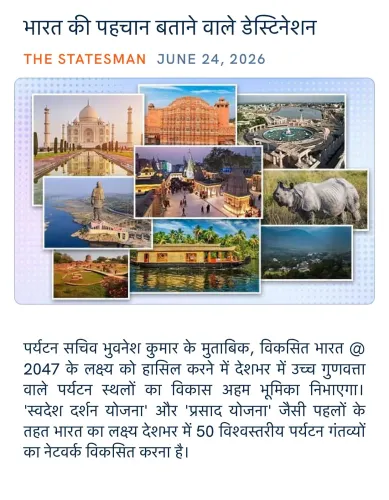
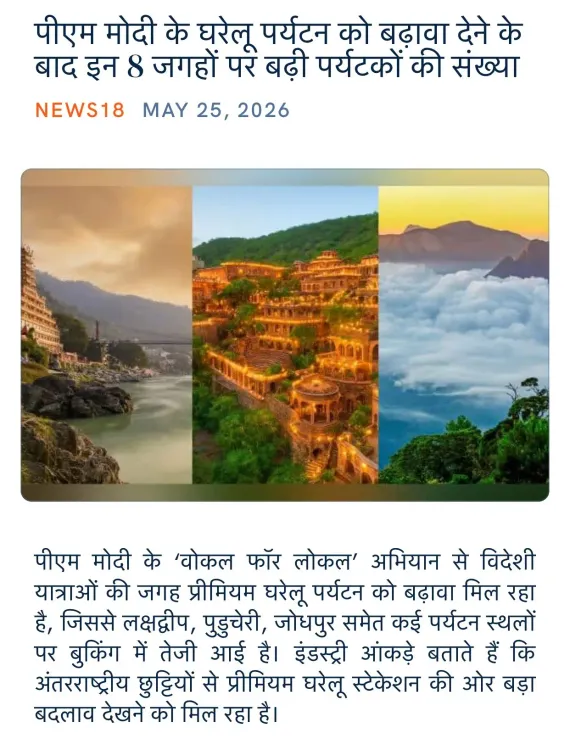
Singh's post, shared via the NaMo App, points to a broader trend of rising footfall at select Indian destinations, framing the growth as a direct outcome of the Central government's domestic tourism advocacy. The Hindi headline he shared translates to: 'पीएम मोदी के घरेलू पर्यटन को बढ़ावा देने के बाद इन 8 जगहों पर बढ़ी पर्यटकों की संख्या' ('After PM Modi's push for domestic tourism, tourist numbers have risen at these 8 places'). While the specific eight destinations and precise visitor figures cited in the linked content have not been independently verified, the trend of rising domestic travel across India has been widely documented in official tourism data.
Policy Backdrop
The Central government has anchored its tourism strategy on two flagship initiatives. The Dekho Apna Desh campaign, launched in January 2020, was designed to encourage Indians to explore their own country and reduce dependence on outbound travel. Before that, the Swadesh Darshan scheme, introduced in 2014-15, provided funding for the integrated development of theme-based tourist circuits across states.
Together, these programmes have directed infrastructure investment and promotional budgets toward both heritage landmarks and lesser-known sites. Post-pandemic policy has accelerated this focus, with the government positioning domestic tourism as a driver of employment and regional economic development.
Stakeholders and Impact
The beneficiaries of rising tourist footfall extend well beyond the travel industry itself. Local economies — including hospitality businesses, handicraft vendors, transport operators, and food sellers — stand to gain directly from increased visitor numbers at destinations across the country. For communities near heritage or nature sites, tourism growth can translate into sustainable livelihoods.
The textile sector, which Singh heads, also has an indirect stake: domestic tourism drives demand for traditional textiles, handlooms, and craft products that are often sold at tourist destinations. This makes the convergence of tourism and textile promotion a natural policy alignment for the Minister.
What's Next
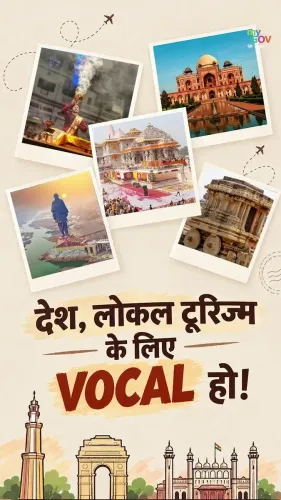
The Ministry of Tourism's annual arrival statistics will be closely watched to assess whether the surge at specific destinations reflects a durable structural shift or a post-pandemic rebound. Any fresh budget allocations or policy updates targeting domestic tourism infrastructure — particularly for Tier-2 and Tier-3 destination development — will indicate whether the momentum is being institutionalised. Singh's amplification of this narrative signals that the BJP's broader communication strategy continues to foreground the 'vocal for local' and self-reliant India themes ahead of future electoral cycles.
Point of View
A theme that resonates with both economic and cultural-nationalist messaging. The 'vocal for local' framing, now embedded across multiple ministries, signals a coordinated communication effort rather than a standalone social media moment. For Singh specifically, linking tourism growth to the broader Modi governance record serves to position the party ahead of future electoral contests in states where tourism employment is politically salient. The durability of this narrative, however, will depend on whether official data can substantiate the visitor surge claims at the specific destinations referenced.
NationPress
9 Oct 2026
Frequently Asked Questions
Which 8 places have seen a tourist surge after PM Modi's domestic tourism push?
The specific eight destinations were referenced in a post shared by Union Textiles Minister Giriraj Singh on 25 May 2026, but the list has not been independently verified. The post attributes the surge to PM Modi's domestic tourism advocacy and related government schemes.
What is the Dekho Apna Desh campaign?
Dekho Apna Desh is a Central government initiative launched in January 2020 to encourage Indians to explore domestic destinations and reduce dependence on outbound tourism. It forms a core part of India's national tourism promotion strategy.
What is the Swadesh Darshan scheme?
Swadesh Darshan is a Central government scheme introduced in 2014-15 that provides funding for the integrated development of theme-based tourist circuits across Indian states, aimed at improving infrastructure at heritage and cultural sites.
Why is Union Textiles Minister Giriraj Singh commenting on tourism?
While Singh heads the Ministry of Textiles, domestic tourism growth is directly relevant to his portfolio because visitor traffic at cultural destinations drives demand for traditional handlooms, handicrafts, and textile products. Senior BJP leaders also routinely amplify government policy achievements across sectors.
How has PM Modi promoted domestic tourism in India?
PM Modi has promoted domestic tourism through campaigns such as Dekho Apna Desh, public appeals for Indians to visit local destinations, and infrastructure investment under schemes like Swadesh Darshan. His advocacy has been credited with raising the profile of lesser-known Indian destinations alongside established heritage sites.