Giriraj Singh Hails PM Modi's Vigil at Airport During NEET Exam
Synopsis
Union Textiles Minister Giriraj Singh on June 21, 2026, praised PM Modi for personally monitoring conditions at an airport during NEET examinations, framing the Prime Minister as a 'sensitive guardian' of students and dismissing critics as using the exam for political ends.
Key Takeaways
Giriraj Singh posted on June 21, 2026 , praising PM Modi for staying at an airport to personally oversee NEET examination conditions.
The minister described the Prime Minister as acting in the role of a 'sensitive guardian' rather than merely as the country's head of government.
NEET is India's sole national medical entrance examination, conducted by the National Testing Agency (NTA) since 2019 for MBBS and BDS admissions.
The post directly challenges critics who, in Giriraj Singh's framing, have used NEET controversies for political purposes rather than student welfare.
The BJP's messaging positions executive-level personal oversight as the government's answer to recurring concerns about examination integrity and student disruption.
Parliamentary scrutiny of NTA functioning and NEET protocols is expected to continue in upcoming legislative sessions.
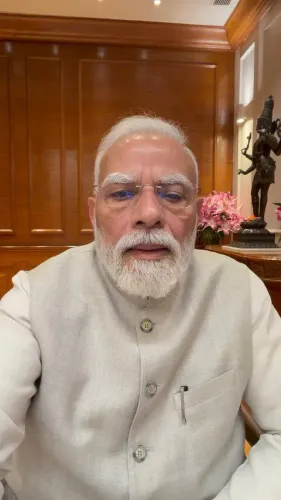
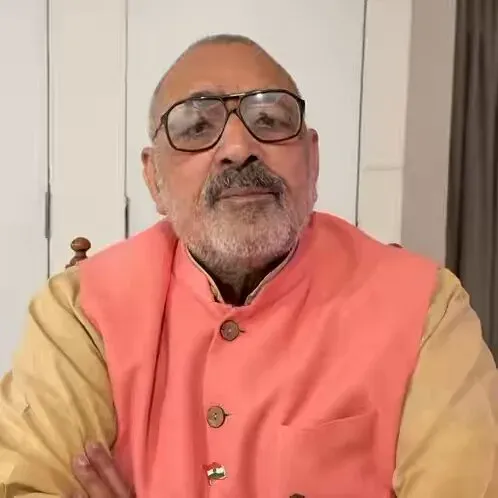
Union Textiles Minister Giriraj Singh on Sunday, June 21, 2026, praised Prime Minister Narendra Modi for personally monitoring the situation at an airport to ensure that NEET examinations proceeded without disruption for students.
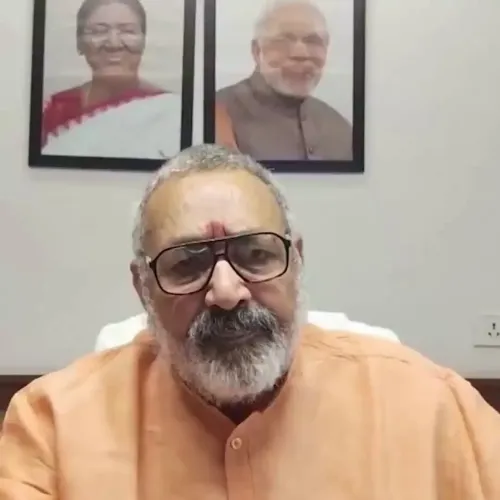
Posting in Hindi on X, Giriraj Singh wrote: 'जो लोग NEET जैसे संवेदनशील विषय की आड़ में राजनीति कर रहे थे, उन्हें यह दृश्य अवश्य देखना चाहिए।' ['Those who were doing politics under the cover of a sensitive issue like NEET must see this scene.'] He added that the Prime Minister appeared not merely as the country's head but as a 'sensitive guardian,' staying back at the airport and continuously monitoring the situation so that students faced no inconvenience and the examination was not affected.
Context
NEET — the National Eligibility cum Entrance Test — is India's single national entrance examination for MBBS and BDS admissions, conducted annually under a framework mandated by the Supreme Court of India. The exam has been a recurring flashpoint in Indian politics, with opposition parties raising concerns about alleged irregularities, centralisation, and the administrative capacity of the National Testing Agency (NTA), which has conducted NEET since 2019.
Giriraj Singh's post frames the Prime Minister's airport vigil as a direct, hands-on response to student welfare concerns — a contrast, in his telling, to those who he says have used NEET controversies for political ends rather than focusing on students' interests.
Policy Backdrop
NEET replaced a patchwork of state-level and institution-level medical entrance tests when it was established as the sole national exam in 2016, following Supreme Court direction. The centralisation was intended to create a level playing field for aspirants across states, though it has also concentrated administrative risk — any disruption to a single exam now affects hundreds of thousands of candidates simultaneously.
The NTA has faced scrutiny in recent years over examination conduct, paper-leak allegations, and logistical gaps. The BJP government has consistently defended the centralised model while projecting senior leadership, including the Prime Minister, as directly engaged in ensuring examination integrity and student welfare.
Stakeholders and Impact
Approximately 20 lakh students appear for NEET each year, making it one of the most competitive and high-stakes examinations in India. Any disruption — logistical, administrative, or otherwise — carries significant consequences for aspirants who have often spent years preparing. The airport episode cited by Giriraj Singh, in which the Prime Minister is said to have remained at the airport to monitor conditions, is being presented by the ruling party as evidence of executive-level sensitivity to student concerns.
Opposition parties and student groups have in previous cycles demanded structural reforms to NEET, including greater transparency in NTA processes and independent oversight of examination conduct. Giriraj Singh's post implicitly pushes back on that criticism by positioning the government's response as proactive and empathetic.
What's Next
Parliamentary discussions on NTA functioning and NEET examination protocols are expected to continue in upcoming sessions, with opposition members likely to press for accountability on past irregularities. The BJP's counter-narrative — emphasising the Prime Minister's personal involvement in safeguarding examination processes — is likely to feature prominently in that debate. How the government translates such gestures into structural reforms to the examination system will be closely watched by the country's vast medical aspirant community.
Point of View
Where the BJP has faced sustained opposition fire over alleged exam irregularities and NTA mismanagement. By foregrounding the Prime Minister's physical presence at an airport as a student-welfare gesture, the ruling party attempts to shift the narrative from systemic accountability to executive empathy. This fits a broader BJP pattern of personalising governance — attributing institutional outcomes to the Prime Minister's direct involvement — particularly on issues that resonate with aspirational, exam-going youth and their families. Whether this narrative holds will depend on whether the government accompanies such optics with verifiable structural reforms to the examination framework.
NationPress
20 Sept 2026
Frequently Asked Questions
Why did PM Modi stay at the airport during NEET 2026?
According to Union Textiles Minister Giriraj Singh's post on June 21, 2026, PM Modi remained at the airport to personally monitor the situation and ensure that NEET examinations were not disrupted and students faced no inconvenience.
What did Giriraj Singh say about NEET on June 21 2026?
Giriraj Singh posted in Hindi praising PM Modi for acting as a 'sensitive guardian' during NEET, and said those who were doing politics under the cover of the NEET issue should witness the Prime Minister's hands-on concern for students.
What is NEET and who conducts it?
NEET, the National Eligibility cum Entrance Test, is India's single national entrance examination for MBBS and BDS admissions. It has been conducted by the National Testing Agency (NTA) since 2019, replacing multiple state-level medical entrance tests.
Why is NEET controversial in Indian politics?
NEET has been a political flashpoint due to allegations of paper leaks, administrative lapses by the NTA, and concerns from states about centralisation of medical admissions. Opposition parties have demanded structural reforms and greater transparency in the examination process.
Who is Giriraj Singh?
Giriraj Singh is a senior BJP leader and Union Minister of Textiles in the Government of India. He is a Lok Sabha MP from Begusarai, Bihar, and is known for active social media commentary on government policies and political developments.