Giriraj Singh Highlights Bobbili Weaver's Rise via Cluster Scheme
Synopsis
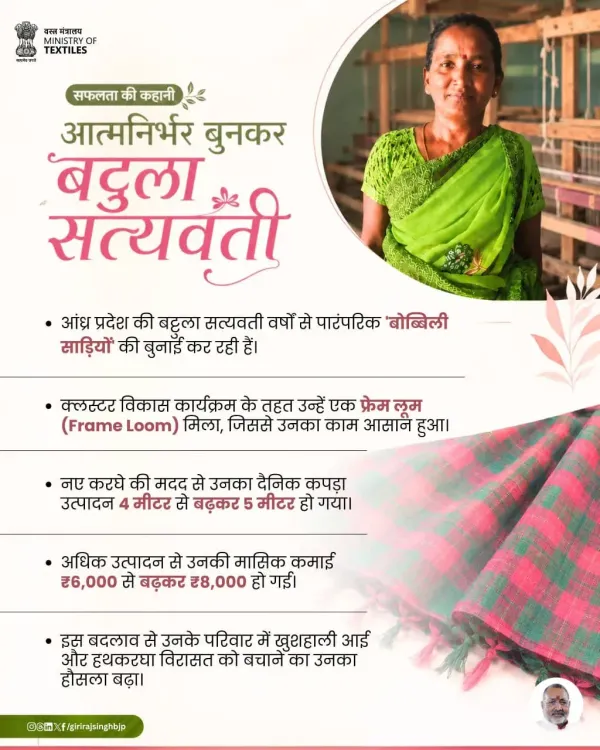
Union Textiles Minister Giriraj Singh on June 17, 2026 spotlighted Andhra Pradesh weaver Batula Satyavati, whose daily output and monthly income rose after she received a new frame loom under the government's Cluster Development Programme, reviving the traditional Bobbili saree heritage.
Key Takeaways
Union Textiles Minister Giriraj Singh highlighted weaver Batula Satyavati from Andhra Pradesh on June 17, 2026 .
Satyavati received a new frame loom under the Cluster Development Programme , boosting her daily cloth production and monthly earnings.
She is engaged in reviving the traditional Bobbili saree weaving heritage of Vizianagaram district , Andhra Pradesh.
The Integrated Handloom Cluster Development Programme was launched in 2005-06 to modernise handloom clusters nationwide.
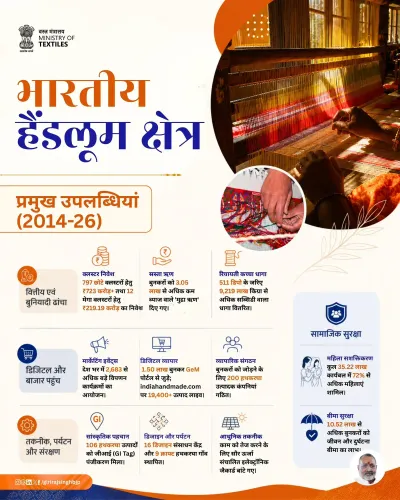
India's handloom sector employs over 3 million weavers , making artisan welfare a significant policy priority.
The post aligns with the government's Atmanirbhar Bharat and Vocal for Local frameworks for handloom promotion.
Union Textiles Minister Giriraj Singh on Wednesday, June 17, 2026 spotlighted Batula Satyavati, a handloom weaver from Andhra Pradesh, crediting a government-supplied frame loom under the Cluster Development Programme for boosting her daily cloth output and monthly income as she works to revive the traditional Bobbili saree weaving heritage.
Context
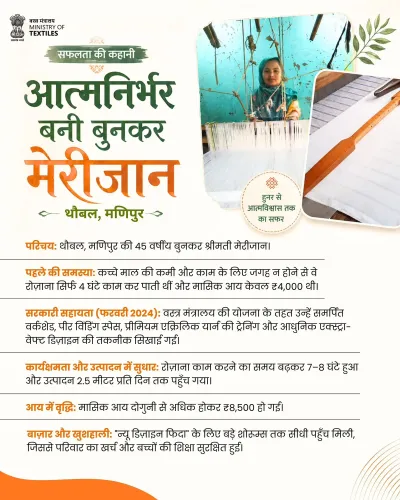
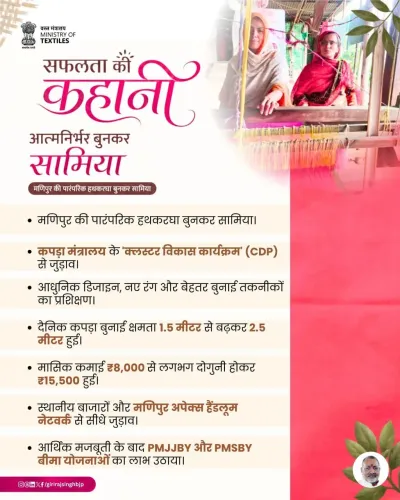
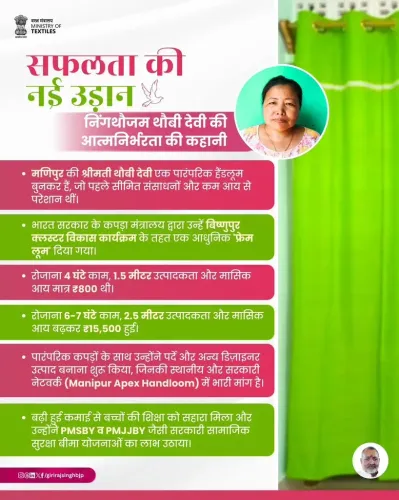
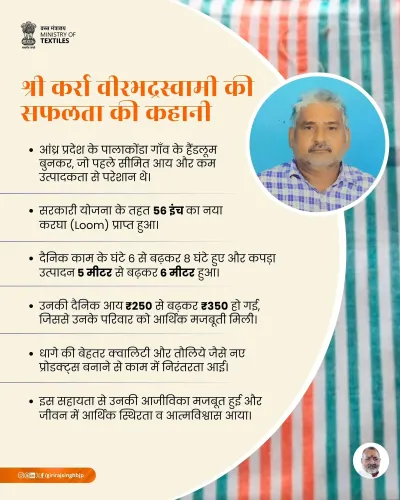
Minister Singh shared Satyavati's story on X, writing in Hindi: 'Bobbili saariyon ki bunai virasat ko nayi pehchaan de rahi hain' — 'giving a new identity to the weaving heritage of Bobbili sarees.' He described her as a symbol of the country's real strength, adding the rallying phrase 'Sashakt Bunkar, Samridh Bharat' — 'Empowered Weavers, Prosperous India.' The post was accompanied by an image, presumably of Satyavati at her loom.
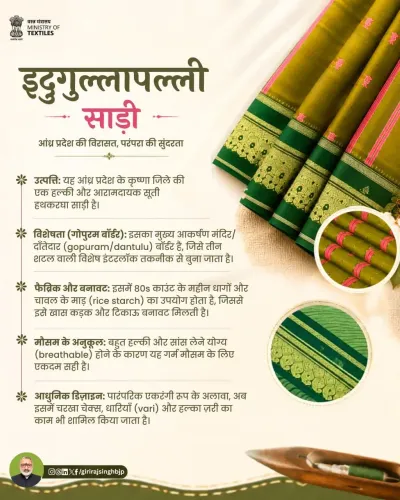
Bobbili is a town in the Vizianagaram district of Andhra Pradesh, long celebrated for its distinctive handloom sarees characterised by bold checks and contrasting borders. The craft is one of the region's most recognised textile traditions.
Policy Backdrop
The Cluster Development Programme referenced by the minister is part of the Integrated Handloom Cluster Development Programme, launched in 2005-06 to modernise select handloom clusters across India by providing improved looms, infrastructure, and market linkages. The scheme has been progressively aligned with the Atmanirbhar Bharat and Vocal for Local frameworks that successive Union Budgets since 2014 have prioritised.
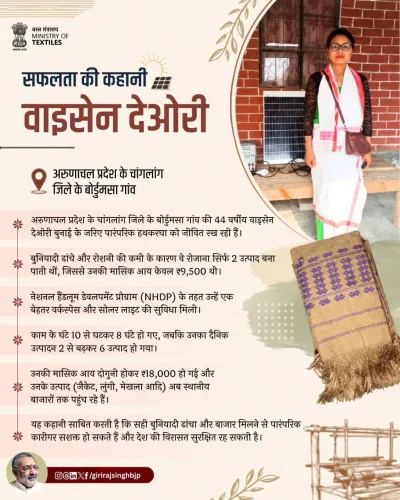
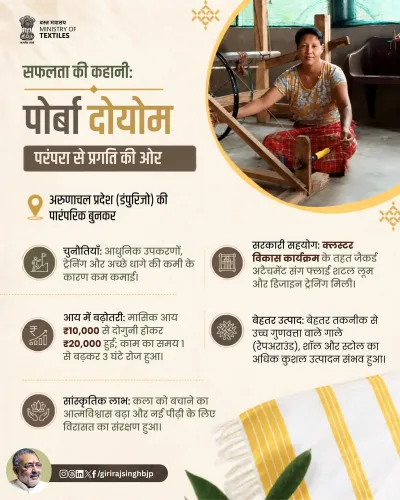
The Ministry of Textiles has increasingly used individual weaver success stories — particularly from states such as Andhra Pradesh, Telangana, and Odisha — to illustrate the on-ground impact of loom-upgrade interventions. The supply of a new frame loom to Satyavati is consistent with this broader pattern of technology infusion into handloom clusters to address low productivity.
Stakeholders and Impact
India's handloom sector employs over 3 million weavers nationwide, making it one of the largest cottage industries in the country. Frame loom upgrades are intended to reduce physical strain and increase the speed of weaving, directly improving a weaver's daily output and, consequently, earnings — though exact figures for Satyavati's income increase have not been independently verified.
The Bobbili saree cluster sits within a region where artisan livelihoods are closely tied to government support for raw material access, loom technology, and market exposure. Highlighting individual beneficiaries such as Batula Satyavati also serves to raise consumer awareness under the #VocalForLocal and #SupportArtisans campaigns, potentially expanding demand for handloom products.
What's Next
The Ministry of Textiles is expected to release its next annual report on handloom cluster performance, which will provide aggregate data on loom distribution and income changes across beneficiary clusters. Any fresh allocations for frame-loom distribution in the upcoming Union Budget will be closely watched by weaver associations and state governments in Andhra Pradesh and beyond.
The broader question is whether individual success stories translate into systemic income gains for the sector's millions of weavers — a metric that policymakers and artisan welfare groups will continue to track.
Point of View
The minister reinforces the Cluster Development Programme's political narrative ahead of potential Budget discussions on handloom allocations. The Bobbili saree geography — Andhra Pradesh, a state of growing electoral significance for the BJP-led alliance — adds a political dimension to what is framed as a welfare story. Whether such spotlighting translates into measurable, scalable income gains for the broader weaver community remains the central policy question.
NationPress
16 Sept 2026
Frequently Asked Questions
What is the Bobbili saree and where is it made?
The Bobbili saree is a traditional handloom textile from Bobbili town in Vizianagaram district , Andhra Pradesh, known for its bold checks and contrasting borders. It is one of the region's most recognised craft traditions.
What is the Cluster Development Programme for handloom weavers?
The Integrated Handloom Cluster Development Programme , launched in 2005-06 , is a Ministry of Textiles initiative that provides improved looms, infrastructure, and market support to handloom clusters across India to raise weaver productivity and income.
Who is Batula Satyavati?
Batula Satyavati is a handloom weaver from Andhra Pradesh who is reviving the traditional Bobbili saree weaving heritage. She received a new frame loom under the government's Cluster Development Programme, which increased her daily output and monthly earnings.
What did Giriraj Singh say about handloom weavers?
Union Textiles Minister Giriraj Singh called skilled, self-reliant weavers 'the real strength of our country' and used the phrase 'Sashakt Bunkar, Samridh Bharat' — 'Empowered Weavers, Prosperous India' — while highlighting Satyavati's story on June 17, 2026.
How many weavers does India's handloom sector employ?
India's handloom sector employs over 3 million weavers nationwide, making it one of the country's largest cottage industries and a significant focus of government welfare and productivity schemes.