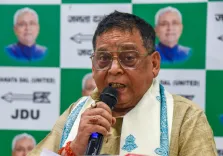
Giriraj Singh backs Modi's warning against 'anti-national forces'
Synopsis
Union Textiles Minister Giriraj Singh backed PM Modi's stern warning against 'anti-national forces' and 'intellectual Naxalites,' invoking Sardar Patel's Ek Bharat vision and framing India as moving decisively past Maoism and division.
Key Takeaways
Giriraj Singh on 1 November 2026 amplified PM Modi's warning against forces he said obstruct development and conspire to divide India.
The post coins the phrase 'dimaagi naxali' ('intellectual Naxalite') to describe ideological opponents seen as threats to national unity.
Sardar Patel's legacy and the Ek Bharat Shreshtha Bharat initiative (launched 2015 ) are invoked as the government's founding mandate on unity.
The BJP has combined security operations with development drives in Left Wing Extremism districts across Chhattisgarh , Jharkhand , and Odisha since 2014.
The minister warned that those threatening national unity and security 'will get a stern reply.'
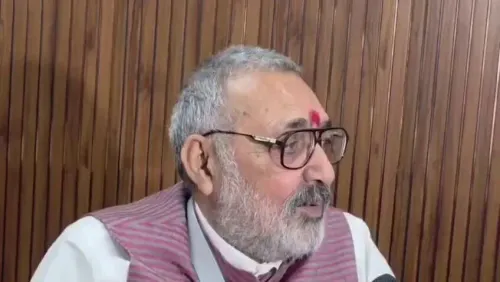
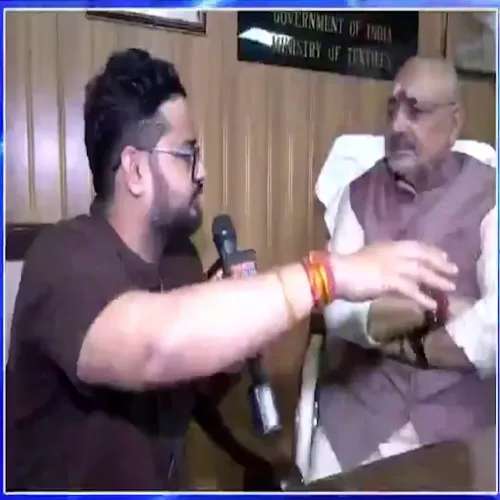
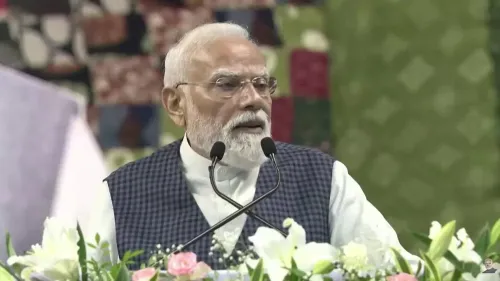
India's political fault-line over internal security sharpened on Sunday, 1 November 2026, as Union Textiles Minister Giriraj Singh amplified Prime Minister Narendra Modi's warning against what he called 'anti-national forces' and 'dimaagi naxalion' — 'intellectual Naxalites' — who he accused of obstructing development and plotting national division.
Posting on X, Giriraj Singh described the Prime Minister's message as 'clear and stern,' asserting that the people of India would never accept forces that 'create obstacles in the country's development and conspire to divide it.' The post invoked the legacy of Sardar Vallabhbhai Patel and his vision of 'Ek Bharat — Shreshtha Bharat' ('One India — Great India'), framing the current government's trajectory as a realisation of that founding ideal.
Patel's vision as political armour
The invocation of Patel is deliberate and well-worn within BJP political messaging. India's first Deputy Prime Minister and Home Minister, Patel is universally credited with integrating hundreds of princely states into the Union — a feat of political consolidation that the BJP has long claimed as its ideological inheritance. The Ek Bharat Shreshtha Bharat initiative, launched in 2015, formalised this symbolism into a central-government programme promoting cultural and national integration across states.
Giriraj Singh's post situates that legacy squarely against contemporary adversaries: Maoist insurgency, ideological division, and what BJP leaders routinely term 'urban Naxalism.' The claim is that India is now moving along a path 'free from fear, Maoism, and anarchy.'
The ground reality in Maoist-affected belts
The messaging lands against a backdrop of sustained — and by official accounts, intensifying — counter-Maoist operations across Chhattisgarh, Jharkhand, and Odisha. Since 2014, the government has combined security operations with infrastructure drives in Left Wing Extremism-designated districts, a twin-track strategy designed to shrink the geographic and social footprint of Naxal groups.
Security forces and tribal communities in affected districts remain the most immediate stakeholders in whether this strategy translates into durable peace — or remains a recurring political talking point. Progress on that front will be visible in forthcoming operations data and in budget allocations when Parliament reconvenes.
A warning with an electoral edge
The minister closed with a direct threat: 'Those who play with the unity, integrity, and security of the nation will get a stern reply.' The phrasing is classic BJP internal-security rhetoric — simultaneously a governing pledge and an electoral cudgel. By framing political opposition alongside Maoist extremism under the umbrella of 'anti-national forces,' the post does what senior party figures have done consistently since 2014: collapse the distinction between ideological dissent and violent insurgency into a single, prosecutable threat to national unity.
Whether this latest salvo signals fresh policy action or is calibrated political positioning ahead of upcoming state elections, the message from the ministerial bench is unambiguous — the government intends to hold the line hard.
Point of View
The framing deliberately blurs the boundary between violent extremism and political opposition — a move that energises the party base while putting critics on the defensive. The timing, with Parliament set to reconvene and state elections on the horizon, suggests the messaging is as much electoral infrastructure as security policy. Analysts watching the Maoist-affected belt will be looking for whether new operational or budgetary moves follow the rhetoric.
NationPress
1 Nov 2026
Frequently Asked Questions
What did Giriraj Singh say about 'intellectual Naxalites'?
Giriraj Singh endorsed PM Modi's description of 'intellectual Naxalites' as anti-national forces who obstruct development and conspire to divide the country, saying the people of India would never accept them.
What is the Ek Bharat Shreshtha Bharat initiative?
Ek Bharat Shreshtha Bharat is a central-government programme launched in 2015 to promote cultural and national integration across Indian states, drawing on Sardar Patel's vision of a unified India.
Who are the 'anti-national forces' Giriraj Singh referred to?
In his post, Giriraj Singh used the term to describe those he accused of blocking national development, fomenting division, and threatening India's unity and security — a framing that encompasses Maoist extremists and, in BJP political parlance, ideological opponents branded 'urban' or 'intellectual' Naxalites.
What is the government's policy on Naxalism in India?
Since 2014, the government has pursued a dual strategy of security operations against Maoist groups and development investment in Left Wing Extremism-designated districts across Chhattisgarh, Jharkhand, and Odisha.
Why does BJP invoke Sardar Patel in internal-security messaging?
Sardar Patel is credited with integrating India's princely states and is seen as the architect of national unity, making his legacy a potent symbol for the BJP when arguing that national integration must be defended against divisive or extremist forces.