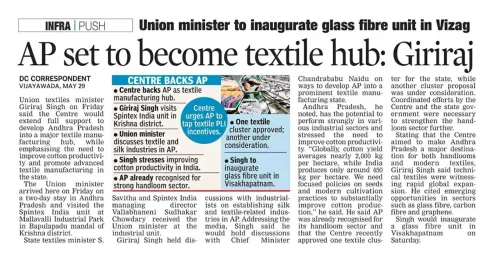
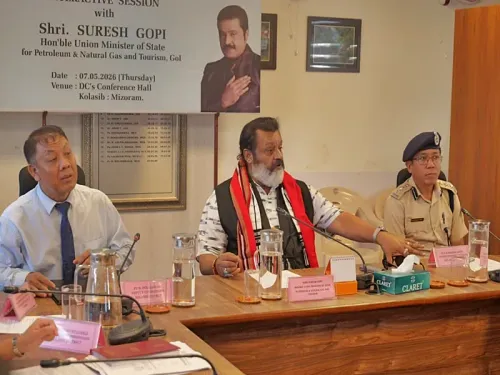
Giriraj Singh flags Northeast's rise as global 'Ashtalakshmi'
Synopsis
Union Textiles Minister Giriraj Singh has backed the central government's 'Ashtalakshmi' vision for Northeast India, spotlighting Mizoram's ginger and Nagaland's coffee as symbols of an export-led transformation rooted in the Act East Policy, NEIDS, and PM-DevINE frameworks.
Key Takeaways
Union Textiles Minister Giriraj Singh shared the government's 'Ashtalakshmi' plan for Northeast India on June 5, 2026 .
The vision positions the eight northeastern states as distinct engines of prosperity, with agri-produce such as Mizoram ginger and Nagaland coffee as export flagships.
The strategy builds on the Act East Policy (2014) , NEIDS (2017) , and PM-DevINE (2022) policy frameworks.
GI tagging of regional produce is central to commanding premium pricing in international markets.
Primary beneficiaries include Northeast farmers and MSME exporters linked to agri-processing and handloom value chains.
Concrete follow-through will be tracked via Union Budget allocations and North Eastern Council decisions on export clusters.
Union Textiles Minister Giriraj Singh on Friday, June 5, 2026, shared the government's vision to position Northeast India as the world's 'Ashtalakshmi' — a reference to the eight northeastern states as eight forms of prosperity — highlighting regional agri-produce such as Mizoram's ginger and Nagaland's coffee as anchors of an export-oriented transformation strategy.
Context
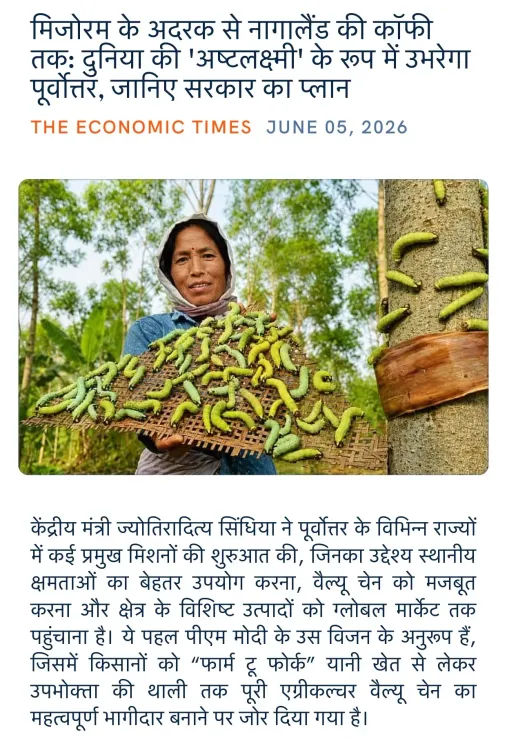
The post, shared via the NaMo App, amplifies a detailed policy outline on how the central government plans to convert the Northeast's agri-horticultural strengths into globally competitive value chains. The Hindi headline translates as: 'Mizoram ke adrak se Nagaland ki coffee tak' — 'From Mizoram's ginger to Nagaland's coffee: the Northeast will emerge as the world's Ashtalakshmi — here is the government's plan.'
The 'Ashtalakshmi' framing, used by the government to describe the eight northeastern states — Arunachal Pradesh, Assam, Manipur, Meghalaya, Mizoram, Nagaland, Sikkim, and Tripura — draws on the concept of eight forms of the goddess Lakshmi, each symbolising a distinct dimension of wealth and prosperity.
Policy Backdrop
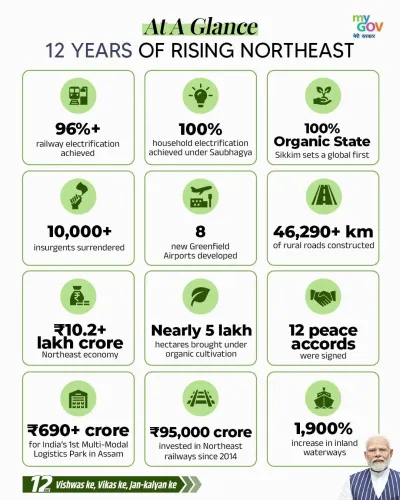
The push sits within a sustained policy architecture built since 2014. The Act East Policy, launched that year, was designed to integrate the Northeast with ASEAN economies through improved connectivity and bilateral trade linkages. It was followed by the North East Industrial Development Scheme (NEIDS) in 2017, which offered fiscal incentives for manufacturing and agri-processing units in the region.
More recently, the PM-DevINE scheme (2022) channelled dedicated funds toward infrastructure and livelihood projects across all eight states. Together, these programmes form the scaffolding on which the current 'Ashtalakshmi' branding and export-cluster strategy is being constructed.
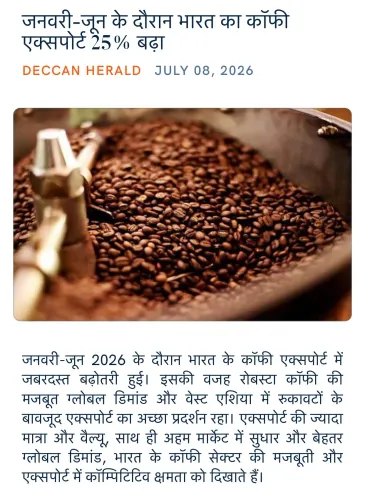
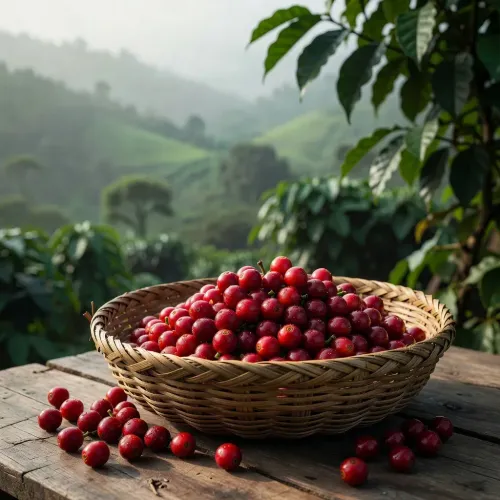
Mizoram has emerged as a significant producer of ginger with growing export interest, while Nagaland has expanded coffee cultivation, with several products from both states receiving or seeking Geographical Indication (GI) tags to command premium pricing in international markets.
Stakeholders and Impact
The primary beneficiaries of this strategic repositioning are Northeast farmers and MSME exporters who stand to gain from formalised value chains, better price realisation, and access to export infrastructure. For smallholder cultivators of spices, coffee, and other niche produce, GI tagging and government-backed marketing can mean the difference between subsistence and commercial viability.
The Textiles Ministry's interest in the Northeast is also significant: the region has a deep tradition of handloom weaving, and linking local fibre and textile output to national and global supply chains is a stated priority. Minister Singh's amplification of this narrative signals continued ministerial attention to the region's economic integration.
What's Next
Observers will watch for concrete announcements on state-specific export clusters or new textile and agri-processing parks in the Northeast, as well as any dedicated outlays in the next Union Budget or North Eastern Council session. The operationalisation of the 'Ashtalakshmi' vision into measurable export targets and infrastructure timelines will be the true test of the policy's ambition.
If the government follows through with sector-specific roadmaps for each of the eight states, the Northeast could shift from being perceived primarily as a security and connectivity challenge to a genuine engine of India's agricultural exports and textile value chains.
Point of View
The government is attempting to shift the Northeast's identity from a frontier requiring security management to a prosperity zone driving India's Act East ambitions. The choice of ginger and coffee — niche, GI-eligible, globally marketable commodities — is deliberate: it projects specificity and commercial seriousness rather than generic development rhetoric. The real test will be whether this branding translates into funded export clusters and measurable farmer income gains before the next electoral cycle.
NationPress
21 Oct 2026
Frequently Asked Questions
What is the 'Ashtalakshmi' concept for Northeast India?
'Ashtalakshmi' refers to the eight northeastern states — Arunachal Pradesh, Assam, Manipur, Meghalaya, Mizoram, Nagaland, Sikkim, and Tripura — each seen as a distinct form of prosperity, mirroring the eight manifestations of the goddess Lakshmi. The government uses this framing to position the region as a collective engine of economic growth and export potential.
Why is Mizoram's ginger significant in India's export strategy?
Mizoram is a notable producer of ginger with distinctive quality characteristics that make it eligible for Geographical Indication tagging. GI status can help command premium prices in international markets, making it a flagship commodity in the Northeast's agri-export push.
What is the Act East Policy and how does it relate to Northeast India?
The Act East Policy, launched in 2014, aims to integrate Northeast India with ASEAN economies through improved trade connectivity, infrastructure, and bilateral linkages. The Northeast's geographic proximity to Southeast Asia makes it a natural gateway, and the policy is the primary framework under which the 'Ashtalakshmi' export vision operates.
What is the PM-DevINE scheme for the Northeast?
PM-DevINE, launched in 2022, is a central government scheme that channels dedicated funds toward infrastructure development and livelihood projects across all eight northeastern states. It complements earlier initiatives like the North East Industrial Development Scheme in building the foundation for export-oriented growth.
What role does Giriraj Singh play in Northeast India's development?
As Union Minister of Textiles, Giriraj Singh oversees policy areas that directly intersect with the Northeast's strengths in handloom weaving and agri-fibre production. His amplification of the 'Ashtalakshmi' narrative signals the Textiles Ministry's stake in linking the region's traditional crafts and produce to national and global supply chains.