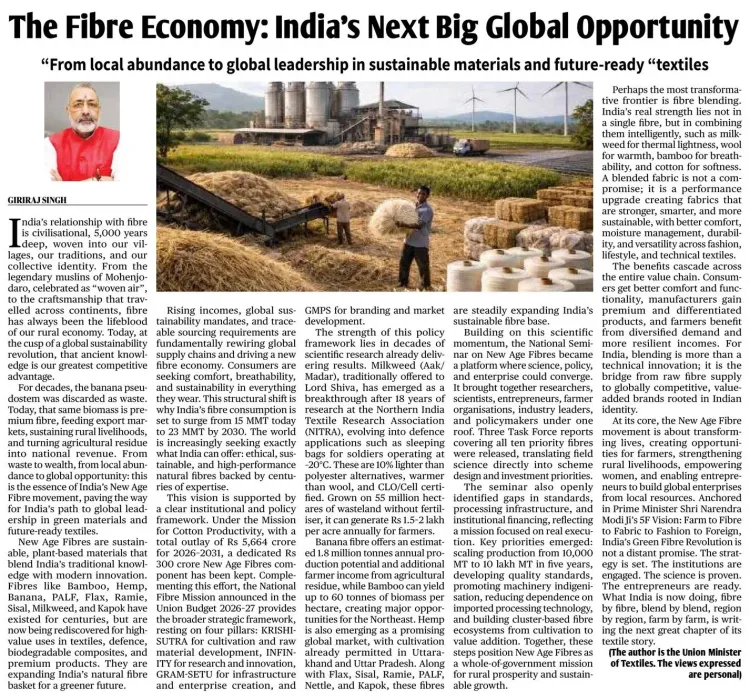
Giriraj Singh Flags Rs 300 Cr Push for New Age Fibres
Synopsis
Union Textiles Minister Giriraj Singh has announced a ₹300 crore budgetary push for 'New Age Fibres' — Bamboo, Banana, and Milkweed — under PM Modi's 5F Vision, aiming to empower farmers, boost rural economies, and position India as a global leader in sustainable materials.
Key Takeaways
Union Textiles Minister Giriraj Singh announced India's strategic shift to 'New Age Fibres' on June 12, 2026 .
The initiative is backed by a dedicated ₹300 crore budgetary allocation and ongoing research programmes.
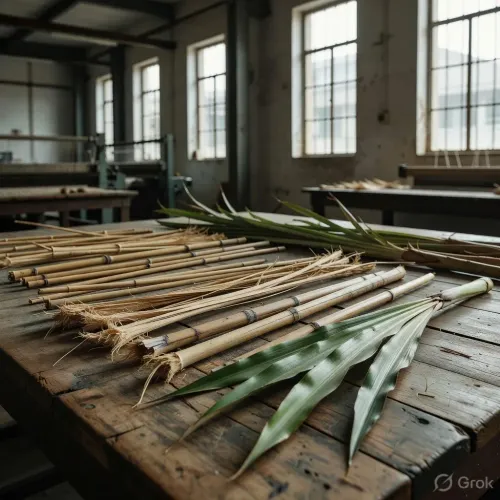
Target fibres include Bamboo, Banana, and Milkweed , described as sustainable alternatives to conventional crops like cotton.
The push is anchored in PM Modi's 5F Vision , which covers the full textile value chain from farm to foreign markets.
The initiative is intended to empower farmers and strengthen rural economies while improving India's export competitiveness in sustainable textiles.
India's broader textile policy includes the PLI scheme for textiles launched in 2021 with an outlay exceeding ₹10,000 crore .
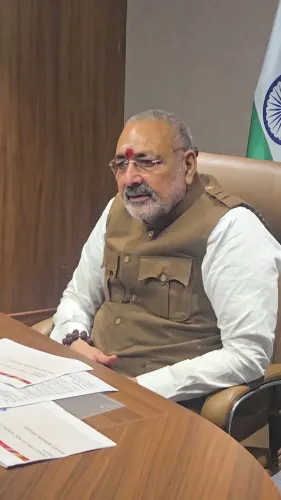
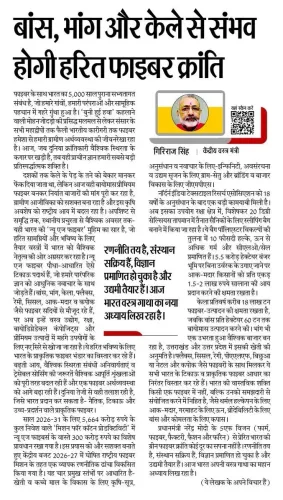
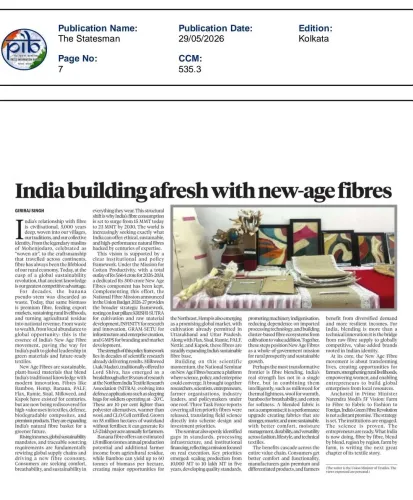
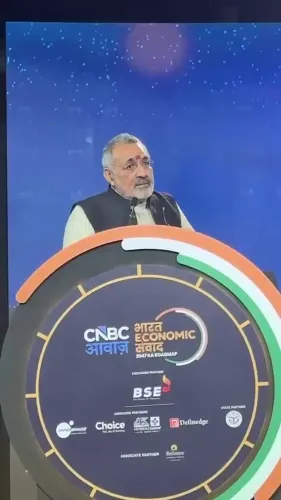
Union Textiles Minister Giriraj Singh on Friday, June 12, 2026, outlined India's strategic pivot toward sustainable 'New Age Fibres' — including Bamboo, Banana, and Milkweed — backed by a ₹300 crore budgetary allocation, framing the shift as central to the country's long-term textile ambitions under Prime Minister Narendra Modi's 5F Vision.
Context
In his post, Minister Singh stated: 'Sustainable fibres are no longer an alternative; they are the future.' He described the initiative as 'integrating ancient wisdom with advanced technical innovation,' positioning India's move toward plant-derived fibres as both an economic and ecological imperative. The minister credited the push to PM Modi's 5F Vision framework, which spans the textile value chain from farm to international markets.
The 5F Vision — Farm to Fibre, Fibre to Fabric, Fabric to Fashion, Fashion to Foreign — has been the governing philosophy behind India's textile policy in recent years, aimed at capturing greater value at every stage of the production chain. Singh's post signals that sustainable and alternative fibres are now a formal pillar of that framework.
Policy Backdrop
India's Ministry of Textiles has progressively built policy support for alternative natural fibres over more than a decade, with research and development programmes targeting agricultural by-products and non-conventional crops. In 2021, the government launched the Production Linked Incentive (PLI) scheme for textiles with an outlay exceeding ₹10,000 crore, aimed at boosting domestic manufacturing and export competitiveness in high-value segments.
The current focus on fibres derived from Bamboo, Banana, and Milkweed aligns with that longer trajectory, reducing dependence on conventional crops such as cotton and opening new income streams for farmers who cultivate or harvest these materials. The minister cited 'robust policy frameworks' and 'pioneering research' as the twin pillars supporting the initiative alongside the dedicated budgetary outlay.
Stakeholders and Impact
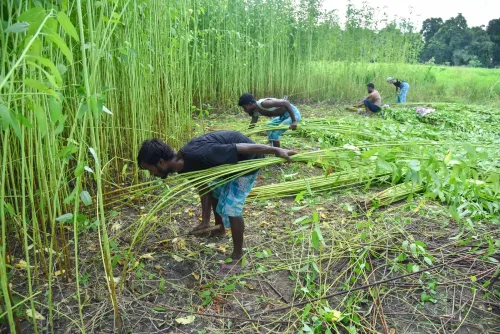
Singh explicitly linked the initiative to rural welfare, stating it is 'empowering farmers, strengthening rural economies, and securing India's leadership in the global sustainable materials market.' Farmers growing bamboo and banana — crops already cultivated widely across northeastern India, Maharashtra, Kerala, and Tamil Nadu — stand to benefit from new value-addition opportunities if processing and procurement infrastructure scales up.
Textile manufacturers, particularly those targeting export markets in Europe and North America where demand for certified sustainable materials is rising, are the other key constituency. Global buyers increasingly require environmental compliance across supply chains, and India's move to formalise alternative-fibre production could strengthen its position against competitors in Bangladesh, Vietnam, and China.
What's Next
The utilisation of the ₹300 crore allocation across research institutions, pilot projects, and farmer linkage programmes will be closely watched in subsequent budget cycles and textile policy updates. Export performance data for sustainable textile products and any formal partnerships with agricultural research bodies such as the Indian Council of Agricultural Research (ICAR) will serve as early indicators of the initiative's traction.
If India successfully scales production and certification of New Age Fibres, it could carve out a differentiated niche in the global sustainable materials market — one that simultaneously supports rural livelihoods and advances the country's environmental commitments on the international stage.
Point of View
Ahead of what is likely an intensifying global conversation on textile supply-chain sustainability. The ₹300 crore allocation, if fully deployed, signals that New Age Fibres have moved from pilot curiosity to mainstream policy priority within the Ministry of Textiles. Linking the initiative to farmer empowerment is also politically astute: it broadens the textile story beyond urban mills and export houses to the rural base that forms the BJP's core constituency. The real test will be whether procurement pipelines, processing infrastructure, and international certification frameworks can be built fast enough to translate the policy intent into measurable export gains.
NationPress
26 Oct 2026
Frequently Asked Questions
What is India's New Age Fibres initiative?
India's New Age Fibres initiative is a government-backed programme under the Ministry of Textiles that promotes sustainable plant-derived fibres such as Bamboo, Banana, and Milkweed as alternatives to conventional textile raw materials, supported by a ₹300 crore budgetary allocation.
What is PM Modi's 5F Vision for textiles?
PM Modi's 5F Vision is a policy framework for India's textile sector covering the full value chain: Farm to Fibre, Fibre to Fabric, Fabric to Fashion, and Fashion to Foreign markets, aimed at boosting domestic manufacturing and export competitiveness.
How does the New Age Fibres push benefit farmers?
Farmers who grow or harvest Bamboo, Banana, and Milkweed — crops cultivated across several Indian states — stand to gain new income opportunities through value-addition and processing linkages created under the initiative, strengthening rural economies.
What is the ₹300 crore textile fibre allocation for?
The ₹300 crore budgetary allocation announced by Union Textiles Minister Giriraj Singh is earmarked to support research, development, and scaling of sustainable New Age Fibres under India's textile policy framework.
Why is India focusing on sustainable textile fibres?
Rising global demand for eco-friendly materials, stricter environmental standards in key export markets like Europe and North America, and the need to reduce dependence on conventional cotton are driving India's focus on sustainable alternative fibres.