Giriraj Singh Calls for Handloom, Khadi Adoption on National Handloom Day
Synopsis
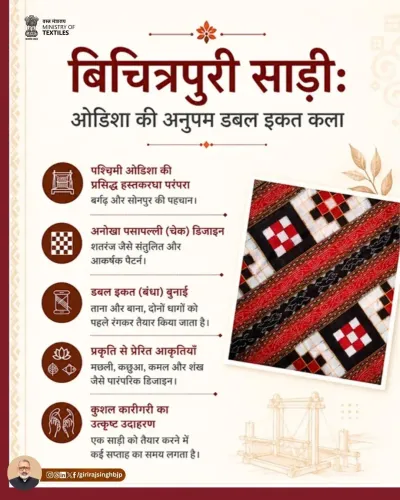
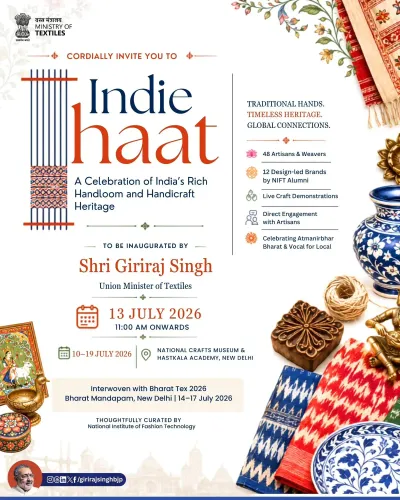
Union Textiles Minister Giriraj Singh marked National Handloom Day by calling on citizens to adopt khadi, handloom, and handicraft products, linking cultural heritage with rural employment under the Vocal for Local campaign.
Key Takeaways
Union Textiles Minister Giriraj Singh posted a National Handloom Day appeal on 27 July 2026 urging adoption of khadi, handloom, and handicraft products.
National Handloom Day is observed on 7 August each year, first instituted in 2015 to mark the Swadeshi movement centenary.
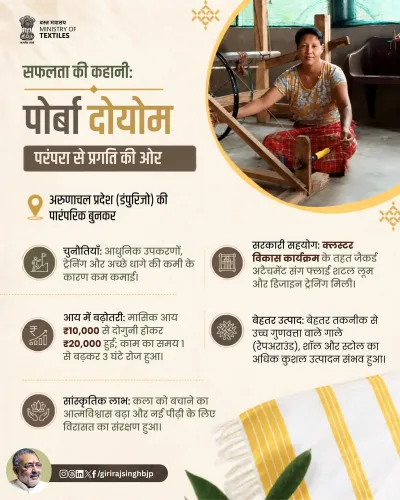
The minister framed handloom promotion as serving both cultural preservation and employment generation for weavers and rural artisans.
The post invokes the Vocal for Local campaign, launched in 2020 under the Atmanirbhar Bharat package to boost indigenous product consumption.
The Khadi and Village Industries Commission , established in 1956 , underpins khadi production and rural livelihood support in India.
Key handloom states including West Bengal , Uttar Pradesh , Assam , Andhra Pradesh , and Telangana stand to benefit from increased consumer demand.
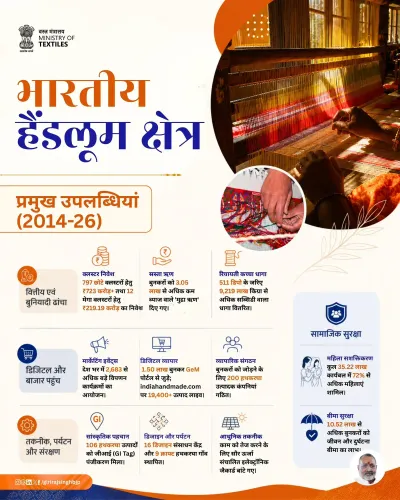
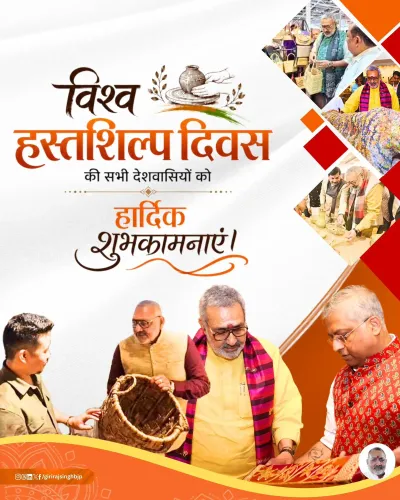
Union Textiles Minister Giriraj Singh on Sunday, 27 July 2026 called on citizens to embrace handloom, khadi, and handicraft products, marking National Handloom Day with a message underscoring the twin goals of cultural preservation and rural employment generation.
In his post on X, the minister wrote: 'हथकरघे पर बना हर वस्त्र भारत की समृद्ध सांस्कृतिक विरासत, पीढ़ियों से चली आ रही परंपराओं और बुनकरों के कुशल हाथों की कहानी कहता है' — 'Every garment made on the handloom tells the story of India's rich cultural heritage, traditions passed down through generations, and the skilled hands of weavers.' He added that current support for handloom and khadi is not only giving a new identity to India's heritage but also expanding employment opportunities for large numbers of people.
Context
National Handloom Day is observed annually on 7 August to honour the contributions of handloom weavers across the country. The day was instituted in 2015 to coincide with the centenary of the Swadeshi movement, which had placed indigenous cloth — particularly khadi — at the centre of India's freedom struggle. Singh's post invokes the Vocal for Local campaign, urging citizens to strengthen the spirit of local consumption on this occasion.
Policy Backdrop
The Khadi and Village Industries Commission (KVIC), established in 1956, remains the principal body supporting khadi production and rural livelihoods under the Ministry of Micro, Small and Medium Enterprises. The handloom sector, governed separately under the Ministry of Textiles, has historically been positioned as a vehicle for rural employment and the preservation of craft traditions. The Vocal for Local campaign was prominently launched in 2020 as part of the Atmanirbhar Bharat economic package to encourage domestic manufacturing and artisan products, and has since been regularly invoked by ministers across portfolios.
The government's messaging consistently links cultural heritage with economic self-reliance, countering the competitive pressure that power-loom production and textile imports place on traditional weavers. The Ministry of Textiles has run several welfare and market-access schemes targeting handloom clusters, though specific budgetary details for the current cycle were not part of this announcement.
Stakeholders and Impact
The primary beneficiaries of sustained handloom promotion are handloom weavers, khadi artisans, and rural textile workers — communities that depend on state support and consumer preference to remain economically viable against mechanised competition. States with significant handloom clusters, including West Bengal, Uttar Pradesh, Andhra Pradesh, Telangana, and Assam, stand to benefit from any uptick in consumer demand driven by such campaigns. The minister's appeal, amplified on social media with hashtags #NationalHandloomDay, #VocalForLocal, #Khadi, #Textiles, and #MannKiBaat, is aimed at both urban consumers and policy stakeholders.
What's Next
Attention will now turn to any formal scheme announcements or events the Ministry of Textiles organises around National Handloom Day on 7 August, including potential welfare disbursements, cluster development announcements, or parliamentary updates on handloom budgets. Consumer-facing initiatives tied to the Vocal for Local framework are also expected to feature prominently in ministry communications in the days ahead. The minister's post signals that handloom and khadi will remain a visible policy and cultural priority for the government in the near term.
Point of View
The minister reinforces a messaging architecture that has been central to the BJP's economic outreach to rural artisan communities. The reference to Mann Ki Baat in the hashtags also signals alignment with the Prime Minister's direct-communication platform, suggesting coordinated amplification rather than a standalone gesture. The post reflects a broader pattern in which symbolic observances are used to sustain policy visibility between formal budget cycles or scheme launches.
NationPress
26 Jul 2026
Frequently Asked Questions
What is National Handloom Day and when is it observed?
National Handloom Day is observed on 7 August every year to honour handloom weavers and promote the sector. It was first instituted in 2015 to mark the centenary of the Swadeshi movement.
What did Giriraj Singh say on National Handloom Day 2026?
Union Textiles Minister Giriraj Singh called on citizens to adopt khadi, handloom, and handicraft products, saying every handloom garment tells the story of India's cultural heritage and that government support is expanding employment for weavers.
What is the Vocal for Local campaign?
Vocal for Local is a campaign launched in 2020 under the Atmanirbhar Bharat economic package to encourage Indians to buy and promote domestically made products, including traditional textiles and crafts.
What is the role of the Khadi and Village Industries Commission?
The Khadi and Village Industries Commission (KVIC) , established in 1956 , is the principal body that supports khadi production and rural livelihoods. It operates under the Ministry of Micro, Small and Medium Enterprises.
Which states benefit most from handloom promotion in India?
States with major handloom clusters — including West Bengal , Uttar Pradesh , Assam , Andhra Pradesh , and Telangana — benefit most from government handloom promotion and consumer-demand campaigns.