Giriraj Singh flags 24% jump in passenger vehicle sales
Synopsis
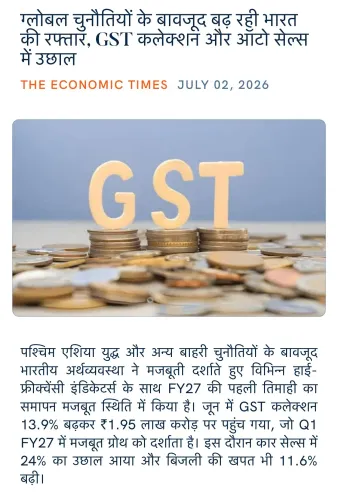
Union Textiles Minister Giriraj Singh amplified data on 2 July 2026 showing a 24 per cent surge in India's passenger vehicle sales for June, sharing the figures via the NaMo App as a signal of economic momentum backed by Make in India and PLI incentives.
Key Takeaways
Union Textiles Minister Giriraj Singh shared June 2026 passenger vehicle sales data on 2 July 2026 via the NaMo App.
The data indicated a 24 per cent jump in passenger vehicle sales for June 2026 .
The post was shared in Hindi and amplified through the NaMo App , a BJP digital platform.
India's auto sector has been supported by the Make in India programme (2014) and the PLI scheme for automobiles (approved 2021).
Strong monthly sales data affect manufacturers, component suppliers, dealerships, and employment across the automotive value chain.
The festive season and upcoming Union Budget announcements will be key determinants of whether the growth trend is sustained.
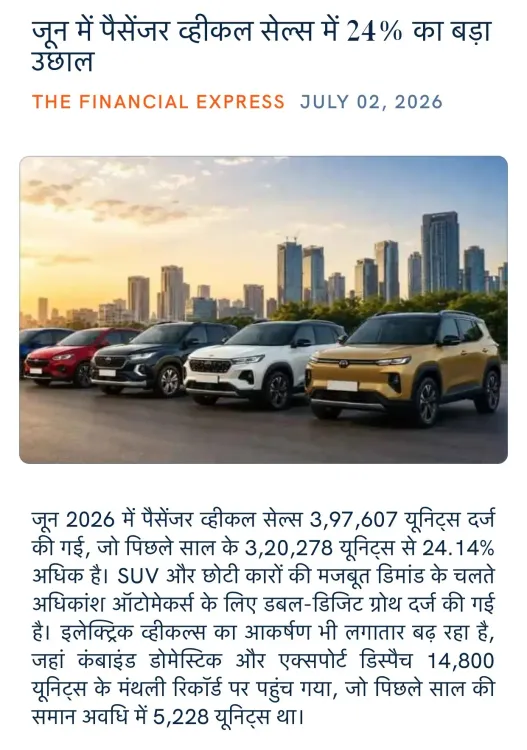
Union Textiles Minister Giriraj Singh on Thursday, 2 July 2026 shared data indicating a 24 per cent surge in passenger vehicle sales for June 2026, amplifying the figures via the NaMo App as a marker of economic momentum.
The minister's post, shared in Hindi, read: 'जून में पैसेंजर व्हीकल सेल्स में 24% का बड़ा उछाल' — 'A big 24% jump in passenger vehicle sales in June' — linking to a detailed breakdown of the monthly figures.
Context
Monthly passenger vehicle sales data are among the most closely watched indicators of consumer sentiment and manufacturing health in India. A double-digit jump signals that both urban and semi-urban buyers are returning to showrooms, reflecting improved purchasing confidence. The June 2026 reading, if sustained, would rank among the stronger monthly performances the sector has recorded in recent years.
Senior government ministers routinely amplify such data on social media to communicate the administration's economic narrative to a wider audience. Singh shared the figures through the NaMo App, a platform used by BJP leaders to disseminate policy and economic updates directly to party supporters and the broader public.
Policy Backdrop
India's passenger vehicle sector has been a beneficiary of two major central government interventions in recent years. The Make in India programme, launched in 2014, identified automobiles as a priority manufacturing sector, encouraging both domestic producers and global original equipment manufacturers to expand local capacity.
The Production Linked Incentive (PLI) scheme for automobiles and auto components, approved in 2021, built on that foundation by tying financial incentives to incremental domestic production. The scheme was designed to attract fresh investment, deepen local value addition, and position India as a competitive export hub for vehicles and components. Industry analysts have credited these measures with helping the sector weather global supply-chain disruptions and emerge with stronger order books.
Stakeholders and Impact
A 24 per cent year-on-year rise in passenger vehicle sales has direct implications for a wide ecosystem. Automobile manufacturers — from mass-market hatchback producers to premium SUV assemblers — benefit from higher volumes that spread fixed costs and improve margins. Ancillary industries, including steel, glass, rubber, and electronics suppliers, see corresponding demand upticks.
Vehicle buyers are both a cause and a consequence of such trends: competitive financing rates, new model launches, and improving road infrastructure all contribute to purchase decisions. Employment across dealerships, service centres, and logistics networks also tracks sales volumes closely, making the data relevant beyond the factory floor.
What's Next
Attention will now turn to whether the June 2026 momentum carries into the second half of the year, particularly ahead of the festive season — historically the strongest sales window for passenger vehicles in India. Any auto-sector announcements in the forthcoming Union Budget or parliamentary session, including extensions or expansions of the PLI scheme, could further shape trajectory. Industry bodies are expected to release granular segment-wise breakdowns that will clarify whether the growth was broad-based or concentrated in specific vehicle categories such as SUVs, which have driven much of the sector's recent outperformance.
Point of View
If corroborated by industry body releases, would offer the administration a timely data point ahead of budget season, when the government typically seeks to frame economic momentum. The use of the NaMo App as the sharing vehicle underscores how the BJP has built a parallel digital communication infrastructure to bypass traditional media gatekeeping. Analysts will watch whether this data point is woven into a broader pre-budget economic pitch, particularly as the auto sector's PLI outcomes come under parliamentary scrutiny.
NationPress
1 Oct 2026
Frequently Asked Questions
What did Giriraj Singh post about passenger vehicle sales?
On 2 July 2026, Union Textiles Minister Giriraj Singh shared data via the NaMo App showing a 24 per cent jump in India's passenger vehicle sales for June 2026.
Why did a Textiles Minister post about car sales?
Senior government ministers across portfolios routinely share positive economic indicators on social media as part of the ruling party's broader communication of India's economic performance, even when the data falls outside their direct ministry.
What is the NaMo App?
The NaMo App is a digital platform used by BJP leaders and supporters to share party communications, government scheme updates, and economic data directly with a wide audience.
How has the government supported India's passenger vehicle sector?
The government has supported the sector through the Make in India programme launched in 2014 and the Production Linked Incentive scheme for automobiles and auto components approved in 2021, which ties financial incentives to incremental domestic production.
What will determine if India's car sales growth continues?
Key factors include festive-season demand in the second half of 2026, any auto-sector measures in the forthcoming Union Budget, and whether the PLI scheme continues to attract fresh manufacturing investment.