Giriraj Singh hails 11 years of Digital India, cites UPI and DBT gains
Synopsis
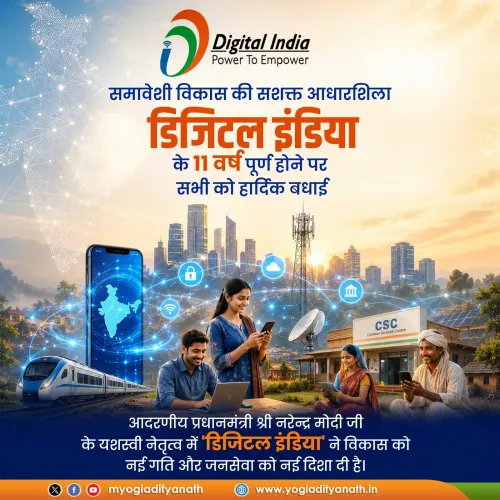
Union Textiles Minister Giriraj Singh marked 11 years of Digital India on 1 July 2026, crediting PM Modi's leadership for expanding UPI, DBT and rural connectivity, and calling these gains the foundation of the Viksit Bharat 2047 vision.
Key Takeaways
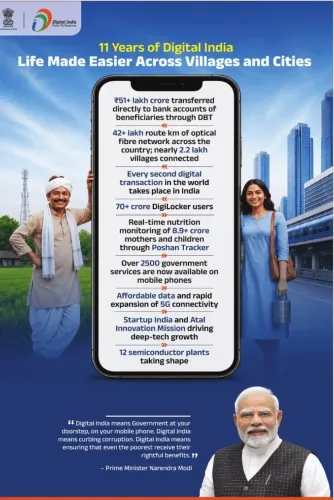
Digital India turned 11 years old on 1 July 2026 , having been launched by PM Narendra Modi on 1 July 2015 .
Union Textiles Minister Giriraj Singh highlighted UPI , Direct Benefit Transfer (DBT) , rural digital connectivity and AI as flagship achievements of the programme.
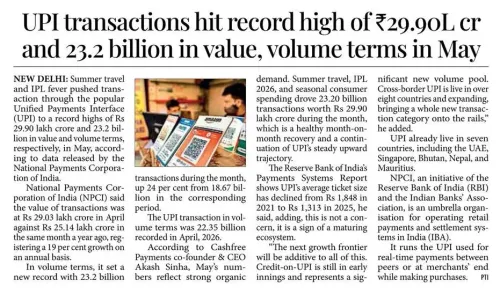
UPI was rolled out by NPCI in August 2016 and has since become India's dominant real-time payments infrastructure.
DBT was scaled nationally after 2014 to transfer welfare subsidies directly into beneficiaries' bank accounts, cutting leakages.
BharatNet has been the government's primary vehicle for extending broadband to gram panchayats in rural India.
The Minister linked the Digital India record to Viksit Bharat 2047 , the government's vision for a developed India by the centenary of independence.
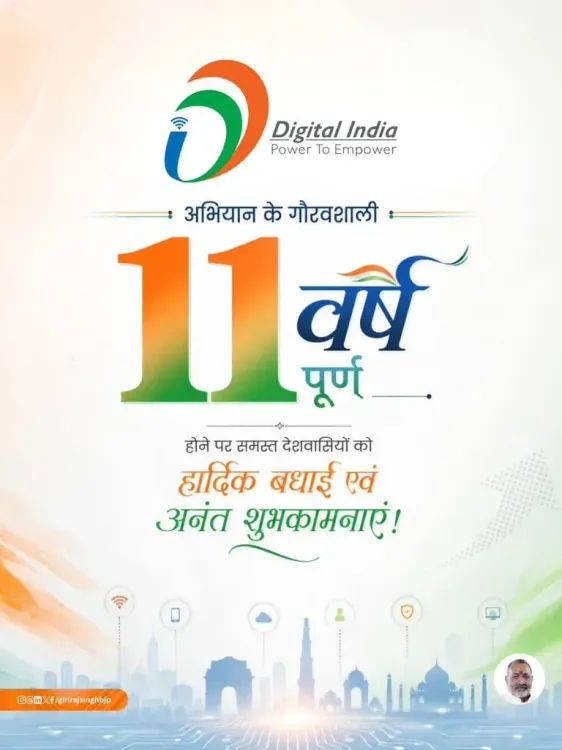
Union Textiles Minister Giriraj Singh on Wednesday, 1 July 2026 marked the 11th anniversary of the Digital India programme with a post on X, calling the initiative a medium of positive change in every Indian's life and linking its achievements to the broader Viksit Bharat 2047 vision.
Context
Digital India was formally launched by Prime Minister Narendra Modi on 1 July 2015 with the stated aim of transforming India into a digitally empowered society and knowledge economy. The programme's anniversary on 1 July 2026 prompted a wave of tributes from senior BJP leaders, with Giriraj Singh among those marking the occasion on social media.
In his post, the Minister wrote — 'डिजिटल इंडिया आज केवल एक अभियान नहीं, बल्कि हर भारतीय के जीवन में सकारात्मक बदलाव का माध्यम बन चुका है' ('Digital India today is not merely a campaign, but has become a medium of positive change in every Indian's life'). He credited Prime Minister Modi's leadership over the past 11 years for making services faster, more transparent and more convenient by taking technology to the masses.
Policy Backdrop
The Unified Payments Interface (UPI), rolled out by the National Payments Corporation of India (NPCI) in August 2016, has grown into India's dominant real-time payment rail, processing billions of transactions monthly. The Direct Benefit Transfer (DBT) mechanism, scaled nationally after 2014, routes welfare subsidies directly into beneficiaries' bank accounts, reducing leakages that had long plagued social spending.
Rural digital connectivity has been a parallel thrust. The BharatNet project, initiated in 2011 and significantly accelerated post-2014, aims to provide optical-fibre broadband to gram panchayats across the country. Giriraj Singh specifically cited UPI, DBT, village-level digital connectivity and artificial intelligence as areas where India is 'continuously building a new identity' — 'भारत लगातार नई पहचान बना रहा है.'
The IndiaAI Mission, announced in the 2024-25 budget cycle, represents the government's most recent push to position India as a competitive player in artificial intelligence — a theme the Minister's post echoes with its explicit reference to AI.
Stakeholders and Impact
The beneficiaries of the Digital India ecosystem span a wide spectrum: rural households gaining first-time internet access, welfare recipients receiving subsidies without intermediaries, small merchants using UPI QR codes for cashless payments, and a growing fintech sector building products on India's open digital public infrastructure stack.
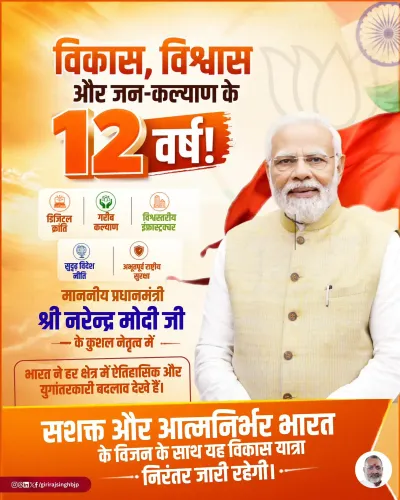
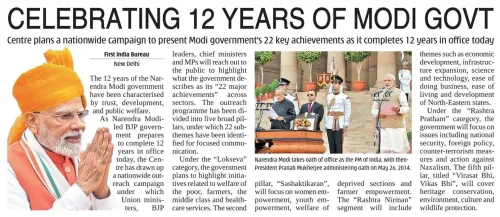
For the ruling BJP, the Digital India narrative serves as a cornerstone of its governance record ahead of state and national electoral cycles. Senior ministers routinely invoke UPI and DBT adoption figures as evidence of technology-driven inclusive growth — a framing that Giriraj Singh's post reinforces by tying the programme directly to the long-term Viksit Bharat 2047 development blueprint.
What's Next
The government is expected to advance the next phase of the IndiaAI Mission in the 2026-27 budget cycle, alongside parliamentary deliberations on the Digital Personal Data Protection rules. How effectively the state can extend high-quality digital infrastructure to India's last-mile communities will be the critical test of whether the Viksit Bharat 2047 promise translates from political narrative into measurable development outcomes.
Point of View
The political stakes around India's digital trajectory are rising well beyond ceremonial anniversaries.
NationPress
1 Jul 2026
Frequently Asked Questions
When was Digital India launched and by whom?
Digital India was formally launched by Prime Minister Narendra Modi on 1 July 2015 to build digital infrastructure, deliver government services online and improve digital literacy across the country.
What did Giriraj Singh say about Digital India?
Giriraj Singh said Digital India is no longer merely a campaign but has become 'a medium of positive change in every Indian's life,' crediting PM Modi's leadership over 11 years for making services faster, transparent and convenient through UPI , DBT , rural connectivity and AI.
What is Viksit Bharat 2047?
Viksit Bharat 2047 is the Indian government's long-term vision to transform India into a fully developed economy by 2047 , the centenary of independence, with digital public infrastructure positioned as a key enabler.
What is UPI and how does it relate to Digital India?
UPI (Unified Payments Interface) is a real-time payment system developed by NPCI and launched in August 2016 . It is one of Digital India's most visible successes, enabling instant bank-to-bank transfers and cashless commerce for millions of Indians.
What is Direct Benefit Transfer (DBT) in India?
Direct Benefit Transfer (DBT) is a government mechanism that routes welfare subsidies and payments directly into the bank accounts of eligible beneficiaries, bypassing intermediaries. It was scaled nationally after 2014 to improve targeting and reduce leakages in social spending.