Giriraj Singh Hails India-Indonesia Prambanan Temple Restoration
Synopsis
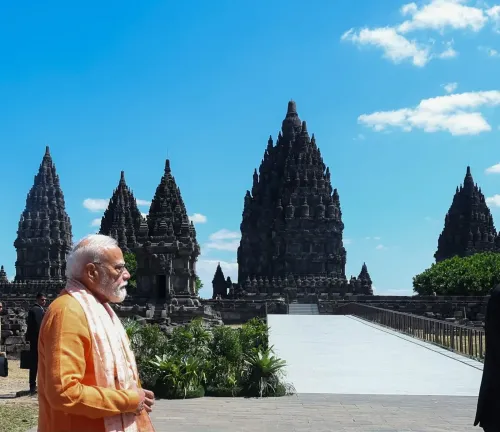
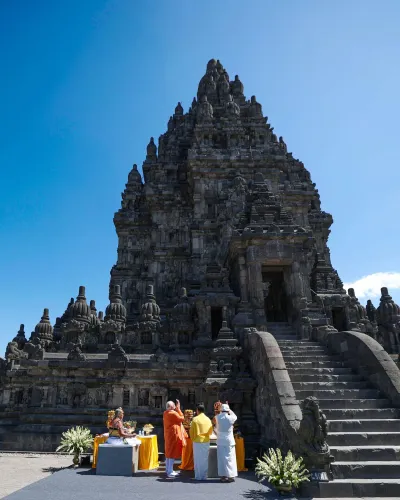
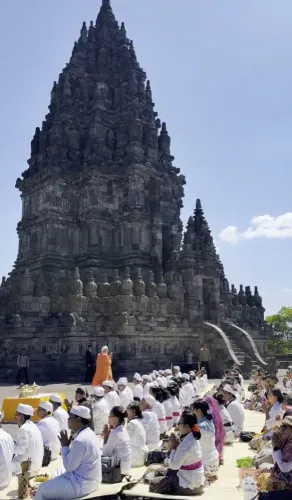
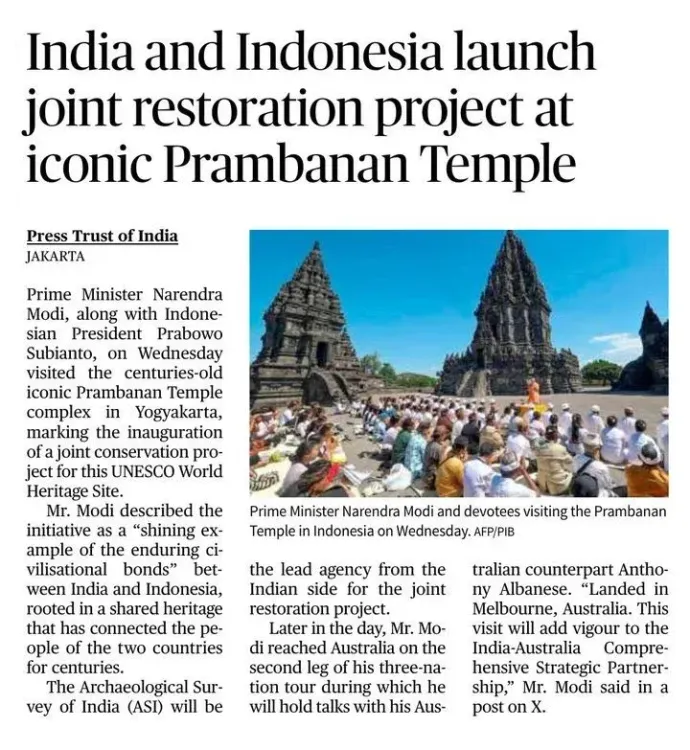
Union Textiles Minister Giriraj Singh on 9 July 2026 lauded the launch of a joint India-Indonesia conservation project for the UNESCO-listed 9th-century Prambanan Hindu temple in Central Java, calling it proof of PM Modi's commitment to preserving shared civilisational heritage.
Key Takeaways
Giriraj Singh posted on 9 July 2026 praising the joint India-Indonesia conservation and restoration project for the Prambanan temple complex in Central Java.
The Prambanan complex is a 9th-century Hindu temple compound and a UNESCO World Heritage Site , symbolising centuries of Indian cultural influence in Southeast Asia.
Singh attributed the initiative to Prime Minister Narendra Modi's leadership and called it proof of the government's commitment to culture, faith, and civilisation.
The project aligns with India's Act East Policy and the India-Indonesia Comprehensive Strategic Partnership agreed upon during Modi's May 2018 visit to Indonesia.
Precise funding, scope, and implementation timelines for the Prambanan project are yet to be officially announced.
Union Textiles Minister Giriraj Singh on Thursday, 9 July 2026, praised the launch of a joint conservation and restoration project for Indonesia's historic Prambanan temple complex, calling it a powerful demonstration of the Indian government's commitment to preserving shared civilisational heritage. Singh credited the initiative to the leadership of Prime Minister Narendra Modi, framing it as a landmark moment in India's cultural diplomacy with Southeast Asia.
Context
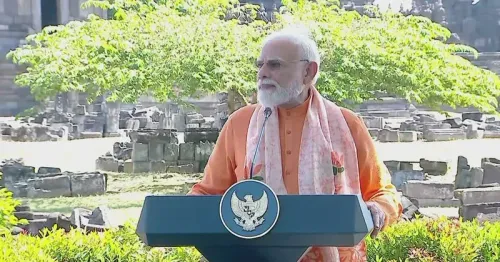
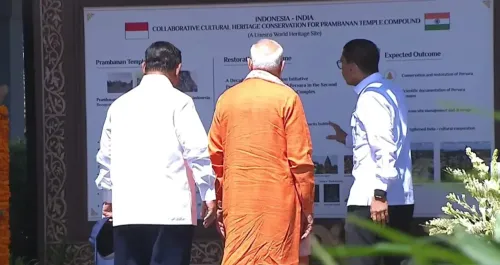
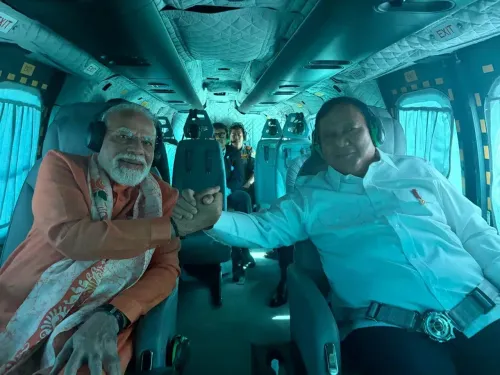
In his post, Singh wrote — 'भारत अपनी विरासत के संरक्षण के साथ-साथ दुनिया में मौजूद अपनी साझा सांस्कृतिक धरोहरों के संरक्षण में भी महत्वपूर्ण भूमिका निभा रहा है' ['India is playing an important role not only in preserving its own heritage but also in conserving shared cultural legacies that exist around the world']. He described the Prambanan joint conservation project as 'a strong proof of the government's unwavering commitment to culture, faith, and civilisation.' The post was accompanied by two images and carried the hashtags #SharedHeritage and #IndiaIndonesia.
The Prambanan temple complex, situated in Central Java, Indonesia, is a 9th-century Hindu temple compound and a UNESCO World Heritage Site. It stands as one of the most visible symbols of the centuries-long Hindu-Buddhist cultural influence that flowed from the Indian subcontinent to maritime Southeast Asia through trade and migration routes.
Policy Backdrop
The restoration project fits squarely within India's Act East Policy, which has increasingly used cultural and civilisational links with ASEAN nations as a pillar of soft-power engagement. During Prime Minister Modi's May 2018 visit to Indonesia, both governments agreed to expand cooperation on cultural heritage and people-to-people ties as part of a Comprehensive Strategic Partnership.
Successive Indian governments have supported the restoration of monuments abroad as a visible expression of civilisational connection, but the current administration has accelerated this through targeted bilateral projects. The Prambanan initiative extends that pattern into a high-profile joint conservation effort, complementing India's broader strategic and economic engagement across the Indo-Pacific.
Stakeholders and Impact
Heritage conservationists and the cultural tourism sector in both countries stand to benefit directly from the project. A restored and better-maintained Prambanan complex could draw greater footfall from Indian pilgrims and tourists who regard the site as part of a shared Hindu heritage, while Indonesian authorities gain technical and potentially financial support for a monument of global significance.
For India, the initiative also carries diplomatic value — it reinforces New Delhi's narrative of being a responsible steward of civilisational heritage beyond its own borders, strengthening goodwill with Jakarta at a time when both countries are deepening defence and economic ties in the Indo-Pacific region.
What's Next
Specific details — including the precise scope, funding commitments, and implementation timeline of the joint Prambanan restoration project — are yet to be formally announced through official channels. Observers will watch for concrete milestones at the next India-Indonesia bilateral summit or at upcoming ASEAN-related cultural meetings.
Singh's post signals that the ruling dispensation intends to keep shared heritage diplomacy in the public spotlight, using cultural restoration projects as a bridge between India's domestic civilisational narrative and its foreign policy ambitions in Southeast Asia.
Point of View
The ruling party reinforces its 'cultural guardian' identity for a domestic audience while simultaneously projecting India as a benevolent soft-power actor in the Indo-Pacific. The timing, amid deepening India-ASEAN strategic engagement, suggests the Prambanan project is being positioned as a flagship symbol of Modi-era heritage diplomacy. The broader arc points to an increasingly institutionalised use of shared Hindu-Buddhist legacies as diplomatic currency across Southeast Asia.
NationPress
9 Jul 2026
Frequently Asked Questions
What is the Prambanan temple and why is India involved in its restoration?
Prambanan is a 9th-century Hindu temple complex in Central Java, Indonesia, and a UNESCO World Heritage Site. India is involved in its joint conservation because the site reflects centuries of shared Hindu-Buddhist cultural heritage between India and Indonesia, and the two countries agreed to cooperate on cultural heritage under their Comprehensive Strategic Partnership.
What did Giriraj Singh say about the Prambanan temple project?
Giriraj Singh said the joint conservation and restoration project for the Prambanan temple is 'a strong proof of the government's unwavering commitment to culture, faith, and civilisation,' and credited the initiative to Prime Minister Narendra Modi's leadership.
When did India and Indonesia agree to cooperate on cultural heritage?
During Prime Minister Modi's May 2018 visit to Indonesia, both countries agreed to expand cooperation on cultural heritage and people-to-people ties as part of their Comprehensive Strategic Partnership.
What is India's Act East Policy and how does Prambanan fit into it?
India's Act East Policy seeks to strengthen political, economic, and cultural ties with Southeast Asian nations. The Prambanan restoration project fits into this framework by using shared Hindu-Buddhist heritage as a pillar of soft-power engagement with Indonesia and the broader ASEAN region.
What are the next steps for the India-Indonesia Prambanan restoration project?
The precise scope, funding, and implementation timeline of the project are yet to be formally announced. Key details are expected to emerge at the next India-Indonesia bilateral summit or upcoming ASEAN-related cultural meetings.