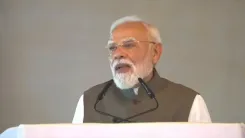
Giriraj Singh Hails India-UK FTA Boost for Green Vehicle Exports
Synopsis
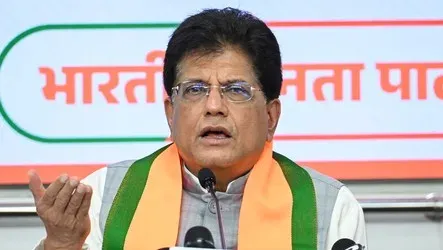
Union Textiles Minister Giriraj Singh flagged that the India-UK Free Trade Agreement has opened doors for 88,000 Made in India green vehicles to access the UK market, spotlighting the deal as a major win for domestic EV and auto manufacturers under the Make in India push.
Key Takeaways
Union Textiles Minister Giriraj Singh shared on 20 June 2026 that the India-UK FTA has created export opportunities for 88,000 Made in India green vehicles .
The India-UK FTA negotiations were formally launched in January 2022 following the 2021 UK-India Summit .
The deal includes provisions relevant to green goods and electric vehicles , aligning with India's net-zero targets and clean-mobility manufacturing ambitions.
India's broader FTA strategy since 2020 has targeted Australia, UAE and EFTA , with green-goods chapters embedded in each agreement.
Parliamentary ratification and finalisation of rules of origin for EVs remain key milestones before the automotive benefits take full effect.
The agreement signals that Indian-manufactured green vehicles are competitive enough to anchor a dedicated chapter in a deal with a major developed economy.
Union Textiles Minister Giriraj Singh on Saturday, 20 June 2026, shared that the India-UK Free Trade Agreement has opened fresh export opportunities for as many as 88,000 'Made in India' green vehicles, pointing to the deal's significance for domestic manufacturers and India's clean-mobility ambitions.
Context
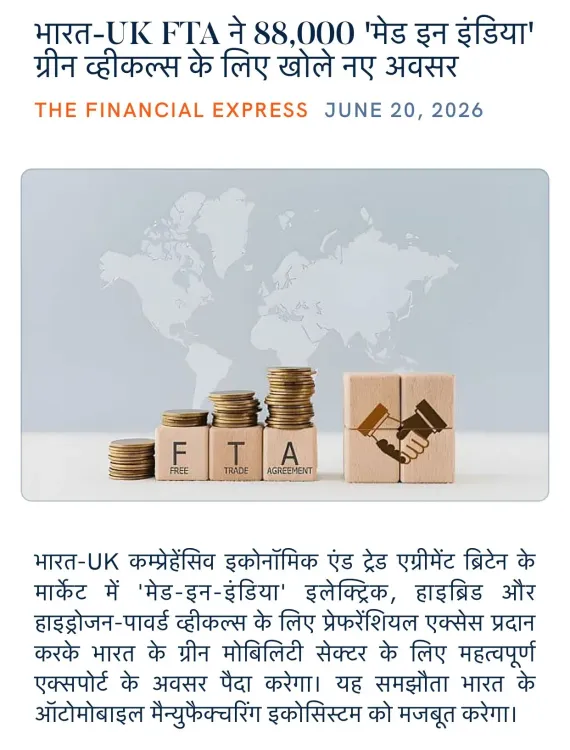
Posting on X via the NaMo App, Singh highlighted the headline finding — 'भारत-UK FTA ने 88,000 'मेड इन इंडिया' ग्रीन व्हीकल्स के लिए खोले नए अवसर' ('India-UK FTA opens new opportunities for 88,000 Made in India green vehicles') — underscoring the agreement's direct impact on India's electric and green vehicle segment. The minister's amplification signals the ruling dispensation's intent to project the FTA as a win for domestic manufacturing under the Make in India initiative.
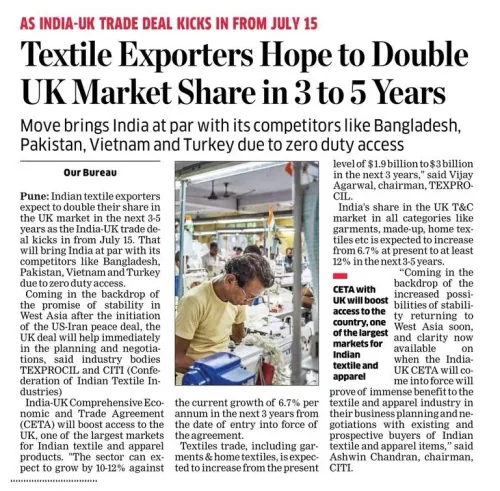
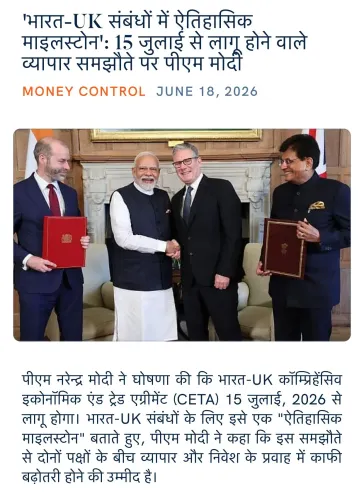
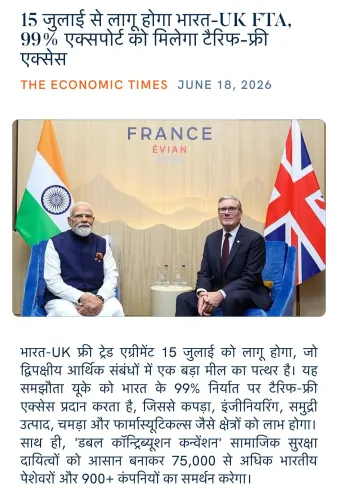
The India-UK FTA was formally set in motion in January 2022, following a bilateral intent announced during the 2021 UK-India Summit. After more than three years of negotiations, the agreement has emerged as one of India's most consequential post-pandemic trade deals, covering goods, services, and — critically for the current moment — green technology and electric vehicles.
Policy Backdrop
India has pursued an accelerated FTA strategy since 2020, concluding agreements with partners including Australia, the UAE, and the EFTA bloc, with a deliberate focus on diversifying export markets and embedding green-goods chapters in each deal. The United Kingdom, navigating its post-Brexit trade agenda independently, has prioritised agreements that combine access to Indian manufacturing capacity with openings for British services exports.
The automotive and EV clause within the India-UK FTA is particularly significant because it aligns with India's net-zero commitments and the government's push to position the country as a global hub for green mobility manufacturing. Rules of origin provisions for electric vehicles — determining what qualifies as 'Made in India' — are among the most closely watched annexes in the final agreement text.
Stakeholders and Impact
Indian auto exporters and electric vehicle manufacturers stand to gain the most directly if preferential tariff access to the UK market is confirmed for domestically produced green vehicles. The 88,000-unit figure cited in the post represents a substantial potential export pipeline, though the precise tariff lines and eligibility criteria will determine the actual beneficiary base once the agreement is ratified.
For the broader Make in India ecosystem, the FTA provides a reputational and commercial signal: that Indian-manufactured green vehicles are competitive enough to anchor a dedicated chapter in a bilateral deal with a major developed economy. Smaller component suppliers and battery manufacturers in the EV supply chain could see downstream benefits as export volumes scale.
What's Next
Attention will now turn to the parliamentary ratification process in both countries and the finalisation of any dedicated annexes on automotive tariffs and rules of origin for electric vehicles. Industry bodies are expected to engage with both governments on implementation timelines and certification frameworks.
As India continues to position itself as a green manufacturing powerhouse, the India-UK FTA could serve as a template for embedding clean-mobility provisions in future bilateral agreements — with the 88,000-vehicle opportunity acting as a concrete benchmark against which the deal's real-world impact will eventually be measured.
Point of View
000-vehicle figure is a calculated move to frame the India-UK FTA as a tangible industrial dividend rather than an abstract diplomatic achievement — linking trade policy directly to the Make in India narrative ahead of any formal ratification. The minister's focus on 'green vehicles' is strategically timed: as global demand for EVs rises, positioning India as a preferred manufacturing source for the UK market strengthens the government's clean-energy credentials domestically and internationally. The post also reflects a broader pattern in which senior ministers use social media to pre-emptively claim credit for trade outcomes, shaping public perception before parliamentary debate on the agreement begins. Whether the 88,000-unit opportunity translates into actual exports will depend heavily on rules-of-origin negotiations and tariff schedules — details that remain to be tested in implementation.
NationPress
21 Jun 2026
Frequently Asked Questions
What is the India-UK FTA and when was it signed?
The India-UK Free Trade Agreement is a bilateral deal between India and the United Kingdom aimed at reducing tariffs on goods and services. Negotiations were formally launched in January 2022 following the 2021 UK-India Summit; ratification details are pending as of mid-2026.
How does the India-UK FTA benefit Indian green vehicle manufacturers?
The agreement is reported to open export opportunities for as many as 88,000 Made in India green vehicles to the UK market, potentially through preferential tariff access, though exact tariff lines and rules of origin are subject to the final ratified text.
What did Giriraj Singh say about the India-UK FTA?
Union Textiles Minister Giriraj Singh posted on X on 20 June 2026 highlighting that the India-UK FTA has opened new opportunities for 88,000 Made in India green vehicles, underscoring the deal's significance for domestic manufacturers.
What are 'rules of origin' and why do they matter for Indian EVs under the FTA?
Rules of origin are provisions in trade agreements that define what percentage of a product must be domestically manufactured for it to qualify for preferential tariff treatment. For Indian EVs, these rules will determine which vehicles genuinely count as 'Made in India' and can therefore benefit from reduced UK import duties under the FTA.
How does the India-UK FTA fit into India's broader trade strategy?
India has pursued multiple FTAs since 2020, including deals with Australia, UAE, and the EFTA bloc, increasingly incorporating green-goods and EV chapters to align with the country's net-zero targets and Make in India manufacturing goals.