Giriraj Singh hails India's first hydrogen train launch
Synopsis
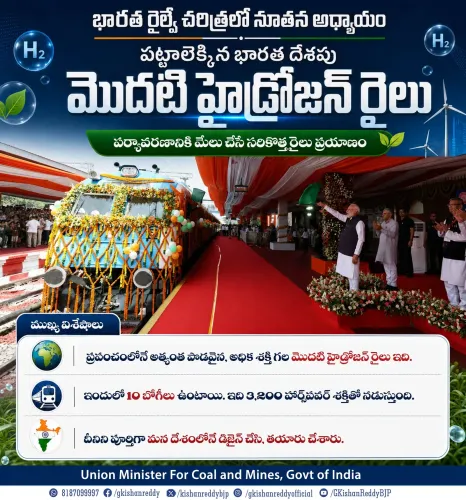
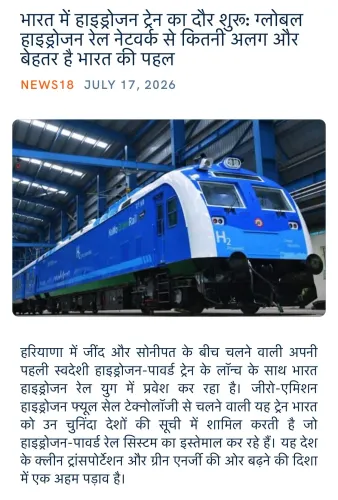
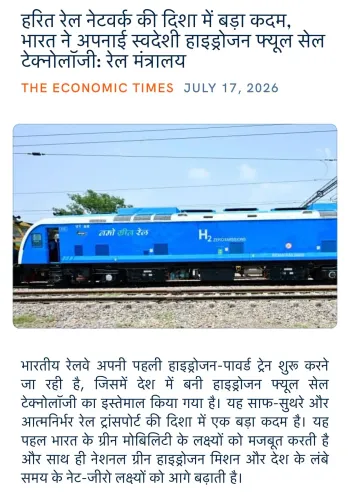
Union Textiles Minister Giriraj Singh on 18 July 2026 highlighted the launch of India's first indigenously built hydrogen-powered train, framing it as a major step in the country's push to bring clean energy into its vast rail network under the National Green Hydrogen Mission.
Key Takeaways
India's first hydrogen-powered train was launched, marking a milestone for indigenous clean-energy rail technology.
Union Textiles Minister Giriraj Singh amplified the development via the NaMo App on 18 July 2026 .
Indian Railways has targeted net-zero traction emissions by 2030 , with hydrogen trains central to that goal.
The project aligns with the National Green Hydrogen Mission approved by the Union Cabinet in 2023 .
Expansion will depend on building hydrogen refuelling infrastructure and identifying viable deployment routes.
The launch reflects India's broader 2070 net-zero commitment and the Make in India push in rolling-stock manufacturing.
Union Textiles Minister Giriraj Singh on Saturday, 18 July 2026 shared news of India's first hydrogen-powered train launch, calling it a landmark step toward integrating clean energy into the country's rail network. The minister shared the development via the NaMo App, underscoring the ruling party's push to amplify infrastructure milestones on social media.
Context
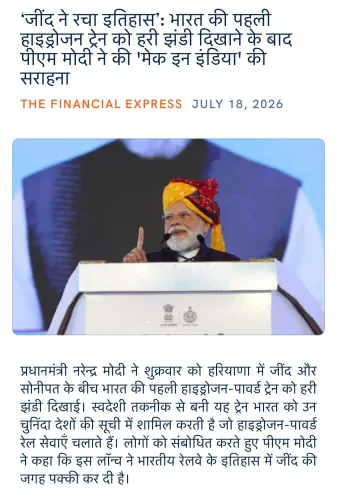
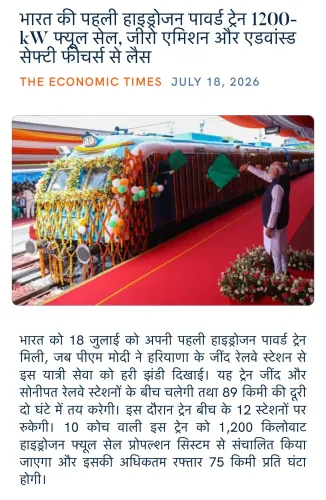
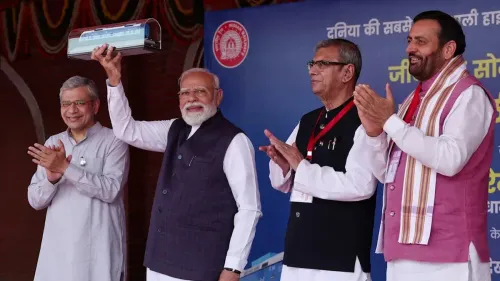
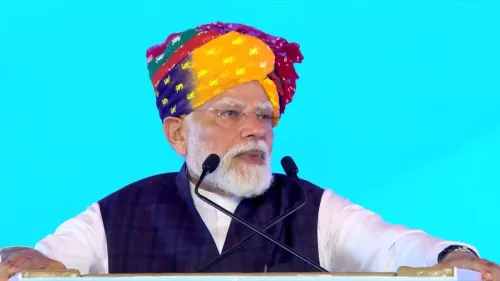
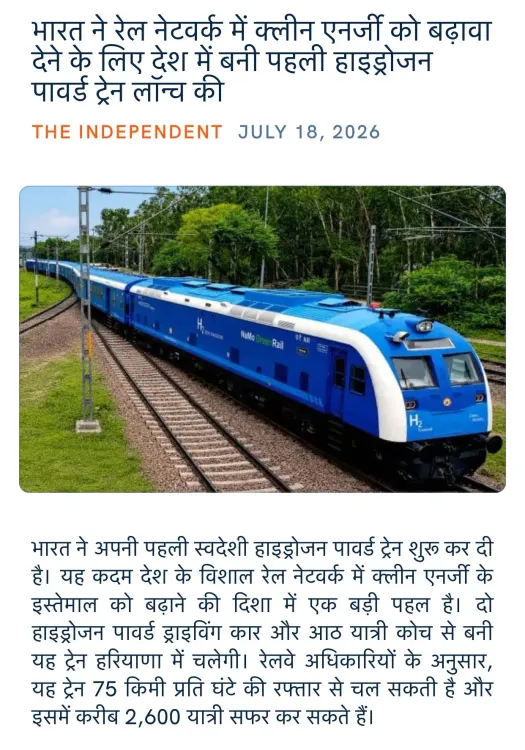
Singh's post, written in Hindi, announced: 'Bharat ne rail network mein clean energy ko badhawa dene ke liye desh mein bani pehli hydrogen powered train launch ki' — 'India has launched its first indigenously built hydrogen-powered train to promote clean energy in the rail network.' The post was accompanied by an image and shared through the NaMo App, a platform frequently used by Bharatiya Janata Party leaders to amplify government achievements.
The launch marks a significant milestone for Indian Railways, which operates one of the world's largest rail networks and has been pursuing decarbonisation goals across its fleet. An indigenously manufactured hydrogen fuel-cell train represents a convergence of the government's Make in India manufacturing push and its clean-energy transition agenda.
Policy Backdrop
Indian Railways has outlined hydrogen fuel-cell train plans in successive budgets and vision documents since 2021, targeting net-zero carbon emissions by 2030 for its traction operations. The project draws directly from the National Green Hydrogen Mission, approved by the Union Cabinet in 2023, which allocated resources to scale green-hydrogen production and deployment across transport and industrial sectors.
India's broader 2070 net-zero commitment has accelerated the integration of alternative-fuel technologies into public transport. Railway electrification has already covered a large share of the network, and hydrogen-powered rolling stock is positioned as the next frontier for non-electrified or remote corridors where overhead infrastructure is not viable.
Prime Minister Narendra Modi has been closely associated with railway modernisation drives, including the rollout of Vande Bharat semi-high-speed trains and large-scale station redevelopment, lending political salience to each new milestone in the sector.
Stakeholders and Impact
The primary beneficiaries of hydrogen train deployment are rail passengers on routes where the technology is introduced, who stand to gain from quieter, emission-free journeys. Railway operators and maintenance crews will need to adapt to new refuelling and servicing protocols distinct from conventional diesel or electric traction.
Indigenous manufacturing of the hydrogen rake also has downstream implications for domestic rolling-stock producers and component suppliers, potentially creating a new industrial segment aligned with the government's self-reliance goals. The success of this pilot will be closely watched by state governments and private logistics operators considering hydrogen mobility for freight corridors.
What's Next
Attention will now turn to the identification of specific routes where hydrogen rakes will be deployed at scale, and to the development of refuelling infrastructure — a critical bottleneck that has slowed hydrogen mobility projects globally. Any supplementary budget allocations or state-level partnerships for hydrogen supply chains will be key indicators of how quickly the programme can expand beyond a pilot phase.
With the launch now confirmed, Indian Railways faces the operational challenge of integrating a nascent technology into a network that moves millions of passengers daily, making the pace of scale-up as consequential as the launch itself.
Point of View
With Indian Railways as the most visible test bed. If refuelling infrastructure and route rollout follow at pace, this could redefine the decarbonisation trajectory of the world's fourth-largest rail network. The political and policy stakes are high: a stalled scale-up would expose the gap between announcement and execution that critics have long flagged in India's clean-energy transitions.
NationPress
18 Jul 2026
Frequently Asked Questions
What is India's first hydrogen-powered train?
India's first hydrogen-powered train is an indigenously built fuel-cell locomotive launched to promote clean energy on the Indian Railways network, reducing dependence on diesel traction on select routes.
What is the National Green Hydrogen Mission?
The National Green Hydrogen Mission is a Central government scheme approved in 2023 to scale up green-hydrogen production and its application across transport and industrial sectors in India.
When was India's hydrogen train launched?
The launch was highlighted on 18 July 2026, when Union Textiles Minister Giriraj Singh shared the development on social media via the NaMo App.
What is Indian Railways' net-zero target?
Indian Railways has set a target of achieving net-zero carbon emissions from its traction operations by 2030, with hydrogen fuel-cell trains forming a key part of that decarbonisation strategy.
Why did Textiles Minister Giriraj Singh post about a railway launch?
Senior BJP leaders routinely share major government infrastructure milestones across portfolios as part of a coordinated communication strategy, regardless of their specific ministerial brief.