Giriraj Singh Hails India's Rising Forex Reserves as Sign of Economic Strength
Synopsis
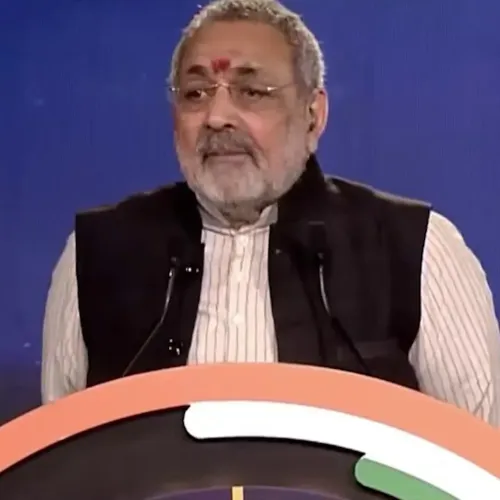
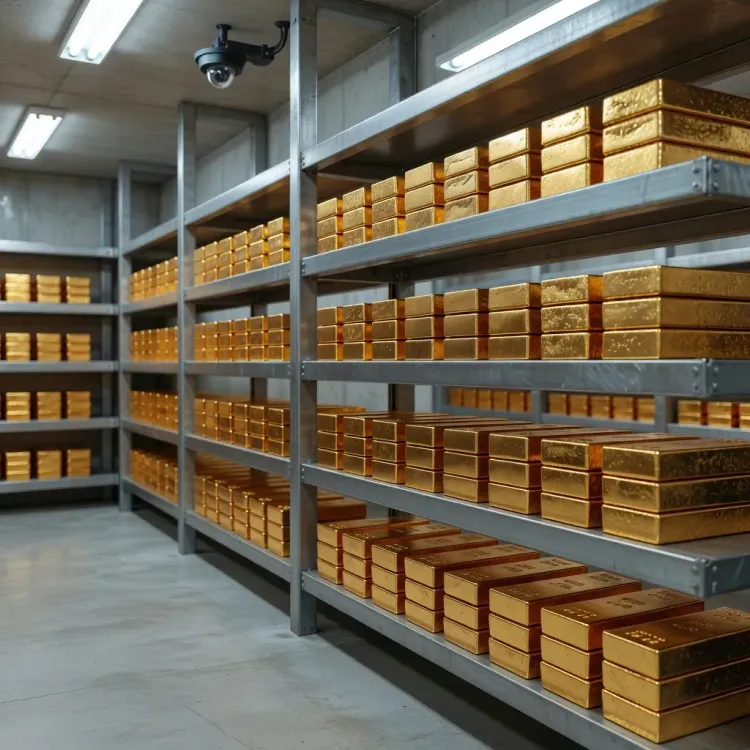
Union Textiles Minister Giriraj Singh on 1 August 2026 praised India's rising foreign exchange and gold reserves as evidence of economic stability and global confidence, crediting Prime Minister Narendra Modi's leadership for the sustained accumulation.
Key Takeaways
Giriraj Singh posted on 1 August 2026 citing growth in India's foreign exchange and gold reserves as a sign of economic strength.
He credited Prime Minister Narendra Modi directly, saying the economy is 'continuously strengthening' under his leadership.
The Reserve Bank of India manages forex reserves as a buffer for currency stability, import cover, and external debt servicing.
India's reserve-building policy traces back to the 1991 balance-of-payments crisis , with successive governments treating accumulation as a strategic priority.
Post- 2014 FDI liberalisation and export promotion schemes are cited as contributors to sustained reserve growth over the past decade.
The RBI's weekly statistical supplement and the next Economic Survey are the key documents to watch for specific reserve figures.
India's foreign exchange and gold reserves are climbing — and Union Textiles Minister Giriraj Singh wants the country to notice what that signals. On Saturday, 1 August 2026, the senior BJP leader posted on X, calling the growth in reserves a marker of economic stability and growing global confidence in India.
In his post, Singh wrote: 'भारत का मजबूत होता विदेशी मुद्रा भंडार देश की आर्थिक स्थिरता और वैश्विक भरोसे का संकेत है' — 'India's strengthening foreign exchange reserves are a sign of the country's economic stability and global trust.' He attributed the momentum directly to Prime Minister Narendra Modi, saying the rise in forex and gold reserves demonstrates that India's economy is 'continuously strengthening' under his leadership and becoming 'more capable of facing global challenges.'
Why Forex Reserves Are India's Economic Shock Absorber
Foreign exchange reserves are not just a number on a central bank's balance sheet — they are a country's first line of defence when global markets turn hostile. The Reserve Bank of India (RBI), which manages these reserves, uses them to stabilise the rupee during episodes of capital flight, to service external debt, and to maintain sufficient import cover. The higher the reserves, the longer India can weather a currency storm without painful intervention. India's reserve-building story stretches back to the 1991 balance-of-payments crisis, which left the country with barely two weeks of import cover and forced a humiliating gold pledge. That episode hardened a cross-party consensus: never again. Every government since has treated reserve accumulation as a non-negotiable buffer. The current administration has built on that foundation through FDI liberalisation and export promotion schemes introduced after 2014, which contributed to sustained inflows and forex accumulation over the past decade.A Decade of Accumulation — and the Politics Behind the Milestone
For the BJP, rising reserves are a political as much as an economic talking point. They represent visible, quantifiable proof of macroeconomic management — the kind of number that travels easily in a campaign speech or a parliamentary debate. Singh's post, tagged #EconomicGrowth and #ForexReserves, fits squarely into that framing: connect a technical indicator to the Prime Minister's leadership, and make the abstract feel consequential. The broader pattern is real, even if the politics around it are contested. India's reserve levels have provided meaningfully higher import cover compared to the pre-2014 era, giving the RBI greater room to manoeuvre during periods of dollar strength or crude oil price spikes — both of which hit India's current account hard. For Indian exporters and global investors, a well-stocked reserve chest signals that the rupee is unlikely to go into freefall, reducing hedging costs and improving long-term investment calculus. Watch the RBI's weekly statistical supplement and the next Economic Survey for the specific reserve figures that likely prompted this post. The numbers, when they arrive, will tell the fuller story.Point of View
And the government moved quickly to claim it. The broader arc here is the BJP's sustained effort to own the 'economic stability' brand heading into future electoral cycles, using hard numbers — reserves, growth rates, FDI inflows — as its primary rhetorical ammunition.
NationPress
1 Aug 2026
Frequently Asked Questions
What are India's foreign exchange reserves and why do they matter?
India's foreign exchange reserves are assets held by the Reserve Bank of India in foreign currencies, gold, and special drawing rights. They matter because they defend the rupee during currency volatility, cover import bills, and signal creditworthiness to global investors.
Why did Giriraj Singh post about forex reserves?
Union Textiles Minister Giriraj Singh posted on 1 August 2026 to highlight growth in India's forex and gold reserves, attributing it to PM Modi 's economic leadership and framing the rise as evidence of India's growing global credibility.
What is the RBI's role in managing India's forex reserves?
The Reserve Bank of India is India's central bank and the sole manager of its foreign exchange and gold reserves, deploying them to stabilise the rupee, maintain adequate import cover, and service external obligations during periods of global stress.
How have India's forex reserves grown since 2014?
India's reserves have expanded substantially since 2014 , driven by FDI liberalisation, export promotion schemes, and sustained foreign inflows, providing significantly higher import cover than in earlier decades — though specific current figures should be verified against the latest RBI data.
Where can I track India's latest forex reserve figures?
The Reserve Bank of India publishes reserve data every week in its statistical supplement, and broader trends are analysed in the annual Economic Survey tabled in Parliament.